Our Solar System
Heliospheric Star System
🌌 Solar System Overview
The Solar System is the collection of celestial bodies gravitationally bound to the Sun. It formed approximately 4.57 billion years ago and consists of eight planets, five officially recognized dwarf planets, hundreds of moons, millions of asteroids, billions of comets, and countless smaller objects. The Sun alone contains almost 99.86% of the total mass of the Solar System. Its gravity governs every planet, moon, asteroid, and comet. Modern spacecraft continue exploring our Solar System, revealing new discoveries about planetary evolution, magnetic fields, underground oceans, atmospheres, and the possibility of life beyond Earth.
☀ Central Star
- Type : G2V Yellow Dwarf
- Age : 4.57 Billion Years
- Mass : 1 Solar Mass
- Diameter : 1.39 Million km
- Surface Temperature : 5,500°C
- Core Temperature : 15 Million°C
- System Mass : 99.86%
🪐 Major Planets
| Planet | Type | Moons |
|---|---|---|
| Mercury | Terrestrial | 0 |
| Venus | Terrestrial | 0 |
| Earth | Terrestrial | 1 |
| Mars | Terrestrial | 2 |
| Jupiter | Gas Giant | 95+ |
| Saturn | Gas Giant | 145+ |
| Uranus | Ice Giant | 28 |
| Neptune | Ice Giant | 16 |
🚀 Famous Missions
- Apollo
- Voyager 1 & 2
- Cassini-Huygens
- Galileo
- Juno
- New Horizons
- Parker Solar Probe
- Perseverance Rover
💡 Interesting Facts
- The Sun contains 99.86% of the Solar System's total mass.
- Jupiter is more massive than every other planet combined.
- One year on Neptune lasts 165 Earth years.
- Olympus Mons is the tallest volcano known.
- Saturn is less dense than water.
- The Solar System completes one orbit around the Milky Way every 230 million years.
📖 Scientific Importance
The Solar System is humanity's natural laboratory. Every spacecraft mission has expanded our understanding of planet formation, atmospheres, magnetic fields, climate systems, geology, and the search for life. Knowledge learned here is used to understand thousands of exoplanets discovered throughout our galaxy.
🪐 Planet Gallery
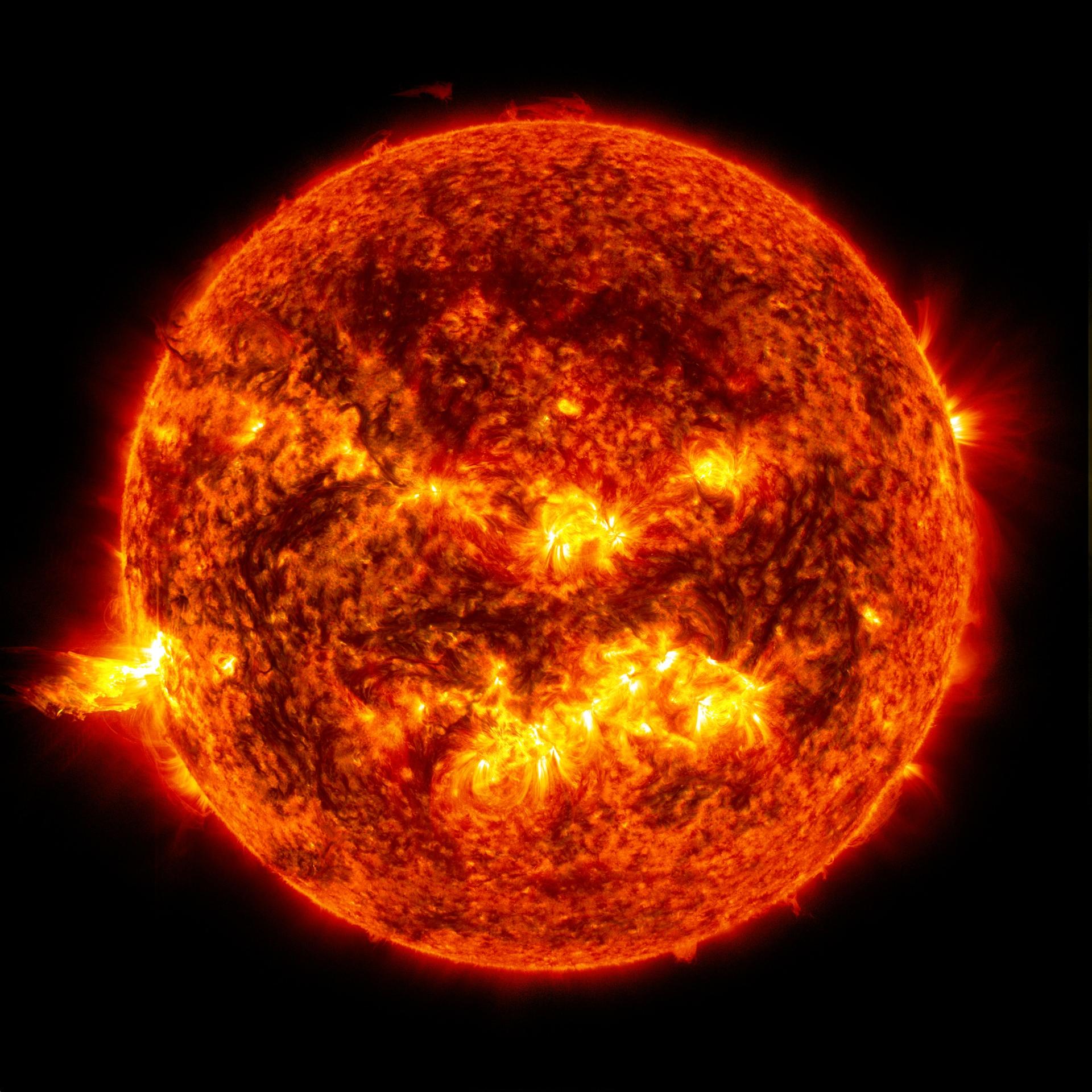
☀ Sun
Type: G-Type Main Sequence Star (Yellow Dwarf)
Diameter: 1,392,700 km
Surface Gravity: 274 m/s²
Rotation Period: 25–35 Earth Days
Age: 4.57 Billion Years
Surface Temperature: 5,500°C
Core Temperature: 15 Million°C
Planets: 8 Major Planets
Fun Fact: The Sun contains 99.86% of the Solar System's total mass.
☀ Sun
Type
G2V Main Sequence Star
Diameter
1,392,700 km
Mass
1.989 × 10³⁰ kg
Density
1.41 g/cm³
Age
4.57 Billion Years
Distance from Earth
149.6 Million km (1 AU)
Luminosity
3.828 × 10²⁶ Watts
Surface Temperature
≈ 5,500°C
Core Temperature
≈ 15 Million°C
Rotation Period
25–35 Earth Days
Composition
Hydrogen (74%), Helium (24%)
Interesting Fact
The Sun contains approximately 99.86% of the Solar System's total mass and powers all life on Earth.
Major Space Missions
- Parker Solar Probe
- Solar Orbiter
- SOHO
- Solar Dynamics Observatory (SDO)
- Ulysses
- Hinode
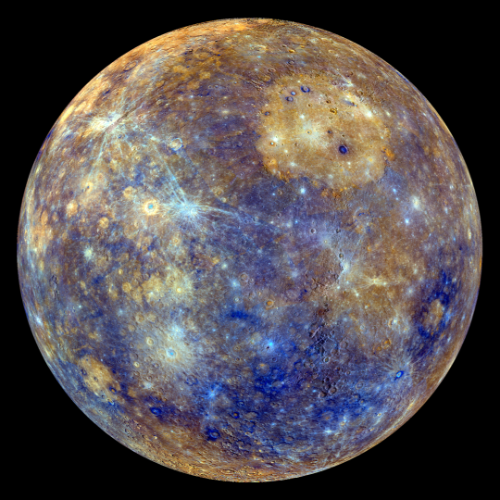
☿ Mercury
Type: Terrestrial Planet
Diameter: 4,879 km
Gravity: 3.7 m/s²
Length of Day: 58.6 Earth Days
Length of Year: 88 Earth Days
Average Temperature: 167°C
Atmosphere: Extremely Thin (Oxygen, Sodium, Hydrogen)
Moons: 0
Fun Fact: Mercury has the largest temperature variation of any planet.
☿ Mercury
Diameter
4,879 km
Gravity
3.7 m/s²
Mass
3.30 × 10²³ kg
Density
5.43 g/cm³
Distance from Sun
57.9 Million km
Orbital Speed
47.4 km/s
Escape Velocity
4.25 km/s
Atmosphere
Extremely Thin Exosphere
Surface Temperature
-180°C to 430°C
Magnetic Field
Weak Global Magnetic Field
Known Moons
0
Interesting Fact
Mercury has the shortest year of any planet.
NASA Missions
- Mariner 10
- MESSENGER
- BepiColombo
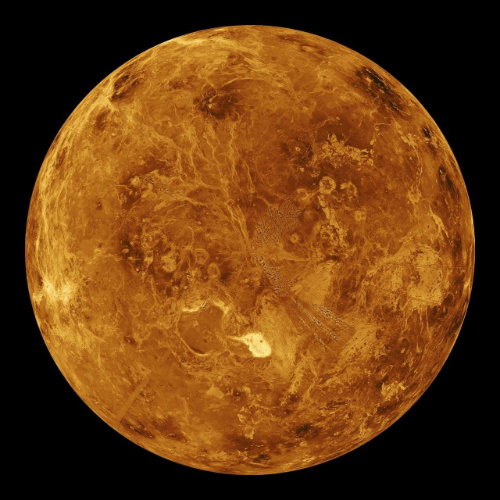
♀ Venus
Type: Terrestrial Planet
Diameter: 12,104 km
Gravity: 8.87 m/s²
Length of Day: 243 Earth Days
Length of Year: 225 Earth Days
Average Temperature: 464°C
Atmosphere: Carbon Dioxide & Sulfuric Acid Clouds
Moons: 0
Fun Fact: Venus rotates backwards compared with most planets.
♀ Venus
Diameter
12,104 km
Gravity
8.87 m/s²
Mass
4.87 × 10²⁴ kg
Density
5.24 g/cm³
Distance from Sun
108.2 Million km
Orbital Speed
35.0 km/s
Escape Velocity
10.36 km/s
Atmosphere
96.5% Carbon Dioxide, 3.5% Nitrogen
Surface Temperature
≈464°C
Magnetic Field
No Global Magnetic Field
Known Moons
0
Interesting Fact
A day on Venus is longer than its year, and it rotates in the opposite direction to most planets.
Major Missions
- Mariner 2
- Venera Program
- Magellan
- Venus Express
- Akatsuki
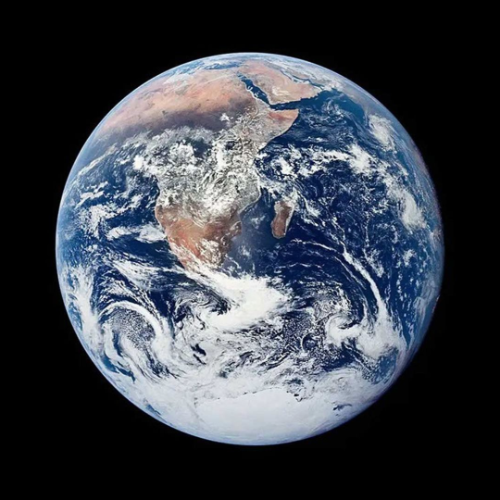
🌍 Earth
Type: Terrestrial Planet
Diameter: 12,742 km
Gravity: 9.81 m/s²
Length of Day: 24 Hours
Length of Year: 365.25 Days
Average Temperature: 15°C
Atmosphere: Nitrogen & Oxygen
Moons: 1
Fun Fact: Earth is the only known planet that supports life.
🌍 Earth
Diameter
12,742 km
Gravity
9.81 m/s²
Mass
5.97 × 10²⁴ kg
Density
5.51 g/cm³
Distance from Sun
149.6 Million km
Orbital Speed
29.78 km/s
Escape Velocity
11.19 km/s
Atmosphere
78% Nitrogen, 21% Oxygen
Average Temperature
≈15°C
Magnetic Field
Strong Global Magnetic Field
Known Moons
1 (The Moon)
Interesting Fact
Earth is the only confirmed planet known to support life.
Major Missions
- Apollo Program
- Landsat
- Terra
- ISS
- Artemis Program
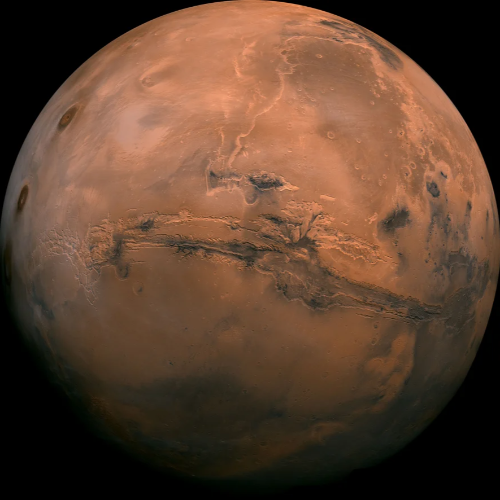
♂ Mars
Type: Terrestrial Planet
Diameter: 6,779 km
Gravity: 3.71 m/s²
Length of Day: 24.6 Hours
Length of Year: 687 Earth Days
Average Temperature: -63°C
Atmosphere: Mostly Carbon Dioxide
Moons: 2
Fun Fact: Mars is home to Olympus Mons, the tallest volcano in the Solar System.
♂ Mars
Diameter
6,779 km
Gravity
3.71 m/s²
Mass
6.42 × 10²³ kg
Density
3.93 g/cm³
Distance from Sun
227.9 Million km
Orbital Speed
24.1 km/s
Escape Velocity
5.03 km/s
Atmosphere
95% Carbon Dioxide
Average Temperature
≈−63°C
Magnetic Field
No Global Magnetic Field
Known Moons
2 (Phobos & Deimos)
Interesting Fact
Olympus Mons is the tallest volcano and mountain in the Solar System.
Major Missions
- Viking 1 & 2
- Mars Pathfinder
- Spirit
- Opportunity
- Curiosity
- Perseverance
- Mars Reconnaissance Orbiter
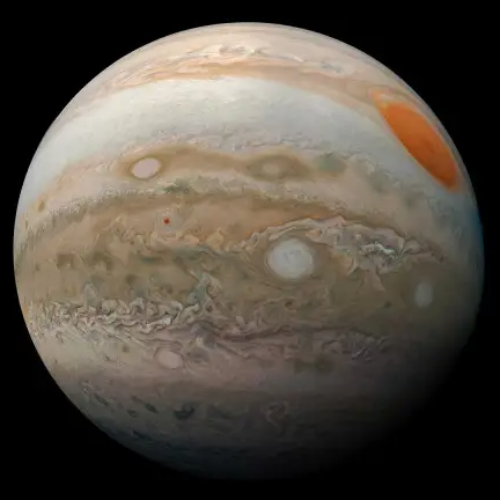
♃ Jupiter
Type: Gas Giant
Diameter: 139,820 km
Gravity: 24.79 m/s²
Length of Day: 9.9 Hours
Length of Year: 11.86 Earth Years
Average Temperature: -145°C
Atmosphere: Hydrogen & Helium
Moons: 95+
Fun Fact: Jupiter is more than twice as massive as all the other planets combined.
♃ Jupiter
Diameter
139,820 km
Gravity
24.79 m/s²
Mass
1.898 × 10²⁷ kg
Density
1.33 g/cm³
Distance from Sun
778.5 Million km
Orbital Speed
13.07 km/s
Escape Velocity
59.5 km/s
Atmosphere
Hydrogen & Helium
Average Temperature
-145°C
Magnetic Field
Strongest Planetary Magnetic Field
Known Moons
95+
Ring System
Faint Ring System
Great Red Spot
Giant Storm Larger Than Earth
Rotation Period
9h 56m
Orbital Period
11.86 Earth Years
Interesting Fact
Jupiter is more massive than every other planet combined.
Major Missions
- Pioneer 10
- Pioneer 11
- Voyager 1
- Voyager 2
- Galileo Orbiter
- Juno
- Europa Clipper
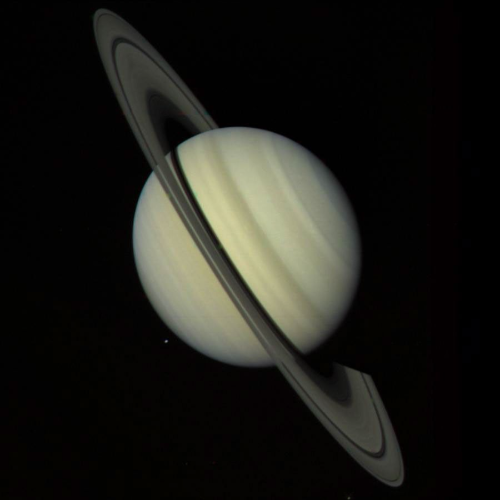
♄ Saturn
Type: Gas Giant
Diameter: 116,460 km
Gravity: 10.44 m/s²
Length of Day: 10.7 Hours
Length of Year: 29.46 Earth Years
Average Temperature: -178°C
Atmosphere: Hydrogen & Helium
Moons: 145+
Fun Fact: Saturn's average density is lower than water.
♄ Saturn
Diameter
116,460 km
Gravity
10.44 m/s²
Mass
5.68 × 10²⁶ kg
Density
0.687 g/cm³
Distance from Sun
1.43 Billion km
Orbital Speed
9.68 km/s
Escape Velocity
35.5 km/s
Atmosphere
Hydrogen & Helium
Average Temperature
-178°C
Magnetic Field
Powerful Global Magnetic Field
Known Moons
145+
Ring System
Most Spectacular Rings
Rotation Period
10h 33m
Orbital Period
29.46 Earth Years
Titan
Largest Moon With Thick Atmosphere
Interesting Fact
Saturn could float in water because its average density is lower than water.
Major Missions
- Pioneer 11
- Voyager 1
- Voyager 2
- Cassini-Huygens
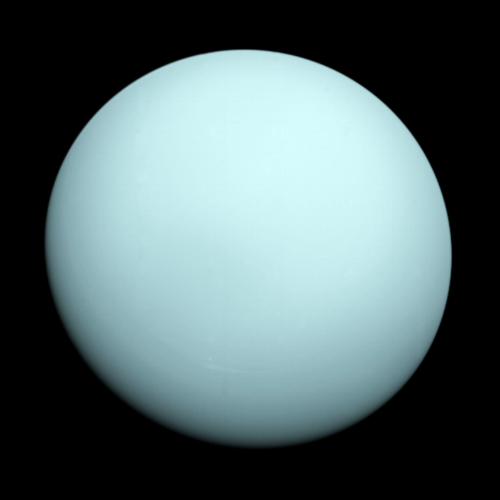
♅ Uranus
Type: Ice Giant
Diameter: 50,724 km
Gravity: 8.69 m/s²
Length of Day: 17.2 Hours
Length of Year: 84 Earth Years
Average Temperature: -224°C
Atmosphere: Hydrogen, Helium & Methane
Moons: 28
Fun Fact: Uranus rotates almost completely on its side.
♅ Uranus
Diameter
50,724 km
Gravity
8.69 m/s²
Mass
8.68 × 10²⁵ kg
Density
1.27 g/cm³
Distance from Sun
2.87 Billion km
Orbital Speed
6.80 km/s
Escape Velocity
21.3 km/s
Atmosphere
Hydrogen, Helium & Methane
Average Temperature
-224°C
Magnetic Field
Highly Tilted Magnetic Field
Known Moons
28
Ring System
13 Known Rings
Rotation Period
17h 14m
Orbital Period
84 Earth Years
Axis Tilt
97.8°
Interesting Fact
Uranus rotates on its side, unlike any other major planet.
Major Missions
- Voyager 2
- Future Uranus Orbiter (Proposed)
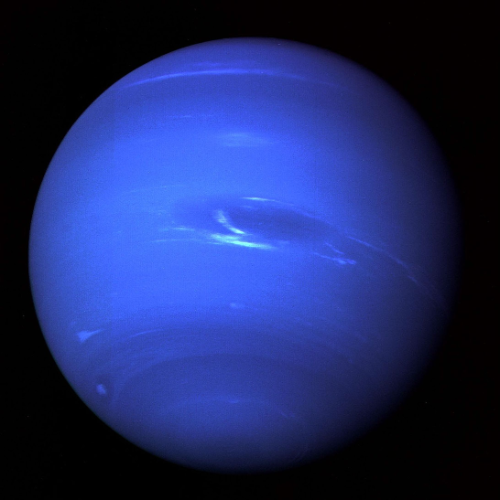
♆ Neptune
Type: Ice Giant
Diameter: 49,244 km
Gravity: 11.15 m/s²
Length of Day: 16.1 Hours
Length of Year: 164.8 Earth Years
Average Temperature: -214°C
Atmosphere: Hydrogen, Helium & Methane
Moons: 16
Fun Fact: Neptune has the fastest winds in the Solar System, exceeding 2,000 km/h.
♆ Neptune
Diameter
49,244 km
Gravity
11.15 m/s²
Mass
1.02 × 10²⁶ kg
Density
1.64 g/cm³
Distance from Sun
4.50 Billion km
Orbital Speed
5.43 km/s
Escape Velocity
23.5 km/s
Atmosphere
Hydrogen, Helium & Methane
Average Temperature
-214°C
Magnetic Field
Strong & Highly Tilted
Known Moons
16
Ring System
5 Faint Rings
Rotation Period
16h 6m
Orbital Period
164.8 Earth Years
Largest Moon
Triton
Interesting Fact
Neptune has the fastest winds in the Solar System, reaching over 2,000 km/h.
Major Missions
- Voyager 2
- Future Neptune Odyssey (Concept)
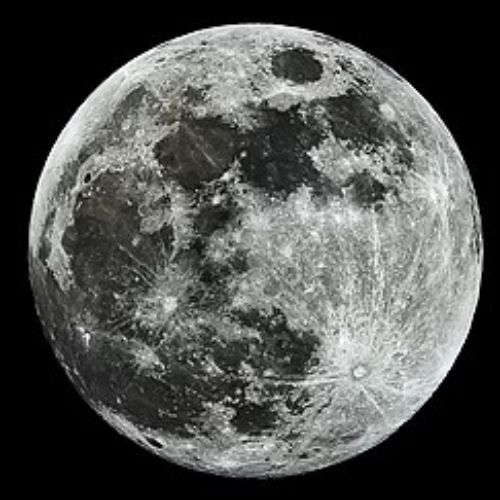
🌙 Moon
Type: Natural Satellite
Diameter: 3,474.8 km
Surface Gravity: 1.62 m/s²
Rotation Period: 27.3 Earth Days
Orbital Period: 27.3 Earth Days
Average Temperature: -20°C
Atmosphere: Extremely Thin Exosphere
Parent Planet: Earth
Fun Fact: The Moon is slowly moving away from Earth by about 3.8 cm every year.
🌙 Moon
Type
Natural Satellite
Diameter
3,474.8 km
Mass
7.35 × 10²² kg
Density
3.34 g/cm³
Distance from Earth
384,400 km
Orbital Speed
1.022 km/s
Escape Velocity
2.38 km/s
Gravity
1.62 m/s²
Surface Temperature
-173°C to 127°C
Atmosphere
Extremely Thin Exosphere
Age
≈4.51 Billion Years
Interesting Fact
The Moon is tidally locked with Earth, so the same side always faces our planet.
Major Space Missions
- Apollo Program
- Luna Program
- Clementine
- Lunar Reconnaissance Orbiter (LRO)
- Chang'e Program
- Chandrayaan-1
- Chandrayaan-2
- Chandrayaan-3
- Artemis Program
- SMART-1
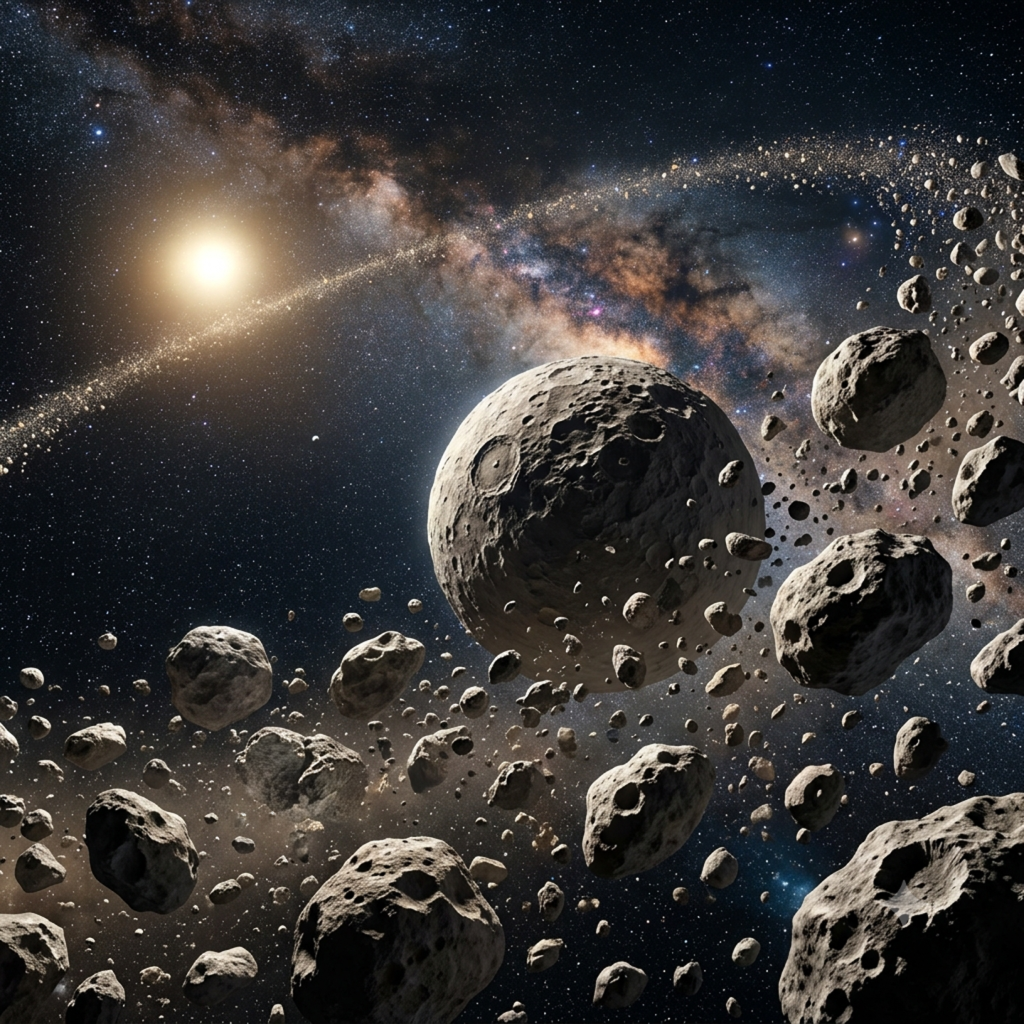
☄️ Asteroid Belt
Type: Region of Rocky Bodies
Location: Between Mars & Jupiter
Average Distance from Sun: 2.2–3.2 AU
Estimated Objects: Millions
Largest Object: Ceres
Age: About 4.56 Billion Years
Total Mass: ≈3% of the Moon's Mass
Major Composition: Rock, Metal & Carbon-rich Bodies
Fun Fact: Even though it contains millions of asteroids, the Asteroid Belt is mostly empty space.
☄️ Asteroid Belt
Type
Asteroid Region
Location
Between Mars & Jupiter
Distance from Sun
2.2–3.2 AU
Estimated Objects
Millions
Largest Body
Ceres (Dwarf Planet)
Second Largest
Vesta
Total Mass
≈3 × 10²¹ kg
Age
≈4.56 Billion Years
Main Composition
Rock, Metal & Carbon-rich Asteroids
Orbital Speed
≈17–25 km/s
Formation
Leftover Material from the Early Solar System
Interesting Fact
If all asteroids were combined into one object, it would still be much smaller than Earth's Moon.
Major Space Missions
- Dawn (Ceres & Vesta)
- Lucy
- Psyche
- Galileo
- NEAR Shoemaker
- Hayabusa
- Hayabusa2
- OSIRIS-REx
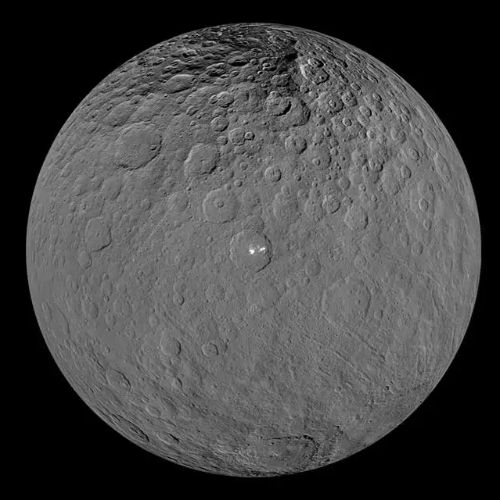
🪐 Ceres
Type: Dwarf Planet
Diameter: 939.4 km
Surface Gravity: 0.27 m/s²
Length of Day: 9.07 Hours
Length of Year: 4.61 Earth Years
Average Temperature: -105°C
Location: Asteroid Belt
Moons: 0
Fun Fact: Ceres is the largest object in the Asteroid Belt and contains more water than all of Earth's fresh water combined.
🪐 Ceres
Type
Dwarf Planet
Diameter
939.4 km
Mass
9.39 × 10²⁰ kg
Density
2.16 g/cm³
Distance from Sun
413.7 Million km (2.77 AU)
Orbital Speed
17.9 km/s
Escape Velocity
0.51 km/s
Surface Gravity
0.27 m/s²
Surface Temperature
≈ -105°C
Rotation Period
9.07 Hours
Composition
Rock, Water Ice, Hydrated Minerals & Salts
Interesting Fact
Ceres is believed to contain vast amounts of water ice beneath its surface and may once have had a subsurface ocean.
Major Space Missions
- Dawn (NASA)
- Hubble Space Telescope Observations
- Ground-based Observatory Studies
- Future Proposed Sample Return Missions
Solar System Overview
The Solar System is the collection of celestial bodies gravitationally bound to the Sun. It extends from the Sun through the inner rocky planets, the asteroid belt, the outer giant planets, the Kuiper Belt, and finally toward the distant Oort Cloud. Together these objects represent one of the best studied planetary systems in modern astronomy.
Formation
Scientists believe the Solar System formed approximately 4.57 billion years ago when a massive cloud of gas and dust collapsed under gravity. As the cloud rotated, most of the material accumulated in the center to form the Sun, while the remaining material gradually combined to create planets, moons, asteroids, and comets.
Planet Classification
- Mercury — Rocky Planet
- Venus — Rocky Planet
- Earth — Rocky Planet
- Mars — Rocky Planet
- Jupiter — Gas Giant
- Saturn — Gas Giant
- Uranus — Ice Giant
- Neptune — Ice Giant
Scientific Exploration
NASA, ESA, JAXA, ISRO, CNSA, and many other space agencies continuously explore the Solar System using robotic spacecraft and telescopes. Their discoveries help scientists better understand planetary formation, climate evolution, magnetic fields, and the possibility of life beyond Earth.
Sources
- NASA Solar System Exploration
- ESA
- Jet Propulsion Laboratory
- International Astronomical Union