Between Mars & Jupiter

Asteroid Belt

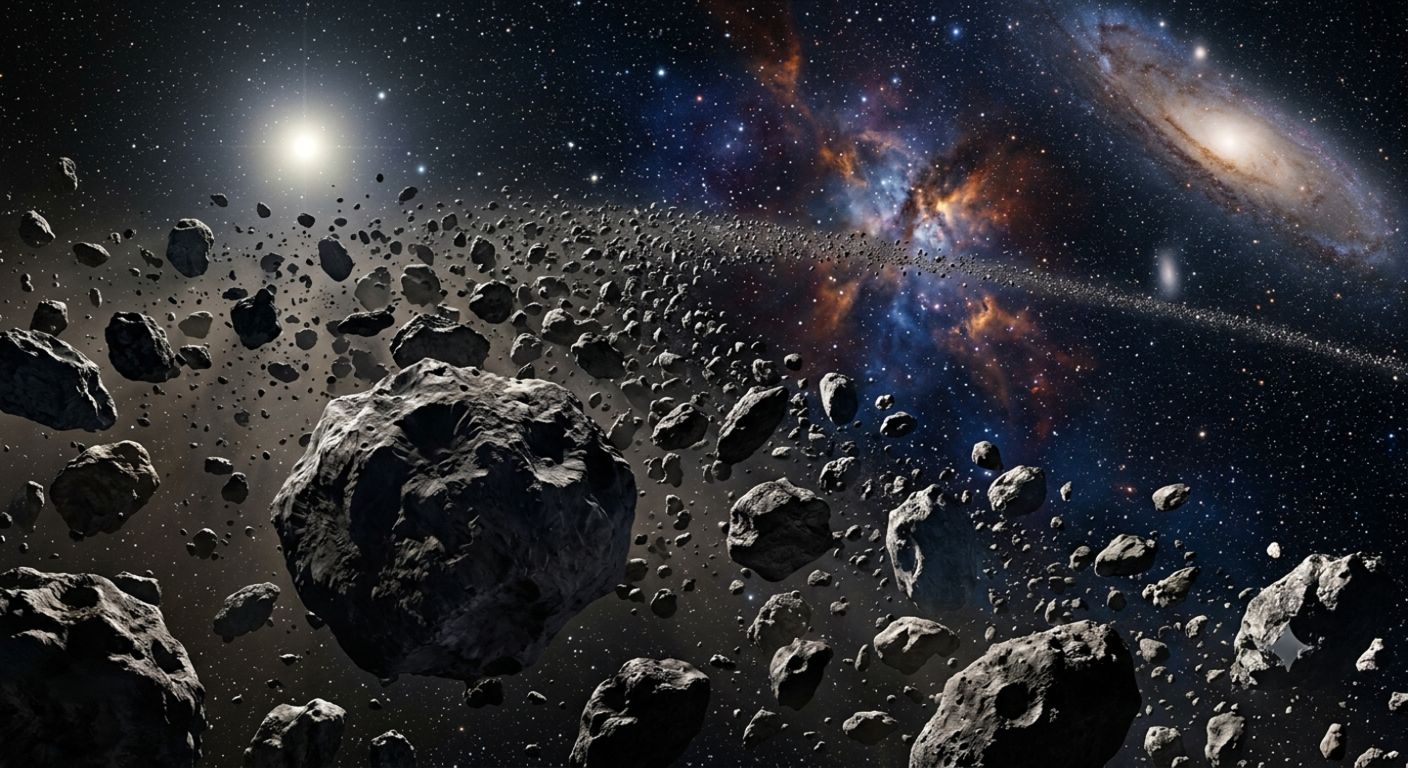
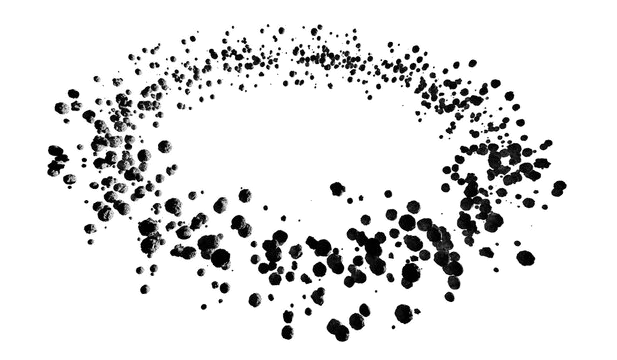
The Asteroid Belt is a vast region of millions of rocky and metallic objects orbiting the Sun between Mars and Jupiter. It contains ancient leftovers from the birth of the Solar System, preserving clues about how planets formed more than 4.5 billion years ago.
Asteroid Belt

Location

Mars–Jupiter

The Asteroid Belt lies between the orbits of Mars and Jupiter.

Largest Object

Ceres

A dwarf planet nearly 940 km across.

Known Asteroids

1.3M+

Over 1.3 million asteroids have been discovered.

Age

4.56 BY

Remnants from the formation of the Solar System.

Total Mass

3×10²¹ kg

Only about 3% of the Moon's mass.

Average Distance

2.2–3.2 AU

Measured from the Sun.

What is the Asteroid Belt?

Contrary to popular movies, the Asteroid Belt is not crowded with closely packed rocks. The average distance between large asteroids is hundreds of thousands of kilometers. Most spacecraft can safely pass through the belt without coming close to an asteroid.

Formation

  • Created 4.56 Billion Years Ago
  • Planetary Building Blocks
  • Never Formed a Planet
  • Jupiter's Gravity Prevented It

Composition

  • Rocky Asteroids
  • Metal-rich Asteroids
  • Carbon-rich Asteroids
  • Water-bearing Objects

Importance

  • History of Solar System
  • Planet Formation Clues
  • Future Space Mining
  • Scientific Exploration

Formation of the Asteroid Belt

The Asteroid Belt formed approximately 4.56 billion years ago from leftover material that never became part of a planet. During the formation of the Solar System, dust and rock surrounded the young Sun. Most of this material combined to create the planets, but between Mars and Jupiter, the immense gravity of Jupiter continuously disturbed the growing objects, preventing them from merging into a single large planet.

Age

  • ≈ 4.56 Billion Years
  • Oldest Solar System Material
  • Formed with the Planets
  • Ancient Planetary Debris

Origin

  • Dust & Rock
  • Solar Nebula
  • Planetesimals
  • Failed Planet Formation

Why It Exists

  • Jupiter's Gravity
  • Frequent Collisions
  • Orbital Resonances
  • Objects Never United

Types of Asteroids

Scientists classify asteroids according to their composition. The three primary classes are carbon-rich, rocky, and metallic asteroids.

C-Type Asteroids

Carbon-rich asteroids make up approximately 75% of all known asteroids. They are dark, primitive, and preserve material from the early Solar System.

S-Type Asteroids

Silicate or rocky asteroids account for about 17% of the population. They contain rock mixed with nickel and iron.

M-Type Asteroids

Metal-rich asteroids are composed mainly of nickel and iron. They are believed to be fragments of the cores of ancient protoplanets.

Largest Objects in the Asteroid Belt

Although millions of asteroids exist, four bodies dominate the Asteroid Belt by size and mass.

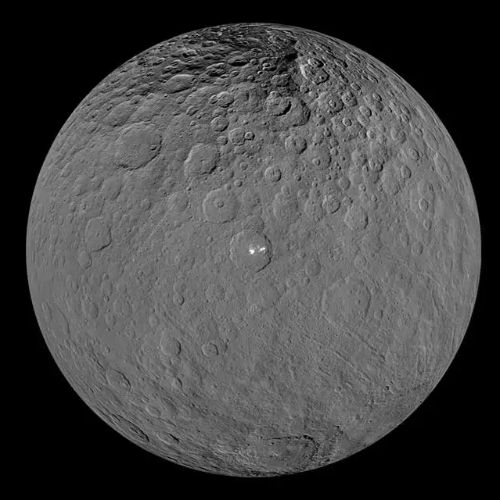
Ceres

939 km

The largest object in the belt and officially classified as a dwarf planet.

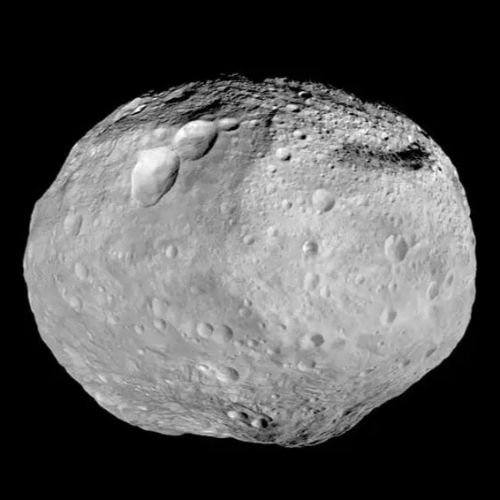
Vesta

525 km

One of the brightest asteroids visible from Earth and visited by NASA's Dawn spacecraft.

Pallas

512 km

The third-largest asteroid with a highly tilted orbit.

Hygiea

434 km

The fourth-largest asteroid and a possible dwarf planet candidate.

Why Isn't There a Planet Here?

One of astronomy's most common questions is why the Asteroid Belt never became a planet. The answer lies in Jupiter's enormous gravity.

Jupiter's Gravity

Jupiter repeatedly disturbed asteroid orbits, preventing them from combining into a larger world.

High-Speed Collisions

Instead of merging together, many objects collided at high speeds and shattered into smaller pieces.

Orbital Resonances

Special gravitational resonances with Jupiter created gaps known as Kirkwood Gaps, removing many asteroids from stable orbits.

Jupiter's Gravitational Influence

As the largest planet in the Solar System, Jupiter acts as both a protector and a disruptor. Its gravity shapes the structure of the Asteroid Belt and influences the paths of countless small bodies.

Creates Kirkwood Gaps

Regions where few asteroids remain because of orbital resonances.

Changes Orbits

Asteroids can slowly drift into new orbits due to Jupiter's gravity.

Near-Earth Asteroids

Some asteroids are eventually pushed toward the inner Solar System.

Planetary Shield

Jupiter also helps deflect many comets and asteroids away from the inner planets.

Amazing Asteroid Belt Facts

☄ Mostly Empty

Despite popular movies, spacecraft usually pass through the Asteroid Belt without encountering any nearby asteroids.

🪨 Tiny Mass

The combined mass of every asteroid is only about 3% of Earth's Moon.

🌍 Building Blocks

Many asteroids are unchanged remnants from the earliest days of the Solar System.

Exploring the Asteroid Belt

Although the Asteroid Belt is difficult to explore because of its enormous size, several robotic spacecraft have visited its largest objects and continue to reveal how our Solar System formed.

Dawn

2007–2018

The first spacecraft to orbit two different extraterrestrial worlds—Vesta and Ceres.

Lucy

2021–Present

Exploring ancient asteroids to understand the Solar System's earliest history.

Psyche

2023–Present

Traveling to the metallic asteroid 16 Psyche, believed to be the exposed core of a protoplanet.

Major Asteroid Missions

Dawn (NASA)

  • Launch: 2007
  • Visited Vesta
  • Orbited Ceres
  • Studied Planet Formation

Lucy (NASA)

  • Launch: 2021
  • Multiple Asteroid Flybys
  • Ancient Solar System Objects
  • 12-Year Mission

Psyche (NASA)

  • Launch: 2023
  • Destination: 16 Psyche
  • Metal-rich Asteroid
  • Arrives in 2029

Hayabusa & Hayabusa2

  • JAXA Missions
  • Collected Samples
  • Returned Material to Earth
  • Advanced Asteroid Science

Future Asteroid Mining

Many asteroids contain enormous quantities of valuable metals and water. Future missions may use these resources to support deep-space exploration and build space infrastructure.

Metals

  • Iron
  • Nickel
  • Cobalt
  • Platinum Group Metals

Water

  • Drinking Water
  • Oxygen Production
  • Rocket Fuel
  • Space Habitats

Benefits

  • Lower Mission Costs
  • Deep Space Exploration
  • Moon & Mars Support
  • Space Industry

Asteroid Families

Many asteroids belong to families created when larger parent bodies shattered during ancient collisions. Members of a family share similar orbits and compositions.

Vesta Family

Fragments blasted from Vesta after a massive impact.

Flora Family

One of the largest asteroid families in the inner belt.

Eos Family

A large family located in the outer Asteroid Belt.

Koronis Family

Known for their similar orbital paths and rotation rates.

Asteroids and Earth

Some asteroids are gradually nudged out of the Asteroid Belt and become Near-Earth Objects (NEOs). While most pose no danger, scientists continuously monitor their orbits to protect Earth from potential impacts.

Near-Earth Asteroids

Thousands of asteroids regularly pass close to Earth's orbit.

Planetary Defense

NASA and ESA actively track potentially hazardous asteroids.

DART Mission

NASA successfully changed the orbit of an asteroid in 2022, demonstrating planetary defense technology.

Asteroid Exploration Timeline

1801

Ceres discovered by Giuseppe Piazzi.

1802

Pallas discovered.

1804

Juno discovered.

1807

Vesta discovered.

2011

Dawn entered orbit around Vesta.

2015

Dawn reached Ceres.

2021

Lucy mission launched.

2023

Psyche mission launched.

The Giants of the Asteroid Belt

Although the Asteroid Belt contains millions of objects, four bodies dominate its total mass and scientific importance.

🌍 Ceres

Diameter: 939 km

The largest object in the Asteroid Belt and the only officially recognized dwarf planet in this region. Ceres contains water ice, mysterious bright salt deposits, and may have once possessed a subsurface ocean.

🪨 Vesta

Diameter: 525 km

One of the brightest asteroids visible from Earth. Vesta has a differentiated interior with a crust, mantle, and metallic core, making it resemble a miniature planet.

☄ Pallas

Diameter: 512 km

Pallas follows one of the most tilted orbits of any large asteroid. It is believed to contain hydrated minerals and primitive material from the early Solar System.

🌑 Hygiea

Diameter: 434 km

The fourth-largest asteroid and a strong dwarf planet candidate. Hygiea appears remarkably round despite ancient giant impacts.

Amazing Asteroid Belt Facts

☄ Mostly Empty

Hollywood often shows crowded asteroid fields, but spacecraft can usually cross the belt without encountering a nearby asteroid.

🌍 Ancient Time Capsule

Many asteroids have remained almost unchanged since the Solar System formed over 4.5 billion years ago.

💎 Valuable Resources

Some metallic asteroids contain enormous quantities of nickel, iron, platinum, and rare elements.

🚀 Future Fuel Stations

Water-rich asteroids could one day provide drinking water, oxygen, and rocket fuel for deep-space missions.

🛰 Scientific Treasure

Studying asteroids helps scientists understand how planets, including Earth, were formed.

🌌 Millions of Worlds

More than 1.3 million asteroids have been discovered, with countless smaller bodies still awaiting discovery.

Asteroid Belt Gallery

Representative views of the Asteroid Belt and its largest worlds.

Ceres

The largest object in the Asteroid Belt.

Vesta

Visited and mapped by NASA's Dawn spacecraft.

Asteroid Field

An artistic view showing rocky bodies orbiting the Sun.

Frequently Asked Questions

Could the Asteroid Belt become a planet?

No. Jupiter's powerful gravity prevents most asteroids from combining into a single planet.

Can spacecraft safely fly through it?

Yes. The Asteroid Belt is mostly empty space, and spacecraft routinely pass through it safely.

What is the largest asteroid?

Ceres is the largest object and is classified as a dwarf planet.

Why are scientists interested in asteroids?

Asteroids preserve material from the birth of the Solar System and may contain valuable resources for future exploration.

Could an asteroid hit Earth?

Some Near-Earth Asteroids cross Earth's orbit, but they are carefully tracked by space agencies around the world.

Will humans mine asteroids?

Future missions may extract water and metals from asteroids to support long-term exploration beyond Earth.

Scientific References

Continue Exploring

← Back to Solar System Next Destination → Ceres