The Moon is Earth's only natural satellite and the fifth-largest moon in the Solar System. It formed about 4.5 billion years ago and has shaped Earth's tides, climate stability, and even the evolution of life. The Moon is the only celestial body beyond Earth that humans have visited.
The Moon is about one-quarter the diameter of Earth.
Distance
384,400 km
Average distance from Earth.
Gravity
1.62 m/s²
Only about one-sixth of Earth's gravity.
Orbital Period
27.3 Days
The Moon completes one orbit around Earth every 27.3 days.
Age
4.51 Billion Years
Formed shortly after the birth of Earth.
Surface Temperature
-173° to 127°C
Temperatures vary dramatically between lunar night and day.
The Earth–Moon System
Earth and the Moon form one of the most remarkable planetary systems in the Solar System. Their gravitational interaction creates ocean tides, stabilizes Earth's axial tilt, and gradually slows Earth's rotation while causing the Moon to drift farther away over time.
Relationship
Parent Planet — Earth
Natural Satellite — Yes
Average Distance — 384,400 km
Tidally Locked — Yes
Moving Away — 3.8 cm/year
Gravity Influence — Ocean Tides
Orbit Shape — Slightly Elliptical
Why It Matters
Stabilizes Earth's Rotation
Produces Ocean Tides
Slows Earth's Spin
Influences Climate Stability
Creates Solar & Lunar Eclipses
Supports Scientific Research
Future Human Exploration
Quick Facts
Fifth Largest Moon
Largest Relative to Parent Planet
No Global Atmosphere
No Liquid Water on Surface
Water Ice at Poles
One Side Always Faces Earth
First Human Landing: 1969
Formation of the Moon
The leading scientific explanation for the Moon's origin is the Giant Impact Theory. Around 4.5 billion years ago, a Mars-sized protoplanet named Theia collided with the young Earth. The enormous impact blasted huge amounts of molten rock into space. Over millions of years, this material gathered together under gravity and formed the Moon.
Formation
Created from debris after a collision between Earth and Theia.
Age
Approximately 4.51 billion years.
Importance
The impact helped stabilize Earth's rotation and axial tilt.
Lunar Phases
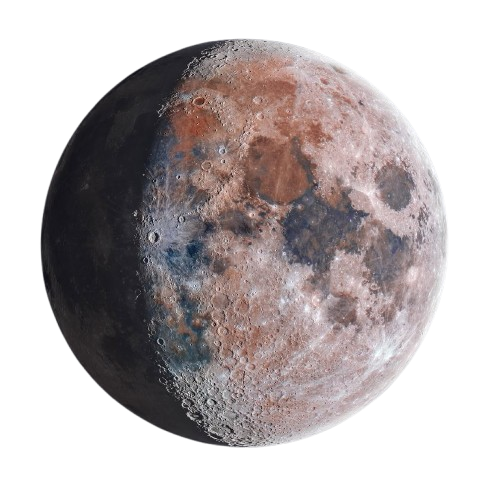
The Moon does not produce its own light. Instead, it reflects sunlight. As the Moon orbits Earth, different portions of its sunlit side become visible, creating the familiar lunar phases.
🌑 New Moon
The Moon lies between Earth and the Sun, making its illuminated side invisible from Earth.
🌓 First Quarter
Half of the Moon's visible surface is illuminated.
🌕 Full Moon
Earth is positioned between the Sun and Moon, revealing the fully illuminated face.
🌗 Last Quarter
The opposite half of the Moon remains illuminated before returning to a New Moon.
Lunar Eclipses
A lunar eclipse occurs when Earth passes directly between the Sun and the Moon, casting Earth's shadow onto the lunar surface. During a total lunar eclipse, the Moon often appears reddish because Earth's atmosphere bends red sunlight into the shadow.
Total Eclipse
The Moon is completely inside Earth's darkest shadow (umbra).
Partial Eclipse
Only part of the Moon passes through Earth's shadow.
Blood Moon
The reddish color is caused by sunlight filtered through Earth's atmosphere.
The Lunar Surface
The Moon's surface has been shaped by billions of years of meteorite impacts and ancient volcanic activity. Fine dust known as regolith covers nearly the entire surface.
Surface Material
Regolith Dust
Basalt Rocks
Anorthosite Highlands
Impact Ejecta
Major Features
Impact Craters
Lava Plains (Maria)
Mountains
Rilles & Valleys
No Weather
No Wind
No Rain
No Rivers
No Plate Tectonics
Lunar Maria (Seas)
The dark regions visible on the Moon are called Maria, Latin for "seas." Early astronomers believed these smooth plains contained water, but they are actually vast fields of ancient volcanic basalt formed billions of years ago.
Mare Tranquillitatis
The Sea of Tranquility, where Apollo 11 landed in 1969.
Mare Imbrium
One of the largest lava-filled impact basins.
Mare Serenitatis
A large volcanic plain created after a massive impact.
Famous Lunar Craters
Without a thick atmosphere to burn up incoming meteoroids, the Moon has accumulated millions of impact craters over billions of years.
Tycho
A young crater famous for its bright rays stretching across the Moon.
Copernicus
One of the most spectacular impact craters visible from Earth.
Clavius
A giant crater over 225 km wide, easily visible through telescopes.
Water Ice at the Lunar Poles
Recent spacecraft have confirmed that permanently shadowed craters near the Moon's north and south poles contain water ice. These frozen reserves may provide drinking water, oxygen, and rocket fuel for future human missions.
Discovery
Confirmed by multiple lunar missions using orbital instruments.
Location
Deep craters near the lunar north and south poles.
Future Importance
Essential for long-term Moon bases and future exploration of Mars.
Apollo Program
NASA's Apollo Program was humanity's first successful effort to land astronauts on another world. Between 1969 and 1972, six Apollo missions successfully landed twelve astronauts on the Moon, forever changing our understanding of space exploration and science.
Program Duration
1961–1972
Successful Moon Landings
6 Crewed Missions
Astronauts on the Moon
12 Humans
Apollo 11
Apollo 11 became the first mission to land humans on the Moon. On July 20, 1969, Neil Armstrong and Buzz Aldrin landed in Mare Tranquillitatis (Sea of Tranquility) while Michael Collins remained in lunar orbit aboard the Command Module Columbia.
Commander
Neil Armstrong
Lunar Module Pilot
Buzz Aldrin
Command Module Pilot
Michael Collins
Historic Quote
"That's one small step for man, one giant leap for mankind."
Human Moon Landings
Apollo 11
1969
Sea of Tranquility
First Human Landing
Apollo 12
1969
Ocean of Storms
Precision Landing
Apollo 14
1971
Fra Mauro
Geological Studies
Apollo 15
1971
Hadley–Apennine
First Lunar Rover
Apollo 16
1972
Descartes Highlands
Highland Exploration
Apollo 17
1972
Taurus–Littrow
Last Human Moon Landing
NASA Artemis Program
The Artemis Program aims to return astronauts to the Moon, establish a sustainable human presence, and prepare for future missions to Mars. Unlike Apollo, Artemis focuses on long-term exploration using modern spacecraft, lunar habitats, and international partnerships.
Artemis I
Successful uncrewed test flight of the Orion spacecraft in 2022.
Artemis II
First crewed lunar flyby mission of the Artemis era.
Artemis III
Planned mission to land astronauts near the Moon's South Pole.
Major Robotic Lunar Missions
Soviet Luna Program
First spacecraft to impact, orbit, and soft-land on the Moon.
Chang'e Program
China's successful lunar orbiters, landers, rovers, and sample-return missions.
Chandrayaan
India's missions that confirmed water molecules and achieved a successful south-pole landing.
Lunar Reconnaissance Orbiter
NASA mission mapping the Moon in extraordinary detail since 2009.
Future Lunar Bases
Scientists and engineers plan to establish permanent research stations near the Moon's south pole. These bases could use local resources such as water ice to produce drinking water, oxygen, and rocket fuel while supporting future journeys to Mars.
Water Ice
Supports life support and fuel production.
Lunar Gateway
A planned space station orbiting the Moon.
Mars Preparation
The Moon will serve as a testing ground for deep-space exploration.
Lunar Exploration Timeline
1959
Luna 2 became the first spacecraft to reach the Moon.
1966
Luna 9 achieved the first successful soft landing.
1969
Apollo 11 landed the first humans on the Moon.
1972
Apollo 17 became the last crewed Moon landing.
2009
NASA launched the Lunar Reconnaissance Orbiter.
2023
India's Chandrayaan-3 successfully landed near the Moon's south pole.
Amazing Moon Facts
🌍 Tides
The Moon is the primary cause of Earth's ocean tides.
🌙 One Face
Because it is tidally locked, we always see the same side of the Moon.
👣 Footprints
Astronaut footprints could remain on the Moon for millions of years because there is no wind or rain.
🚀 Distance
The Moon is slowly moving away from Earth by about 3.8 centimeters every year.
❄ Ice
Water ice exists inside permanently shadowed polar craters.
🌕 Brightness
The Moon is the brightest object in Earth's night sky after the Sun.
Earth's Moon: Our Closest Neighbor in Space
The Moon has fascinated humanity for thousands of years. It has inspired myths, guided calendars, helped sailors navigate the oceans, and eventually became the first world beyond Earth visited by humans. Today it remains one of the most important objects in astronomy because it preserves a record of the early Solar System and serves as the next destination for human exploration.
Unlike Earth, the Moon has almost no atmosphere and no liquid water on its surface. Because of this, its craters remain preserved for billions of years, providing scientists with a unique record of impacts that shaped the early Solar System. Rocks collected during the Apollo missions revealed important clues about the Moon's origin and confirmed that it formed from material ejected after a giant collision between Earth and another young planet.
The Moon also plays a vital role in Earth's environment. Its gravitational pull creates ocean tides, stabilizes Earth's axis, and slows our planet's rotation. Without the Moon, Earth's climate would have been much less stable over geological time, potentially affecting the evolution of life.
In the coming decades, the Moon will become humanity's gateway to deep space. NASA's Artemis Program and international lunar missions aim to establish long-term research stations, explore water ice at the poles, and develop technologies needed for future human missions to Mars and beyond.
Moon Gallery
Representative imagery of Earth's Moon from NASA and other space agencies.
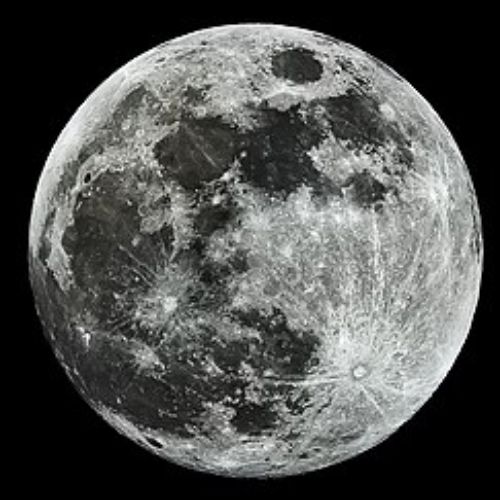
Full Moon
The fully illuminated face of the Moon viewed from Earth.
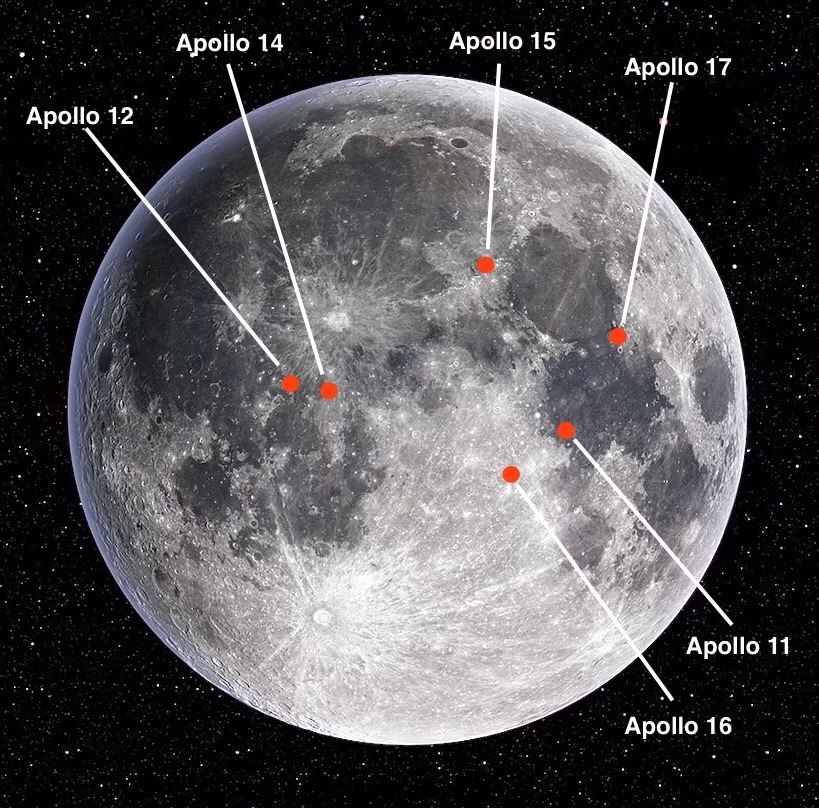
Apollo Landing Site
Historic region where Apollo astronauts explored the lunar surface.
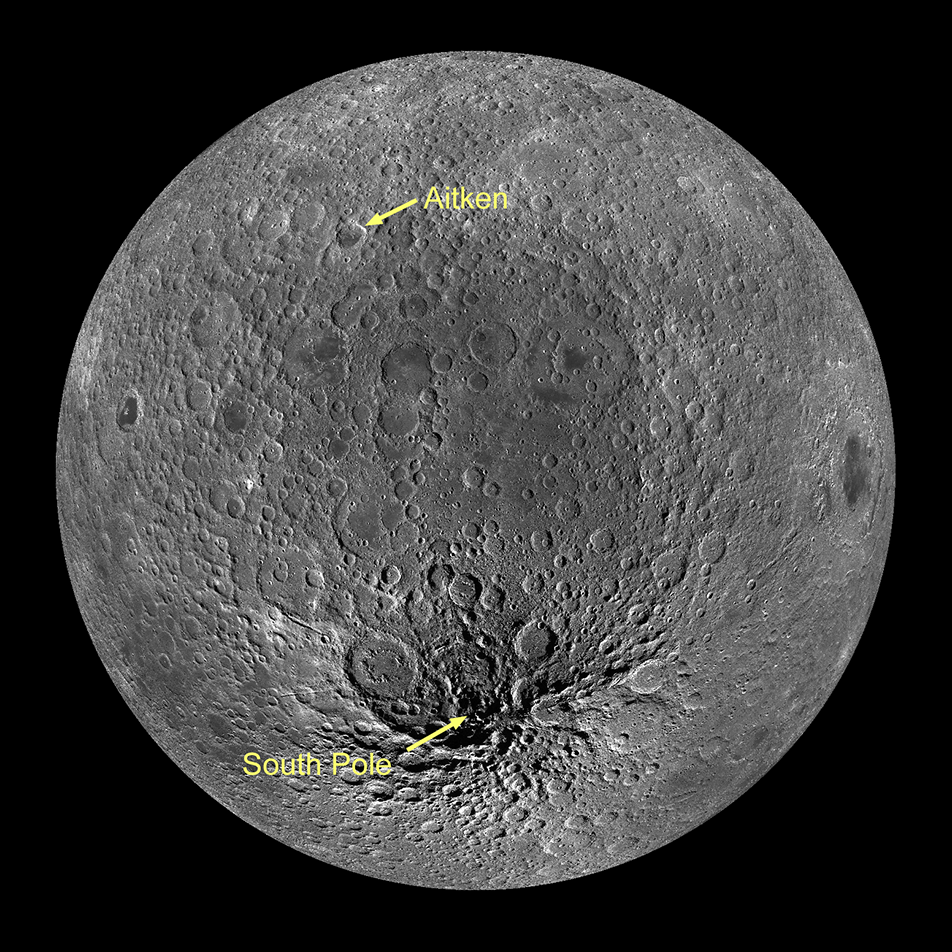
South Pole
A region containing permanently shadowed craters with water ice.
Frequently Asked Questions
How did the Moon form?
Most scientists agree the Moon formed after a giant collision between Earth and a Mars-sized object called Theia about 4.5 billion years ago.
Why do we always see the same side?
Because the Moon rotates once on its axis in exactly the same time it takes to orbit Earth, a phenomenon known as tidal locking.
Is there water on the Moon?
Yes. Water ice has been discovered inside permanently shadowed craters near both lunar poles.
How many people have walked on the Moon?
Twelve astronauts walked on the Moon during six Apollo missions between 1969 and 1972.
Can humans live on the Moon?
Not yet, but future lunar bases may become possible using local resources such as water ice for drinking water, oxygen, and rocket fuel.
Why is the Moon important?
The Moon stabilizes Earth's rotation, creates tides, preserves the history of the Solar System, and serves as the next major destination for human exploration.