

☄ Introduction to Asteroids
Asteroids are ancient rocky bodies that formed during the birth of the Solar System approximately 4.56 billion years ago. They are considered the surviving building blocks of the planets, preserving valuable information about the earliest stages of planetary formation. Unlike planets, most asteroids never became large enough for gravity to shape them into perfect spheres, leaving them with their unique irregular appearances.
🪨 Why Asteroids Matter
Every asteroid is like a natural time capsule from the dawn of the Solar System. By studying their rocks, minerals, metals, organic molecules, and ice, scientists can better understand how planets formed, how water reached Earth, and how life-friendly environments developed. Some asteroids also contain valuable metals that could support future space exploration and off-world industries.
📊 Asteroid Quick Facts
A quick overview of some of the most important facts about asteroids.
🪨 Object Type
Small rocky or metallic bodies orbiting the Sun that formed during the early Solar System.
🌞 Origin
Most formed around 4.56 billion years ago from leftover material after the Sun and planets formed.
☄ Main Location
Most asteroids orbit within the Main Asteroid Belt between Mars and Jupiter.
🌍 Largest Asteroid
Ceres is the largest object in the Main Belt and is also classified as a dwarf planet.
🔭 Discovered Objects
More than 1.3 million asteroids have been identified, with new discoveries made every year.
🚀 Scientific Importance
Asteroids provide clues about planetary formation, the origin of water on Earth, and the evolution of our Solar System.
⚙ Composition
Commonly composed of rock, nickel-iron metal, carbon-rich material, silicates, and occasionally water ice.
💥 Impact Hazard
A small percentage of asteroids cross Earth's orbit, making planetary defense an important area of research.
🛰 Space Missions
Visited by missions such as Dawn, OSIRIS-REx, Hayabusa, Hayabusa2, Lucy, and DART.
🪨 What Are Asteroids?
Asteroids are small rocky, metallic, or carbon-rich bodies that orbit the Sun. They formed from the leftover material that remained after the planets began forming approximately 4.56 billion years ago. Because they have changed very little since then, scientists consider them to be some of the oldest and most valuable objects for studying the history of our Solar System.
🌍 Ancient Worlds
Asteroids are remnants from the Solar System's formation. They are often called planetary building blocks because they are made from the same material that formed the planets.
🪨 Irregular Shapes
Unlike planets, most asteroids are too small for gravity to pull them into perfect spheres. Many resemble giant rocks, potatoes, peanuts, or rubble piles.
☀ Solar Orbits
Every asteroid travels around the Sun. Most remain inside the Main Asteroid Belt, while others follow orbits that cross the paths of planets.
⚖ Low Gravity
Most asteroids have extremely weak gravity. A person standing on a small asteroid could easily jump into space if they pushed off too hard.
🛰 Scientific Treasure
Their untouched rocks preserve information about the early Solar System, making asteroids excellent targets for robotic exploration and sample-return missions.
💎 Valuable Resources
Some asteroids contain iron, nickel, platinum-group metals, water ice, and other resources that could support future human exploration of space.
⚖ Asteroid vs Meteoroid vs Meteor vs Meteorite vs Comet
Although these objects are related, they are not the same. The table below highlights the major differences.
| Object | What It Is | Typical Size | Main Composition | Where It Exists |
|---|---|---|---|---|
| 🪨 Asteroid | Rocky or metallic body orbiting the Sun. | 1 meter to nearly 1,000 km | Rock, metal, carbon | Solar orbit |
| 🪵 Meteoroid | Small fragment broken from an asteroid or comet. | Dust to several meters | Rock or metal | Space |
| 🔥 Meteor | The bright streak produced when a meteoroid enters Earth's atmosphere. | Visible light phenomenon | Ionized gas | Atmosphere |
| 🌍 Meteorite | A meteoroid that survives atmospheric entry and reaches the ground. | Pebbles to large rocks | Rock or iron | Earth's surface |
| ☄ Comet | Icy object that develops a glowing coma and tail near the Sun. | Hundreds of meters to tens of kilometers | Ice, dust, rock | Outer Solar System & Sun orbit |
🌌 Formation of Asteroids
Asteroids are among the oldest surviving objects in the Solar System. They formed about 4.56 billion years ago from the same cloud of gas and dust that created the Sun and planets. While many planetesimals merged to form planets, countless smaller objects remained behind and became today's asteroids.
☀ From Dust to Space Rocks
The Solar System began as a giant rotating cloud called the solar nebula. As gravity pulled this cloud inward, most of the material collected at the center to form the Sun. The remaining gas and dust flattened into a spinning disk. Tiny grains collided and stuck together through electrostatic forces, gradually forming pebbles, boulders, and larger bodies called planetesimals. Over millions of years, many planetesimals merged into planets. However, in the region between Mars and Jupiter, the immense gravity of Jupiter constantly disturbed these growing bodies, preventing them from combining into another planet. Instead, millions of fragments remained as the Main Asteroid Belt.
🕒 Asteroid Formation Timeline
Major events that led to the creation of today's asteroid population.
🌌 4.6 Billion Years Ago
A massive cloud of gas and dust collapsed under gravity, forming the Solar Nebula.
☀ Birth of the Sun
Most of the nebula's material accumulated at the center, igniting nuclear fusion and creating the young Sun.
🪨 Dust Became Planetesimals
Dust grains collided repeatedly, producing pebbles, rocks, boulders, and eventually planetesimals measuring several kilometers across.
🌍 Planet Formation
Large planetesimals merged through gravity to create Mercury, Venus, Earth, Mars, and the giant planets.
☄ Asteroid Belt Survives
Jupiter's strong gravitational influence prevented many bodies between Mars and Jupiter from merging, leaving behind today's asteroid belt.
🚀 Modern Exploration
Today, spacecraft continue studying asteroids to understand the origins of planets and the history of our Solar System.
🧪 Composition & Minerals
Asteroids are not all made from the same materials. Their composition depends on where they formed in the early Solar System and how much they have changed over billions of years. By studying asteroid composition, scientists gain valuable insights into planetary formation, the distribution of water, and the chemical ingredients present during the birth of the Solar System.
🔬 What Are Asteroids Made Of?
Most asteroids are mixtures of rocky minerals, metallic elements, and carbon-rich compounds. Some also contain water ice trapped beneath their surfaces. These materials have remained largely unchanged for billions of years, making asteroids some of the best-preserved records of the early Solar System.
🪨 Silicate Rock
Silicate minerals such as olivine and pyroxene make up many stony asteroids. These are similar to rocks commonly found on Earth and other terrestrial planets.
⚙ Iron & Nickel
Metallic asteroids contain large amounts of iron and nickel. Some may represent the exposed cores of ancient protoplanets destroyed during massive collisions.
🌑 Carbon Compounds
Carbonaceous asteroids contain carbon-rich minerals, complex organic molecules, and hydrated minerals. They are among the oldest and most primitive objects in the Solar System.
💧 Water Ice
Some asteroids, particularly those farther from the Sun, contain frozen water beneath their surfaces. These objects may have helped deliver water to the early Earth.
💎 Precious Metals
Certain metallic asteroids contain platinum-group metals, gold, cobalt, iridium, and other valuable resources that could support future space industries.
🧬 Organic Molecules
Several asteroids contain amino-acid precursors and complex organic compounds that may have contributed to the ingredients necessary for life on Earth.
📚 Major Composition Types
Scientists classify asteroids into several major groups based on their reflectivity, mineral composition, and spectral properties.
🌑 C-Type (Carbonaceous)
• About 75% of known asteroids
• Dark surfaces rich in carbon
• Often contain water-bearing minerals
• Represent some of the oldest Solar System material
🪨 S-Type (Silicaceous)
• About 17% of known asteroids
• Rich in silicate rocks
• Contain nickel and iron
• Common within the inner Main Asteroid Belt
⚙ M-Type (Metallic)
• Mostly iron and nickel
• Very dense objects
• May be remnants of planetary cores
• Important targets for future mining
🪨 Internal Structure of Asteroids
Not all asteroids are solid rocks. Spacecraft observations have shown that asteroids have a surprising variety of internal structures. Some are single solid bodies, while others are loose collections of countless rocks held together only by their weak gravity.
🪨 Monolithic Asteroids
These asteroids are mostly solid rock or metal. They formed as single bodies and have survived billions of years without being completely shattered by collisions.
🧱 Rubble-Pile Asteroids
Many asteroids are actually piles of broken rocks created after ancient collisions. Gravity slowly pulled the fragments back together into a loosely connected object with many empty spaces.
🕳 Internal Voids
Some rubble-pile asteroids contain large cavities between their rocks, making them surprisingly porous and much less dense than solid objects of the same size.
💥 Constant Collisions
Billions of years of impacts have cracked, fractured, and reshaped asteroids into the irregular objects observed today.
🌍 Weak Gravity
The gravity of most asteroids is extremely weak. Even large boulders can slowly move across the surface after small impacts or rapid rotation.
🚀 Spacecraft Discoveries
Missions such as Hayabusa2, OSIRIS-REx, and Dawn revealed that many asteroids are much less solid than scientists originally expected.
🌍 Why Didn't Asteroids Become a Planet?
One of astronomy's most interesting questions is why the asteroid belt never formed another planet. The answer lies mainly in the enormous gravitational influence of Jupiter.
🪐 Jupiter Changed Everything
As Jupiter rapidly grew into the Solar System's largest planet, its immense gravity repeatedly disturbed the orbits of nearby planetesimals. Instead of gently colliding and merging, many objects began crashing into one another at extremely high speeds. These violent impacts shattered growing worlds into countless smaller fragments. Over billions of years, this continuous cycle of collisions prevented the material between Mars and Jupiter from forming a ninth terrestrial planet. Today, those surviving fragments remain as the Main Asteroid Belt.
🪐 Jupiter's Gravity
Powerful gravitational disturbances repeatedly altered asteroid orbits, preventing stable planetary growth.
💥 High-Speed Collisions
Instead of merging together, many planetesimals smashed apart, creating millions of smaller rocky fragments.
⚖ Limited Mass
The asteroid belt simply contains too little total material to form another large planet today.
🔄 Orbital Resonances
Jupiter created gravitational resonances that continually removed or scattered many growing objects from the asteroid belt.
☄ Billions of Years
After more than 4.5 billion years, the asteroid belt has become a stable collection of ancient leftover building blocks.
🔬 Scientific Value
Because they never formed into a planet, asteroids preserve some of the oldest material in the Solar System.
⭐ Key Takeaways
- ☄ Asteroids formed about 4.56 billion years ago.
- 🪨 They are surviving building blocks from the birth of the Solar System.
- 🧱 Many asteroids are loose rubble-pile structures rather than solid rocks.
- 🪐 Jupiter's gravity prevented another planet from forming between Mars and Jupiter.
- 🛰 Modern spacecraft continue revealing new information about asteroid composition and evolution.
- 🌍 Studying asteroids helps scientists understand planetary formation and Earth's early history.
🌟 Amazing Asteroid Facts
Asteroids may appear to be simple rocky objects, but they hold remarkable secrets about the history, chemistry, and evolution of our Solar System. Here are some fascinating facts that make them one of the most exciting subjects in planetary science.
☄ More Than 1.3 Million Known
Astronomers have officially discovered more than 1.3 million asteroids, and millions more are thought to exist throughout the Solar System.
🪨 Ancient Time Capsules
Many asteroids have remained largely unchanged for over 4.5 billion years, preserving material from the birth of the Solar System.
💧 Water in Space Rocks
Some carbon-rich asteroids contain hydrated minerals and water ice, supporting the idea that asteroids helped deliver water to the early Earth.
💎 Valuable Resources
Certain metallic asteroids may contain enormous quantities of iron, nickel, cobalt, platinum, and other rare metals valuable for future space industries.
🛰 Visited by Spacecraft
NASA, ESA, and JAXA have successfully explored several asteroids, returning detailed images and even samples to Earth.
🌍 Earth's Protectors
By studying asteroid orbits, scientists can identify potentially hazardous objects and develop strategies to protect Earth from future impacts.
🏆 Asteroid Record Holders
Some asteroids are famous for their size, speed, composition, or scientific importance.
| 🏅 Record | Asteroid | Details |
|---|---|---|
| Largest Object | Ceres | Diameter of approximately 940 km; also classified as a dwarf planet. |
| Second Largest | Vesta | One of the brightest asteroids visible from Earth. |
| Third Largest | Pallas | Large, highly inclined orbit with an unusual shape. |
| Fourth Largest | Hygiea | May nearly qualify as a dwarf planet due to its rounded shape. |
| First Asteroid Discovered | Ceres | Discovered on 1 January 1801 by Giuseppe Piazzi. |
| First Sample Return | Itokawa | JAXA's Hayabusa mission returned the first asteroid samples in 2010. |
| Largest Metal-Rich Asteroid | 16 Psyche | Believed to be rich in iron and nickel and currently being explored by NASA's Psyche mission. |
| First Planetary Defense Target | Dimorphos | NASA's DART mission successfully changed its orbit in 2022. |
📜 Discovery History
The study of asteroids has transformed our understanding of the Solar System. From the discovery of Ceres in 1801 to modern spacecraft collecting asteroid samples, each milestone has revealed new clues about how planets formed and evolved.
🔭 1801 — Discovery of Ceres
On 1 January 1801, Italian astronomer Giuseppe Piazzi discovered Ceres while searching for stars. It was first thought to be a new planet before becoming recognized as the first known asteroid. Today, Ceres is classified as a dwarf planet.
✨ 1802–1807 — More Large Asteroids Found
Astronomers discovered Pallas, Juno, and Vesta, revealing that Ceres was not alone. This led to the realization that an entire population of small bodies existed between Mars and Jupiter.
🌌 Late 1800s
Improved telescopes and astrophotography greatly increased asteroid discoveries. Hundreds of new objects were cataloged, laying the foundation for modern asteroid research.
💻 1990s–Present
Digital sky surveys, automated telescopes, and powerful computers began discovering thousands of new asteroids every year, including many Near-Earth Objects (NEOs).
👨🔬 Scientists Who Changed Asteroid Science
🇮🇹 Giuseppe Piazzi
Discovered Ceres in 1801, opening an entirely new chapter in Solar System exploration.
🇩🇪 Heinrich Olbers
Discovered Pallas and Vesta and proposed one of the earliest ideas that asteroids might be fragments of a destroyed planet.
🇩🇪 Karl Ludwig Hencke
After a long search, discovered Astraea in 1845, helping restart the search for many more asteroids.
🌍 Modern Planetary Scientists
Researchers worldwide continue studying asteroid composition, trajectories, and planetary defense using advanced telescopes and spacecraft.
🚀 Major Asteroid Space Missions
Robotic spacecraft have revolutionized asteroid science by flying past, orbiting, landing on, impacting, and even returning samples from these ancient worlds.
| Mission | Agency | Launch | Primary Achievement |
|---|---|---|---|
| NEAR Shoemaker | NASA | 1996 | First spacecraft to orbit and land on an asteroid (Eros). |
| Hayabusa | JAXA | 2003 | Returned the first asteroid samples from Itokawa. |
| Dawn | NASA | 2007 | Orbited both Vesta and Ceres using ion propulsion. |
| Hayabusa2 | JAXA | 2014 | Returned pristine samples from asteroid Ryugu. |
| OSIRIS-REx | NASA | 2016 | Collected and returned samples from asteroid Bennu. |
| DART | NASA | 2021 | Successfully changed Dimorphos' orbit during the first planetary defense test. |
| Lucy | NASA | 2021 | Exploring multiple Trojan asteroids near Jupiter. |
| Psyche | NASA | 2023 | Exploring the metal-rich asteroid 16 Psyche. |
💡 Did You Know?
Asteroids continue to surprise scientists with their incredible diversity and their important role in shaping our Solar System.
🌍 Earth Gains Space Dust Daily
Earth collects an estimated tens of thousands of tonnes of tiny asteroid and comet dust every year. Most particles are microscopic and burn harmlessly in the atmosphere.
🛰 Asteroids Have Moons
Many asteroids are accompanied by one or more natural satellites. Some systems even contain multiple moons orbiting the primary asteroid.
🪨 Some Asteroids Spin Extremely Fast
Small asteroids can complete one rotation in only a few minutes, while larger objects may take several hours or even days to rotate.
🌞 Trojan Asteroids
Not all asteroids live in the Main Belt. Thousands share Jupiter's orbit around the Sun, gathering around the stable Lagrange points known as the Trojan camps.
🚀 Future Mining Targets
Scientists are studying certain metal-rich asteroids as possible sources of water, construction materials, and metals for future space missions.
🔭 New Discoveries Every Week
Modern automated sky surveys continually discover previously unknown asteroids, improving our understanding of the Solar System and planetary defense.
💥 Famous Asteroid Impacts
Throughout Earth's history, asteroid impacts have changed landscapes, influenced evolution, and helped shape our planet.
🦖 Chicxulub Impact
About 66 million years ago, an asteroid roughly 10–12 km across struck near today's Yucatán Peninsula in Mexico. The impact is strongly linked to the extinction of the non-avian dinosaurs and many other species.
🌲 Tunguska Event
In 1908, an asteroid or small rocky body exploded high above Siberia, flattening more than 2,000 square kilometres of forest without leaving a large impact crater.
🌍 Chelyabinsk Event
In 2013, a small asteroid exploded over Chelyabinsk, Russia. The shock wave damaged buildings and injured over a thousand people, mostly from broken glass.
📖 Summary
Asteroids are ancient remnants from the formation of the Solar System and preserve invaluable information about conditions more than 4.5 billion years ago. They range from tiny rocky fragments to dwarf planets like Ceres, and they vary greatly in size, composition, structure, and orbit. Modern spacecraft have revealed that asteroids are far more diverse than once imagined. Some are solid rock, others are loose rubble piles, and many contain materials that may support future human exploration. Studying asteroids also helps scientists understand planetary formation, evaluate impact hazards, and prepare technologies that may one day protect Earth from dangerous objects.
🚀 Coming Next
The next chapter explores asteroid classifications, orbital groups, asteroid families, Near-Earth Objects (NEOs), Trojan asteroids, Centaurs, and many other fascinating populations found throughout the Solar System.
➡ Continue to Part 3🪨 Asteroid Classification
Although asteroids may appear similar at first glance, they differ greatly in composition, color, density, reflectivity, and origin. Planetary scientists classify asteroids into different groups based primarily on the light they reflect (their spectrum), allowing us to determine what materials make up their surfaces without landing on them.
🔬 How Scientists Classify Asteroids
Astronomers use instruments called spectrometers to study sunlight reflected from asteroid surfaces. Different minerals absorb and reflect specific wavelengths of light, creating a unique spectral fingerprint. By comparing these fingerprints with laboratory measurements of rocks and meteorites, scientists can estimate an asteroid's composition, surface age, and even clues about where it formed in the early Solar System. Modern surveys combine visible light, infrared observations, radar, and spacecraft measurements to produce increasingly accurate asteroid classifications.
📚 Why Asteroid Classification Matters
Classifying asteroids is far more than giving them names—it helps scientists reconstruct the history of the Solar System and identify objects that may be important for science, planetary defense, or future exploration.
🌌 Solar System History
Different asteroid classes formed under different temperatures and conditions. Their composition helps reveal how the Solar System developed over billions of years.
🧪 Mineral Composition
Spectral analysis allows scientists to estimate whether an asteroid contains silicate rock, metals, carbon-rich material, hydrated minerals, or water ice.
☄ Mission Planning
Knowing an asteroid's composition helps engineers design spacecraft, landing systems, drilling equipment, and sample collection methods.
🛡 Planetary Defense
The internal structure and composition of a hazardous asteroid affect how it would respond to deflection missions such as NASA's DART experiment.
💎 Resource Exploration
Some asteroid types contain large amounts of water, iron, nickel, or platinum-group metals that could support future space industries.
🔭 Meteorite Connections
Many meteorites found on Earth can be linked to specific asteroid classes, helping scientists trace their origins across the Solar System.
🌈 Spectral Classification Overview
Most known asteroids fall into a handful of major spectral classes, each representing different materials and formation environments.
🌑 C-Type
Carbon-rich, dark, primitive, and the most common class.
🪨 S-Type
Silicate-rich rocky asteroids containing iron and nickel.
⚙ M-Type
Dense metallic bodies composed mainly of iron and nickel.
🧊 D-Type
Dark reddish asteroids rich in organic compounds and volatile materials.
🔥 V-Type
Volcanic basaltic asteroids believed to originate from Vesta.
🌠 Rare Classes
Additional spectral groups include A, E, P, R, Q, T, K, L, and other uncommon asteroid types.
🌑 C-Type (Carbonaceous) Asteroids
Carbonaceous asteroids are the most common type of asteroid in the Solar System. They are extremely ancient and have changed very little since the Solar System formed about 4.56 billion years ago.
🧪 Composition
Rich in carbon compounds, hydrated minerals, clay, silicate rock, and sometimes water-bearing materials.
🌌 Location
Mostly found in the outer regions of the Main Asteroid Belt, where cooler temperatures allowed primitive materials to survive.
🌑 Appearance
Very dark surfaces with low reflectivity (low albedo), making them difficult to observe using small telescopes.
💧 Water Content
Many C-type asteroids contain hydrated minerals, suggesting that water was present during their formation.
🛰 Famous Examples
Bennu, Ryugu, and many primitive Main Belt asteroids explored by NASA and JAXA missions.
🔬 Scientific Importance
Provide clues about the early Solar System and may explain how water and organic compounds reached Earth.
🪨 S-Type (Silicaceous) Asteroids
Silicaceous asteroids are the second most common asteroid class. They are composed mainly of rocky silicate minerals mixed with metallic iron and nickel.
🪨 Composition
Mostly olivine, pyroxene, silicate rock, and iron-nickel metals.
☀ Location
Common throughout the inner Main Asteroid Belt, closer to the Sun than many carbonaceous asteroids.
✨ Appearance
Brighter than C-type asteroids because rocky minerals reflect more sunlight.
⚖ Density
Generally denser than carbonaceous asteroids due to their larger rock and metal content.
🛰 Famous Examples
Itokawa, Eros, and many Near-Earth Asteroids belong to this class.
🔬 Importance
Scientists compare S-type asteroids with ordinary chondrite meteorites commonly found on Earth.
⚙ M-Type (Metallic) Asteroids
Metallic asteroids are among the densest objects in the asteroid population. Many scientists believe they are exposed cores of ancient protoplanets that were shattered by massive collisions.
⚙ Composition
Primarily iron and nickel with smaller amounts of cobalt and other heavy metals.
🪐 Origin
Likely remnants of larger planetary bodies whose outer rocky layers were stripped away by ancient impacts.
✨ Appearance
Relatively bright surfaces that strongly reflect radar signals due to their metallic composition.
💎 Valuable Metals
May contain platinum-group elements, making them interesting targets for future resource exploration.
🛰 Famous Example
16 Psyche, currently being explored by NASA's Psyche spacecraft, is the best-known metallic asteroid.
🚀 Importance
Studying metallic asteroids helps scientists understand the cores of early planetary bodies and the processes of differentiation.
📊 Comparison of the Three Major Asteroid Classes
| Property | 🌑 C-Type | 🪨 S-Type | ⚙ M-Type |
|---|---|---|---|
| Abundance | Most common (~75%) | Second most common (~17%) | Less common |
| Main Material | Carbon & hydrated minerals | Silicate rock | Iron & nickel |
| Surface Brightness | Very dark | Moderately bright | Bright |
| Typical Location | Outer Main Belt | Inner Main Belt | Main Belt |
| Scientific Interest | Origin of water & organics | Rocky planet formation | Planetary cores |
🧊 D-Type Asteroids
D-Type asteroids are among the darkest and reddest objects in the Solar System. Their surfaces are believed to contain large amounts of organic-rich material mixed with carbon compounds and possibly water ice beneath the surface.
🌑 Appearance
Very dark, reddish-colored surfaces with extremely low reflectivity.
🧬 Composition
Rich in complex organic molecules, carbon compounds, silicates, and volatile materials.
🌌 Location
Common among Jupiter Trojan asteroids and objects in the outer Solar System.
🛰 Importance
May preserve material from the cold outer Solar System that has remained almost unchanged since its formation.
🔥 V-Type Asteroids
V-Type (Vestoid) asteroids are rare volcanic asteroids composed mainly of basaltic rock. Most are believed to be fragments blasted from the crust of the giant asteroid Vesta after enormous impacts.
🌋 Origin
Fragments ejected from asteroid Vesta during ancient collisions.
🪨 Composition
Basaltic volcanic rock formed from molten material that cooled billions of years ago.
🔬 Scientific Value
Evidence that some asteroids were once hot enough to melt and differentiate into crust, mantle, and core.
⭐ Famous Example
4 Vesta—the second-largest asteroid in the Main Belt and one of the brightest asteroids visible from Earth.
🌈 Other Spectral Classes
Besides the major asteroid classes, astronomers recognize several rarer spectral types. Although uncommon, they provide important clues about the diversity of materials found throughout the Solar System.
| Class | Main Characteristics | Scientific Importance |
|---|---|---|
| A-Type | Rich in olivine minerals. | May represent exposed planetary mantles. |
| E-Type | Very bright, enstatite-rich surfaces. | Provide clues to high-temperature formation. |
| P-Type | Dark, reddish objects. | Common in the outer asteroid belt. |
| Q-Type | Fresh rocky surfaces. | Closely resemble ordinary chondrite meteorites. |
| R-Type | Rare mixture of olivine and pyroxene. | Important for studying planetary differentiation. |
| K-Type | Moderately reddish silicate bodies. | Similar to carbonaceous meteorites. |
| L-Type | Unusual reddish spectra. | Possibly linked to partially altered minerals. |
| T-Type | Very rare dark reddish asteroids. | May represent primitive Solar System material. |
🎯 Classification Summary
Modern asteroid classification combines visible-light spectroscopy, infrared observations, radar studies, laboratory meteorite analysis, and spacecraft exploration. Together, these techniques reveal the chemical composition and history of each asteroid. The majority of known asteroids belong to three major classes: C-Type (carbon-rich), S-Type (rocky), and M-Type (metallic). Smaller populations—including D-Type, V-Type, A-Type, E-Type, P-Type, Q-Type, R-Type, K-Type, L-Type, and T-Type— demonstrate the remarkable diversity of objects left behind from the formation of the Solar System. Every asteroid class provides another piece of the puzzle explaining how planets formed, how materials were distributed through the early Solar System, and how our cosmic neighborhood continues to evolve.
☄ The Main Asteroid Belt
The Main Asteroid Belt is the largest concentration of asteroids in the Solar System. Located between the orbits of Mars and Jupiter, it contains millions of rocky and metallic objects that never combined to form a planet. These ancient bodies preserve valuable information about the Solar System's earliest history.
🌌 A Cosmic Archive
Although artwork often shows the Main Asteroid Belt as a crowded field of tumbling rocks, the reality is very different. The belt spans an enormous volume of space, and individual asteroids are usually separated by hundreds of thousands to millions of kilometres. Spacecraft can safely travel through the belt because collisions are extremely unlikely. The belt formed more than 4.5 billion years ago from leftover planet-building material. Jupiter's powerful gravity prevented this material from merging into another planet, leaving behind the vast population of asteroids we observe today.
📍 Location & Dimensions
The Main Asteroid Belt occupies a broad region between Mars and Jupiter, stretching across hundreds of millions of kilometres.
☀ Distance from the Sun
Approximately 2.1–3.3 AU (about 315–495 million km) from the Sun.
🌍 Position
Located between the orbits of Mars and Jupiter.
📏 Width
The belt spans nearly 180 million kilometres, making it one of the largest structures in the inner Solar System.
⚖ Total Mass
All Main Belt asteroids together contain only about 4% of the Moon's mass, far less than many people imagine.
🌌 Number of Objects
More than 1.3 million known asteroids have been cataloged, with millions more awaiting discovery.
🚀 Spacecraft Travel
Numerous spacecraft—including Dawn, Galileo, and Lucy—have safely passed through or explored parts of the asteroid belt.
🪨 Structure of the Main Belt
The asteroid belt is not uniform. Scientists divide it into several regions based on distance from the Sun and the types of asteroids found there.
🌞 Inner Belt
Located between approximately 2.1–2.5 AU. Rocky S-Type asteroids dominate this warmer region.
☄ Middle Belt
A transition zone containing a mixture of rocky, metallic, and carbon-rich asteroids.
🌌 Outer Belt
Extending to around 3.3 AU, this cooler region contains many dark C-Type and D-Type asteroids.
⚖ Kirkwood Gaps
Certain regions contain surprisingly few asteroids because Jupiter's gravity creates orbital resonances that gradually remove objects from those locations.
🪐 Dwarf Planet Ceres
Ceres, the largest object in the asteroid belt, accounts for nearly one-third of the belt's total mass.
🌠 Asteroid Families
Many asteroids belong to families created when larger parent bodies were shattered during ancient collisions.
📊 Main Belt at a Glance
| Property | Main Asteroid Belt |
|---|---|
| Location | Between Mars and Jupiter |
| Distance from Sun | 2.1–3.3 AU |
| Estimated Width | ~180 million km |
| Largest Object | Ceres |
| Second Largest | Vesta |
| Total Known Asteroids | Over 1.3 million |
| Total Mass | ≈4% of the Moon's mass |
| Estimated Age | About 4.56 billion years |
🌍 Near-Earth Asteroids (NEAs)
Near-Earth Asteroids (NEAs) are asteroids whose orbits bring them close to Earth's orbit around the Sun. Most originated in the Main Asteroid Belt and were gradually pushed into new orbits by gravitational interactions with planets and subtle forces such as the Yarkovsky Effect. Although most NEAs pose no danger, they are closely monitored because a small number have orbits that could bring them close to Earth in the future.
🛰 Why NEAs Matter
Near-Earth Asteroids are scientifically valuable because they are relatively easy to reach with spacecraft. They also play an important role in planetary defense programs, helping scientists evaluate and reduce the risk of future impacts. Several asteroid sample-return missions—including OSIRIS-REx and Hayabusa2—visited NEAs because they provide direct access to primitive Solar System material.
☄ Major Near-Earth Asteroid Groups
Astronomers divide Near-Earth Asteroids into four principal orbital groups based on how their paths compare with Earth's orbit.
☀ Atira Group
Also called Interior-Earth Objects (IEOs). Their entire orbit lies inside Earth's orbit around the Sun, making them difficult to observe because they remain close to the Sun in the sky.
🌞 Aten Group
Aten asteroids spend most of their orbit inside Earth's orbit but cross Earth's path each revolution. They generally have orbital periods shorter than one Earth year.
🌍 Apollo Group
The largest known NEA population. Apollo asteroids spend most of their orbit outside Earth's orbit but regularly cross it, making many of them important planetary defense targets.
🪨 Amor Group
Amor asteroids approach Earth's orbit but do not currently cross it. However, gravitational interactions can slowly change their orbits over long periods.
🛡 Potentially Hazardous Asteroids (PHAs)
Only a small fraction of Near-Earth Asteroids are classified as Potentially Hazardous Asteroids (PHAs). These objects are monitored carefully because their orbits bring them relatively close to Earth and they are large enough to cause significant regional or global damage if an impact were ever to occur.
📏 Size Requirement
Typically larger than about 140 metres in diameter.
🌍 Close Approach
Their orbit can approach Earth within approximately 0.05 AU (about 7.5 million kilometres).
🔭 Continuous Monitoring
NASA, ESA, and observatories worldwide regularly track PHAs to improve orbit predictions.
🚀 Planetary Defense
Future deflection missions can be planned decades in advance if a hazardous asteroid is discovered early.
📊 Near-Earth Asteroid Groups Comparison
| Group | Crosses Earth's Orbit? | Main Orbit Location | Examples |
|---|---|---|---|
| Atira | No | Entirely inside Earth's orbit | 163693 Atira |
| Aten | Yes | Mostly inside Earth's orbit | 99942 Apophis |
| Apollo | Yes | Mostly outside Earth's orbit | Bennu, Geographos |
| Amor | No (currently) | Approaches Earth's orbit | Eros |
⭐ Interesting Facts About NEAs
🛰 Easy Spacecraft Targets
Many NEAs require less fuel to reach than the Moon, making them excellent destinations for robotic and future crewed missions.
💧 Possible Water Sources
Some carbon-rich NEAs may contain water-bearing minerals that could support long-duration space exploration.
⚙ Valuable Resources
Metal-rich NEAs contain iron, nickel, cobalt, and platinum-group metals that could be useful for future space industries.
🛡 Planetary Safety
Most known NEAs have extremely well-determined orbits, allowing scientists to predict their future positions with remarkable accuracy.
🪐 Trojan Asteroids
Trojan asteroids are a unique population of asteroids that share the same orbit as a planet around the Sun. Instead of orbiting the planet itself, they travel around stable gravitational regions known as Lagrange Points. Thousands of Trojan asteroids have been discovered, with the largest population accompanying Jupiter.
🌌 Cosmic Travel Partners
Imagine Jupiter moving around the Sun while two enormous groups of asteroids travel ahead of it and behind it like giant cosmic escorts. These groups remain remarkably stable because the combined gravity of the Sun and Jupiter creates special balance points where objects can orbit for billions of years. These regions preserve primitive material from the early Solar System and provide scientists with valuable clues about planetary formation and migration.
⚖ Lagrange Points (L4 & L5)
Trojan asteroids occupy two of the five Lagrange Points in a Sun–planet system.
⭐ L4 Point
Located approximately 60° ahead of a planet in its orbit. This region is gravitationally stable and contains thousands of Trojan asteroids.
⭐ L5 Point
Located approximately 60° behind the planet. Like L4, it provides a long-term stable orbit for Trojan asteroids.
⚖ Gravitational Balance
At these locations the gravitational pull of the Sun and planet, combined with orbital motion, keeps objects in relatively stable positions for billions of years.
🛰 Scientific Importance
Trojan asteroids preserve some of the oldest untouched material remaining from the Solar System's formation.
🌍 Trojan Populations Around the Solar System
| Planet | Known Trojans | Notes |
|---|---|---|
| 🪐 Jupiter | Over 15,000 | Largest known Trojan population. |
| 🔴 Mars | Several | Small but stable Trojan population. |
| 🌍 Earth | Very Few | Only a handful of confirmed Earth Trojans. |
| 🟢 Uranus | Possible | A few candidate objects have been identified. |
| 🔵 Neptune | Hundreds | Growing population discovered in recent years. |
🌠 Centaurs
Centaurs are small bodies that orbit between Jupiter and Neptune. They are considered transitional objects because they display characteristics of both asteroids and comets.
🪐 Location
Orbit between the giant planets, especially Jupiter, Saturn, Uranus, and Neptune.
☄ Mixed Nature
Many Centaurs contain large amounts of ice and can develop comet-like tails when approaching the Sun.
🔄 Unstable Orbits
Gravitational interactions with the giant planets gradually alter their paths over millions of years.
🌌 Origin
Most Centaurs are believed to originate in the Kuiper Belt before being scattered inward.
⭐ Famous Example
2060 Chiron was the first known Centaur and later showed comet-like activity.
🚀 Scientific Importance
Centaurs help scientists understand how icy bodies evolve into short-period comets.
📊 Trojan Asteroids vs. Centaurs
| Feature | Trojan Asteroids | Centaurs |
|---|---|---|
| Orbit | Share a planet's orbit | Orbit between giant planets |
| Stability | Very stable | Relatively unstable |
| Main Composition | Rock and primitive material | Rock mixed with abundant ice |
| Comet Activity | Rare | Often develops comet-like activity |
| Origin | Early Solar System | Mainly scattered from the Kuiper Belt |
| Example | Jupiter Trojans | 2060 Chiron |
🌌 Beyond the Main Asteroid Belt
The Main Asteroid Belt is only one of several populations of small bodies in our Solar System. Far beyond Jupiter lie enormous reservoirs of icy worlds, dwarf planets, and comet nuclei. Together, these regions preserve material from the Solar System's birth and supply many of the comets that occasionally visit the inner planets.
🚀 A Journey Outward
Leaving the Main Asteroid Belt and travelling outward, we encounter the giant planets, the icy Kuiper Belt, the distant Scattered Disc, and finally the enormous spherical Oort Cloud. These regions contain billions of frozen objects and are thought to preserve some of the most primitive material left from the formation of the Solar System.
❄ Kuiper Belt
The Kuiper Belt is a vast ring of icy objects extending beyond the orbit of Neptune, roughly from 30 to 55 AU from the Sun. It is home to Pluto, Eris, Makemake, Haumea, and countless other icy bodies.
📍 Location
Beyond Neptune between approximately 30–55 AU from the Sun.
🧊 Composition
Water ice, methane ice, ammonia ice, nitrogen ice, and rocky material.
🌍 Famous Members
Pluto, Haumea, Makemake, Quaoar, Orcus, Arrokoth and many more.
☄ Importance
Source of many short-period comets and an important record of the Solar System's early evolution.
🌠 Scattered Disc
The Scattered Disc overlaps the outer Kuiper Belt but contains objects with extremely elongated and highly tilted orbits. Many were likely thrown outward by Neptune during the early history of the Solar System.
📍 Distance
Begins beyond the Kuiper Belt and extends hundreds of astronomical units from the Sun.
🛰 Famous Object
Eris, one of the largest known dwarf planets, belongs to the Scattered Disc population.
🔄 Orbits
Highly elliptical and strongly influenced by Neptune's gravity.
🌌 Importance
Provides clues to how the giant planets migrated through the young Solar System.
☁ Oort Cloud
The Oort Cloud is a vast, distant spherical shell surrounding the Solar System. Although it has never been observed directly, strong evidence suggests it is the source of most long-period comets.
🌌 Shape
A nearly spherical cloud surrounding the Solar System in every direction.
📏 Distance
Estimated to extend from roughly 2,000 AU to over 100,000 AU from the Sun.
☄ Contents
Billions or possibly trillions of icy comet nuclei.
⭐ Importance
Acts as the long-term reservoir for many comets entering the inner Solar System.
📊 Comparing Small-Body Regions
| Region | Distance from Sun | Main Composition | Representative Objects |
|---|---|---|---|
| Main Asteroid Belt | 2.1–3.3 AU | Rock & Metal | Ceres, Vesta, Pallas |
| Kuiper Belt | 30–55 AU | Ice & Rock | Pluto, Haumea, Makemake |
| Scattered Disc | Beyond ~30 AU | Ice & Rock | Eris, Gonggong |
| Oort Cloud | ~2,000–100,000+ AU | Icy Bodies | Long-period comet nuclei |
📖 Population Summary
The Solar System contains several major populations of small bodies, each preserving a different chapter of planetary history. The Main Asteroid Belt is dominated by rocky and metallic objects that never formed a planet. Beyond Neptune, the Kuiper Belt contains icy dwarf planets and countless frozen worlds. Farther still, the Scattered Disc holds bodies with elongated orbits shaped by Neptune's migration, and the immense Oort Cloud is believed to be the distant source of most long-period comets. Together, these regions provide a record of how the Solar System formed, evolved, and continues to change over billions of years.
👨👩👧 Asteroid Families
Many asteroids are not isolated objects. Instead, they belong to large groups called asteroid families, which formed when a much larger parent asteroid was shattered by an enormous collision billions of years ago. Today, scientists have identified more than 120 asteroid families, with new ones continuing to be discovered as astronomical surveys improve.
💥 Ancient Cosmic Collisions
During the early Solar System, collisions between asteroids were far more frequent than they are today. Some impacts were powerful enough to completely destroy large asteroids, ejecting millions of fragments into nearby space. Although the fragments gradually drift apart over millions or even billions of years, they still share similar orbital paths and nearly identical chemical compositions, allowing astronomers to identify them as members of the same family. Studying asteroid families allows scientists to reconstruct ancient collisions and better understand how the Solar System evolved.
💥 How Asteroid Families Form
Asteroid families are created through catastrophic collisions that break apart a single parent body into thousands or even millions of smaller fragments.
🪨 Parent Asteroid
A large asteroid travels around the Sun for millions or billions of years before experiencing a major collision.
☄ High-Speed Impact
Another asteroid strikes at speeds of several kilometres per second, releasing enormous amounts of energy.
💥 Fragmentation
The collision shatters the parent asteroid into countless pieces of different sizes, from giant fragments to tiny dust particles.
🌌 Shared Orbit
Most fragments continue orbiting the Sun along similar paths because they inherited the original asteroid's motion.
🛰 Long-Term Evolution
Over millions of years, gravitational interactions and subtle thermal forces slowly spread family members throughout the asteroid belt.
🔭 Modern Discovery
Astronomers identify family members by comparing their orbits, spectra, composition, and physical characteristics.
🔬 How Scientists Identify Asteroid Families
Modern astronomy combines orbital calculations, spectroscopy, and computer simulations to determine which asteroids originated from the same parent body.
🛰 Orbital Elements
Scientists compare an asteroid's semi-major axis, eccentricity, and orbital inclination to identify groups moving together through space.
🌈 Spectral Analysis
Family members often have similar colours and reflectance spectra, indicating nearly identical surface compositions.
⚖ Composition
Mineral composition provides strong evidence that several asteroids originated from the same larger object.
💻 Computer Models
Powerful simulations allow researchers to reconstruct ancient impacts and predict how fragments spread over billions of years.
📡 Space Missions
Close-up spacecraft observations help verify family relationships by directly measuring asteroid surfaces and geology.
📚 Meteorite Studies
Meteorites found on Earth can often be linked to particular asteroid families through laboratory analysis.
📊 Asteroid Family Identification Process
① Observe
Discover and track asteroid orbits using telescopes.
② Measure
Calculate orbital elements and physical properties.
③ Compare
Look for clusters of objects sharing similar orbits and spectra.
④ Simulate
Model ancient collisions using high-performance computers.
⑤ Confirm
Verify family members using observations, spacecraft data, and meteorite evidence.
⭐ Asteroid Family Facts
🌌 Known Families
More than 120 recognized asteroid families have been identified in the Main Asteroid Belt.
💥 Oldest Families
Some asteroid families formed over 4 billion years ago.
🛰 Largest Family
Several families contain thousands of confirmed members and many more suspected fragments.
🔬 Scientific Value
Asteroid families preserve evidence of ancient collisions and the internal structure of early planetary bodies.
🌟 Major Asteroid Families
Among the more than one hundred recognized asteroid families, a few stand out because of their size, scientific importance, and influence on the evolution of the Main Asteroid Belt. These families provide valuable clues about the violent collisions that shaped the Solar System billions of years ago.
⭐ Vesta Family
🪨 Parent Body
Formed from the giant asteroid 4 Vesta, the second-largest object in the Main Asteroid Belt.
🌋 Composition
Mainly basaltic volcanic rock, indicating that Vesta once had a molten interior with a crust, mantle, and core.
💥 Formation
Created when massive impacts excavated enormous craters on Vesta, launching thousands of fragments into space.
🔬 Importance
Many meteorites found on Earth are believed to have originated from the Vesta family.
🌸 Flora Family
📍 Location
Located in the inner Main Asteroid Belt.
🪨 Composition
Primarily S-Type silicate-rich asteroids.
🌍 Earth Connection
Believed to be the source of many ordinary chondrite meteorites that fall on Earth.
⭐ Importance
One of the largest and most studied asteroid families.
☀ Koronis Family
💥 Origin
Created by the breakup of a large parent asteroid approximately two billion years ago.
🛰 Rotation
Several Koronis asteroids rotate in similar directions because of their common origin.
🪨 Composition
Mostly S-Type rocky asteroids.
🔬 Importance
Provides excellent evidence for long-term rotational evolution.
🌠 Eos Family
📍 Region
Outer Main Asteroid Belt.
🪨 Composition
Predominantly K-Type asteroids with unique mineral signatures.
⭐ Population
Contains several thousand identified members.
🔭 Scientific Value
Provides insight into asteroid mineral evolution.
🌿 Hygiea Family
🪐 Parent Body
Associated with the dwarf-planet candidate 10 Hygiea.
🌑 Composition
Mostly carbonaceous C-Type asteroids.
🌌 Region
Located in the outer Main Asteroid Belt.
🔬 Importance
One of the largest asteroid families known today.
🧊 Themis Family
💧 Water Ice
Several members show evidence of water ice beneath their surfaces.
🌑 Composition
Mainly primitive carbon-rich C-Type asteroids.
☄ Organic Material
Some members contain complex organic compounds important for studies of the early Solar System.
🚀 Exploration
Frequently considered important targets for future exploration and sample-return missions.
📊 Major Asteroid Families Comparison
| Family | Main Type | Location | Key Feature |
|---|---|---|---|
| ⭐ Vesta | V-Type | Inner Belt | Basaltic volcanic fragments |
| 🌸 Flora | S-Type | Inner Belt | Likely meteorite source |
| ☀ Koronis | S-Type | Outer Belt | Similar rotation patterns |
| 🌠 Eos | K-Type | Outer Belt | Unique mineralogy |
| 🌿 Hygiea | C-Type | Outer Belt | Very large family |
| 🧊 Themis | C-Type | Outer Belt | Water ice & organics |
⏳ Evolution of Asteroid Families
Asteroid families do not remain unchanged after their formation. Over millions and billions of years, gravitational interactions, collisions, sunlight, and thermal forces slowly alter the orbits and physical properties of family members. These processes gradually spread family members throughout the asteroid belt, making ancient families more difficult to recognize.
🪨 Initial Collision
Every asteroid family begins with a catastrophic collision that breaks apart a parent asteroid into thousands of fragments. These pieces initially travel in very similar orbits.
🌌 Orbital Spreading
Over time, gravitational interactions slowly separate family members, causing the family to spread across a wider region of the asteroid belt.
☀ Solar Heating
Sunlight heats asteroid surfaces during the day. As they cool during their night, they emit infrared radiation that creates tiny forces, gradually changing their orbits.
☄ Secondary Collisions
Some family members experience additional impacts, producing even smaller asteroid clusters and fresh debris.
☀ The Yarkovsky Effect
One of the most important forces affecting asteroid evolution is the Yarkovsky Effect. Although extremely weak, it becomes significant over millions of years.
When an asteroid absorbs sunlight, its surface warms up. Several hours later the surface releases that energy as heat. The escaping infrared radiation produces a tiny recoil force, similar to a miniature rocket engine. Although the force is incredibly small, it continuously pushes the asteroid, gradually changing its orbit over very long periods of time. This effect explains why asteroid families slowly spread apart and why some asteroids eventually leave the Main Belt to become Near-Earth Asteroids.
➡ Prograde Rotation
Asteroids rotating in the same direction as their orbit usually drift slowly away from the Sun.
⬅ Retrograde Rotation
Asteroids rotating opposite their orbital motion slowly drift toward the Sun.
🛰 Importance
The Yarkovsky Effect must be included when predicting asteroid positions decades or centuries into the future.
🌍 Near-Earth Asteroids
Many Near-Earth Asteroids likely reached Earth-crossing orbits because of the Yarkovsky Effect combined with planetary resonances.
🌠 How Families Spread Apart
1️⃣ Giant Collision
Parent asteroid shatters into thousands of fragments.
2️⃣ Initial Cluster
Fragments remain grouped in nearly identical orbits.
3️⃣ Slow Drift
Thermal forces and planetary gravity slowly separate family members.
4️⃣ Ancient Family
After billions of years, members become widely scattered across the Main Belt.
☄ Meteorites and Asteroid Families
Many meteorites that fall on Earth originated from asteroid families. Large impacts can eject fragments into space. Some eventually enter orbital resonances with Jupiter or Mars, changing their paths until they become Near-Earth Asteroids and, in rare cases, meteorites. Laboratory analysis allows scientists to compare meteorites with asteroid spectra, revealing their parent families.
⭐ Vesta Family
Source of the HED meteorites, among the best understood meteorites on Earth.
🌸 Flora Family
Likely origin of many ordinary chondrite meteorites.
🧊 Themis Family
Provides insight into primitive carbon-rich material containing water and organic compounds.
🔬 Scientific Importance
Meteorites provide physical samples of asteroids without requiring a space mission.
🚀 Space Missions Studying Asteroid Families
| Mission | Target | Contribution |
|---|---|---|
| Dawn | Vesta & Ceres | Revealed asteroid geology and family origins. |
| OSIRIS-REx | Bennu | Returned pristine asteroid samples to Earth. |
| Hayabusa | Itokawa | First asteroid sample-return mission. |
| Hayabusa2 | Ryugu | Returned carbon-rich material for laboratory study. |
| Psyche | 16 Psyche | Exploring a metal-rich asteroid that may represent a planetary core. |
| Lucy | Jupiter Trojans | Investigating Trojan asteroids formed during the Solar System's infancy. |
📖 Chapter Summary
Asteroid families preserve the history of enormous collisions that occurred throughout the Solar System over the past 4.5 billion years. Although family members gradually spread apart through gravity, collisions, and the Yarkovsky Effect, they still retain clues about their common origin. By studying asteroid families, scientists reconstruct ancient impact events, trace the origins of meteorites, understand planetary formation, and identify promising targets for future robotic and human exploration. These families are living records of the Solar System's violent past and remain one of the most valuable natural laboratories for planetary science.
☄ Asteroid Impacts
Asteroid impacts are among the most energetic natural events in the Solar System. Throughout Earth's 4.54-billion-year history, countless asteroids have collided with our planet, helping shape continents, influence climate, and even alter the course of biological evolution. While most incoming asteroids are extremely small and harmless, larger objects have the power to create enormous craters, generate global earthquakes, ignite wildfires, trigger tsunamis, and change Earth's climate for years or even decades.
☄ What Is an Impact?
An asteroid impact occurs when an asteroid collides with a planet, moon, or another celestial body at extremely high speed. Because these objects travel many kilometres every second, even relatively small asteroids carry enormous kinetic energy.
⚡ Typical Speed
Asteroids strike Earth at speeds ranging from approximately 11 km/s (Earth's escape velocity) to more than 72 km/s. Most impacts occur between 15–25 km/s.
🌍 Why Earth Is Hit
Earth continuously moves through space while millions of asteroids orbit the Sun. Occasionally an asteroid's orbit intersects Earth's orbit, leading to a possible collision.
🛰 Natural Process
Impacts are a normal part of Solar System evolution. Every rocky planet and moon bears scars from billions of years of asteroid collisions.
🌍 Earth's Natural Shield
Earth's atmosphere acts as the planet's first line of defense against small asteroids and meteoroids. Every day, millions of tiny particles enter the atmosphere, but almost all burn up due to friction with atmospheric gases, producing beautiful shooting stars. Only the largest and strongest objects survive long enough to reach the surface.
🌠 Meteors
Most incoming objects completely vaporize 70–120 km above Earth's surface.
🔥 Fireballs
Larger objects create brilliant fireballs that can outshine the Sun for a few seconds.
💥 Meteorites
If part of the object survives atmospheric entry and lands on Earth's surface, it becomes a meteorite.
🛡 Protection
Without Earth's atmosphere, impacts from small asteroids would occur far more frequently.
💥 What Happens During an Impact?
1️⃣ Entry
The asteroid enters Earth's atmosphere at tremendous speed.
2️⃣ Compression
Air in front of the asteroid is compressed and heated to extremely high temperatures.
3️⃣ Explosion
Some asteroids explode in the atmosphere, while larger ones reach the ground.
4️⃣ Crater Formation
The enormous energy excavates a crater many times larger than the asteroid itself.
5️⃣ Ejecta
Rock, dust, and molten material are blasted into the atmosphere and fall back over a wide area.
🌋 Effects of Large Asteroid Impacts
🕳 Massive Craters
Large impacts excavate craters that may range from a few metres to hundreds of kilometres in diameter.
🌊 Tsunamis
Ocean impacts can generate giant tsunami waves capable of travelling across entire ocean basins.
🌎 Earthquakes
Powerful impacts create seismic waves comparable to major earthquakes.
🔥 Global Fires
Hot ejecta falling back through the atmosphere may ignite widespread wildfires.
☁ Dust Clouds
Fine dust injected high into the atmosphere can block sunlight, causing global cooling.
🦖 Mass Extinctions
The Chicxulub impact 66 million years ago contributed to the extinction of non-avian dinosaurs and many other species.
📊 How Often Do Asteroids Hit Earth?
| Object Size | Average Frequency | Typical Effect |
|---|---|---|
| 1 m | Several times per year | Burns up completely |
| 10 m | Every decade | Bright fireball or airburst |
| 50 m | Every few centuries | Regional damage |
| 140 m | Every 10,000–20,000 years | Major regional devastation |
| 1 km | Every 500,000–1 million years | Global environmental effects |
| 10 km | Every ~100 million years | Possible mass extinction |
⭐ Interesting Facts
🌠 Daily Visitors
Around 100 tons of cosmic dust and tiny meteoroids enter Earth's atmosphere every day.
🛰 Moon Records History
Unlike Earth, the Moon has almost no atmosphere or weather, preserving billions of years of impact craters.
🌍 Earth's Surface Changes
Wind, rain, plate tectonics, and erosion erase many ancient impact craters from Earth's surface.
☄ Every Planet Has Been Hit
Mercury, Venus, Earth, Mars, and nearly every moon in the Solar System show evidence of asteroid impacts.
☄ Famous Asteroid Impact Events
Throughout Earth's history, asteroid and meteoroid impacts have shaped our planet. Some changed the course of evolution, while others reminded humanity that impacts are still occurring today. Scientists study these events to understand Earth's past and prepare for future hazards.
🌍 Windows into Earth's History
Every large impact leaves behind valuable scientific evidence. Impact craters, shocked minerals, melted rocks, and tiny glass spherules allow geologists to reconstruct events that happened millions or even billions of years ago. Together these impact sites tell the story of Earth's violent history.
🦖 Chicxulub Impact
📍 Location
Yucatán Peninsula, Mexico.
📅 Age
Approximately 66 million years old.
☄ Impactor
Estimated diameter of 10–15 km.
🕳 Crater Size
Approximately 180 km wide.
🌎 Effects
Generated earthquakes, global wildfires, megatsunamis, and years of climate disruption.
🦕 Scientific Importance
Strongly linked to the Cretaceous–Paleogene (K–Pg) mass extinction, which eliminated about 75% of Earth's species, including all non-avian dinosaurs.
🌲 Tunguska Event (1908)
📍 Location
Remote Siberia, Russia.
💥 Event Type
Atmospheric airburst.
☄ Estimated Size
Approximately 50–60 metres.
🌳 Damage
Flattened around 80 million trees across more than 2,000 km².
🕳 Crater
No impact crater formed because the object exploded several kilometres above the ground.
⭐ Importance
The largest impact event witnessed in recorded human history.
☄ Chelyabinsk Meteor (2013)
📍 Location
Chelyabinsk, Russia.
☄ Diameter
Approximately 20 metres.
💥 Explosion
Airburst equivalent to roughly 400–500 kilotons of TNT.
👥 Injuries
More than 1,500 people were injured, mainly by shattered glass.
📹 Historic Event
The most well-recorded asteroid airburst ever captured on cameras.
🛰 Lesson Learned
Highlighted the importance of continuously monitoring small Near-Earth Asteroids.
🕳 Famous Impact Craters
| Crater | Country | Diameter | Age | Special Feature |
|---|---|---|---|---|
| Barringer (Meteor Crater) | USA | 1.2 km | ~50,000 years | Best-preserved impact crater on Earth |
| Vredefort | South Africa | 250–300 km | ~2.02 billion years | Largest confirmed impact structure |
| Sudbury Basin | Canada | ~200 km | ~1.85 billion years | Rich in nickel and copper deposits |
| Manicouagan | Canada | ~100 km | ~214 million years | Ring-shaped lake visible from space |
| Chicxulub | Mexico | ~180 km | 66 million years | Linked to dinosaur extinction |
📊 Comparison of Major Impact Events
| Event | Approx. Object Size | Main Effect |
|---|---|---|
| Chelyabinsk | 20 m | Airburst |
| Tunguska | 50–60 m | Forest destruction |
| Barringer Impact | ≈50 m | Crater formation |
| Chicxulub | 10–15 km | Mass extinction |
🛰 Lessons for Planetary Defense
🔭 Early Detection
Finding hazardous asteroids years or decades before impact provides the best opportunity for successful deflection.
🛰 Continuous Monitoring
Ground-based telescopes and space missions constantly improve our knowledge of Near-Earth Objects.
🚀 Deflection Missions
Missions such as NASA's DART demonstrate that humanity can alter the orbit of a small asteroid under controlled conditions.
🌍 Global Cooperation
Planetary defense requires collaboration between space agencies, governments, scientists, and observatories around the world.
🛡 Planetary Defense
Planetary defense is the international effort to detect, track, characterize, and—if necessary—deflect asteroids or comets that could pose a threat to Earth. Although catastrophic impacts are extremely rare, scientists monitor the skies continuously because discovering a hazardous object years or decades in advance greatly increases the chances of preventing an impact.
🌍 Protecting Our Planet
Modern planetary defense combines powerful telescopes, advanced computer simulations, spacecraft missions, and international cooperation. Thousands of Near-Earth Objects are discovered every year, and their future positions are calculated with remarkable precision. If an object appears capable of approaching Earth, astronomers perform additional observations to refine its orbit and determine whether any future impact risk exists.
🔭 How Hazardous Asteroids Are Detected
① Survey the Sky
Wide-field telescopes repeatedly photograph large regions of the sky.
② Find Motion
Computers compare images to identify objects moving relative to the background stars.
③ Calculate Orbit
Astronomers determine the object's orbit around the Sun using multiple observations.
④ Evaluate Risk
Computer models predict future close approaches and estimate any potential impact probability.
⑤ Continuous Tracking
Objects requiring additional study are monitored for years or decades.
☄ Potentially Hazardous Asteroids (PHAs)
A Potentially Hazardous Asteroid (PHA) is an asteroid large enough and close enough to Earth's orbit to deserve careful long-term monitoring. Being classified as a PHA does not mean an impact is expected—it simply means astronomers continue to observe it closely.
📏 Typical Size
Generally larger than approximately 140 metres.
🌍 Close Approach
Can approach Earth within roughly 0.05 AU (about 7.5 million km).
🛰 Continuous Monitoring
PHAs are regularly observed to improve orbital accuracy and eliminate uncertainty.
⭐ Good News
No currently known large asteroid is predicted to impact Earth in the near future.
🔭 Major Asteroid Survey Programs
| Program | Country / Agency | Main Purpose |
|---|---|---|
| Pan-STARRS | United States | Discover and track Near-Earth Objects. |
| Catalina Sky Survey | United States | One of the world's leading asteroid discovery programs. |
| ATLAS | United States | Provides early warning for approaching asteroids. |
| Flyeye Telescope | European Space Agency | Automatically scans the sky for hazardous asteroids. |
| NEO Surveyor | NASA | Future infrared space telescope designed to discover difficult-to-detect Near-Earth Objects. |
📡 Predicting Future Encounters
🧮 Orbital Calculations
Supercomputers calculate asteroid positions years or centuries into the future.
🌞 Planetary Gravity
Models include the gravitational influence of the Sun, planets, and sometimes large asteroids.
☀ Thermal Effects
The Yarkovsky Effect can slowly alter asteroid orbits and is included for long-term predictions whenever possible.
📈 Constant Updates
Every new observation improves orbit predictions and usually reduces uncertainty.
🤝 International Cooperation
Planetary defense is a global effort involving observatories, universities, space agencies, and governments around the world.
🚀 NASA
Leads numerous asteroid detection programs and planetary defense research initiatives.
🛰 ESA
Develops detection systems and international asteroid missions, including Hera.
🌍 IAWN
The International Asteroid Warning Network coordinates worldwide observations and information sharing.
☄ SMPAG
The Space Mission Planning Advisory Group studies possible responses to future asteroid threats.
⭐ Planetary Defense Facts
🔭 Discoveries
Thousands of new asteroids are discovered every year.
🌍 Monitoring
Over 38,000 Near-Earth Asteroids have been identified, with new ones being added continually.
🛰 Space Missions
Modern spacecraft now test real asteroid-deflection techniques instead of relying only on computer simulations.
🛡 Preparedness
Early detection remains the most effective planetary defense strategy.
🚀 Defending Earth from Asteroids
Detecting hazardous asteroids is only the first step of planetary defense. If scientists discover a potentially dangerous asteroid years or decades before a possible impact, humanity may have enough time to alter its orbit so it safely misses Earth. Rather than destroying an asteroid, most proposed defense strategies aim to change its speed by only a few millimetres or centimetres per second. Given enough warning time, even a tiny orbital change can cause an asteroid to completely miss Earth.
🌍 Time Is Our Greatest Weapon
Planetary defense depends more on early discovery than on powerful technology. An asteroid detected 20 years before a possible impact is far easier to deflect than one discovered only a few weeks before arrival. Modern astronomy therefore focuses on finding hazardous asteroids as early as possible while developing technologies capable of safely changing their trajectories.
🎯 NASA's DART Mission
🚀 Mission Name
Double Asteroid Redirection Test (DART)
🛰 Launch
Launched in November 2021.
☄ Target
Dimorphos, the small moon orbiting asteroid Didymos.
💥 Historic Impact
On 26 September 2022, DART intentionally collided with Dimorphos, successfully changing its orbital period.
📊 Result
The orbit changed by approximately 33 minutes, far exceeding mission expectations.
🌍 Importance
First successful demonstration that humanity can deliberately alter the orbit of an asteroid.
🛰 ESA Hera Mission
The European Space Agency's Hera mission follows DART by closely studying the Didymos–Dimorphos system after the impact.
🔬 Objective
Measure the crater produced by DART and determine exactly how the asteroid responded.
📷 Mapping
Create detailed 3D maps of both asteroids.
⚖ Mass Measurement
Determine Dimorphos' mass and internal structure.
🌍 Importance
Provides the data needed to improve future asteroid-deflection missions.
🛡 Possible Asteroid Deflection Methods
🚀 Kinetic Impactor
A spacecraft deliberately collides with an asteroid to slightly change its velocity. DART successfully demonstrated this technique.
🛰 Gravity Tractor
A massive spacecraft hovers near an asteroid, using its own gravity to slowly pull the asteroid onto a safer trajectory.
☢ Nuclear Standoff
A nuclear explosion near an asteroid could vaporize part of its surface, producing thrust without completely breaking the asteroid apart. This remains a theoretical emergency option.
⚡ Ion Beam Shepherd
A spacecraft directs a stream of ion particles at the asteroid, gradually altering its orbit over many years.
☀ Solar Sail Concepts
Large reflective sails could slowly modify an asteroid's motion using sunlight pressure.
🛰 Laser Ablation
Powerful lasers could heat part of an asteroid's surface, producing a jet of vaporized material that acts like a tiny rocket engine.
🔮 Future Planetary Defense Technologies
- 🤖 AI-powered asteroid detection systems.
- 🛰 Continuous infrared space telescopes.
- 🚀 Autonomous interception spacecraft.
- 🌌 Swarms of robotic asteroid explorers.
- ⚡ High-power electric propulsion systems.
- 🧲 Precision gravity tractors.
- ☀ Advanced solar sail technology.
- 📡 Global early-warning networks.
- 🌍 Faster international emergency coordination.
- 🛰 Continuous monitoring of newly discovered Near-Earth Objects.
⚠ Challenges Facing Planetary Defense
🔭 Late Discovery
Some asteroids approach from the direction of the Sun, making them difficult for Earth-based telescopes to detect.
🪨 Unknown Composition
Solid rock, loose rubble piles, and metallic asteroids respond differently to deflection attempts.
⏳ Warning Time
The sooner an asteroid is discovered, the easier it becomes to change its orbit safely.
🤝 Global Cooperation
A planetary threat requires scientific collaboration across many countries and space agencies.
📖 Chapter Summary
Asteroid impacts have shaped Earth's history for billions of years, from creating enormous craters to contributing to mass extinctions. Today, humanity possesses the scientific knowledge and technology to detect most large Near-Earth Asteroids long before they become a danger. Planetary defense combines astronomy, engineering, physics, computer science, and international cooperation. Missions such as DART have already demonstrated that asteroid orbits can be changed intentionally, while future missions like Hera will refine these techniques. Although the probability of a devastating asteroid impact in the near future is extremely low, continued observation, technological development, and global collaboration ensure that humanity is better prepared than ever before to protect our planet.
🚀 Asteroid Exploration
Asteroids are among the oldest surviving objects in the Solar System. Unlike planets, many asteroids have remained largely unchanged for over 4.5 billion years, preserving material from the era when the Sun and planets first formed. Exploring asteroids allows scientists to study the building blocks of the Solar System, investigate the origin of water and organic molecules, improve planetary defense, and prepare for future deep-space exploration.
🌌 Time Capsules of the Early Solar System
Most asteroids never became part of a planet. Instead, they remained in space as relatively primitive bodies that preserve the conditions of the young Solar System. By visiting asteroids directly, spacecraft can study rocks, minerals, ices, magnetic properties, internal structures, and surface features that cannot be examined from Earth alone. Every mission adds another piece to the story of how our planetary system formed and evolved.
🔬 Why Do Scientists Explore Asteroids?
🪨 Solar System Origins
Asteroids preserve ancient material dating back to the formation of the Solar System over 4.5 billion years ago.
💧 Water Delivery
Some carbon-rich asteroids contain hydrated minerals and ice, helping scientists investigate whether asteroids contributed water to the early Earth.
🧬 Organic Molecules
Primitive asteroids contain carbon-bearing compounds that provide clues about the chemical ingredients necessary for life.
🌍 Planetary Defense
Studying asteroid structure and composition improves our ability to predict and potentially deflect hazardous asteroids.
🚀 Future Exploration
Asteroids may serve as stepping stones for future missions deeper into the Solar System.
💎 Valuable Resources
Many asteroids contain metals, water, and other resources that could one day support long-duration space missions.
🛰 What Do Spacecraft Study?
🪨 Surface Geology
High-resolution cameras reveal craters, cliffs, boulders, landslides, and unusual terrain.
🧪 Mineral Composition
Spectrometers identify minerals, metals, water-bearing compounds, and organic molecules.
⚖ Mass & Gravity
Tracking spacecraft motion allows scientists to calculate an asteroid's mass, density, and internal structure.
🌡 Temperature
Infrared instruments measure surface temperatures and thermal properties.
🧲 Magnetic Properties
Some missions search for evidence of ancient magnetic fields preserved inside asteroids.
🌌 Internal Structure
Scientists investigate whether an asteroid is solid rock, fractured, or a loosely bound "rubble pile."
🚀 Types of Asteroid Missions
| Mission Type | Description | Example |
|---|---|---|
| ☄ Flyby | Passes an asteroid once while collecting images and scientific data. | Galileo |
| 🛰 Orbiter | Enters orbit to study an asteroid for months or years. | NEAR Shoemaker, Dawn |
| 🛬 Lander | Touches down to study the asteroid directly. | Hayabusa, Hayabusa2 |
| 📦 Sample Return | Collects asteroid material and returns it safely to Earth. | Hayabusa2, OSIRIS-REx |
| 🎯 Kinetic Impactor | Intentionally strikes an asteroid to alter its orbit. | DART |
💎 Asteroids as Future Resources
💧 Water
Water can potentially be converted into drinking water, breathable oxygen, and rocket fuel.
⚙ Metals
Nickel, iron, cobalt, and other metals could support future space construction.
☀ Deep-Space Bases
Asteroids may become resource depots for missions traveling beyond Earth orbit.
🚀 Space Economy
Although asteroid mining remains experimental, it is an active area of scientific and engineering research.
📅 Evolution of Asteroid Exploration
🔭 Telescopes
Asteroids were first studied from Earth using optical telescopes.
☄ Flybys
Spacecraft began photographing asteroids during close encounters.
🛰 Orbiters
Dedicated missions entered orbit for detailed scientific investigation.
📦 Sample Return
Spacecraft successfully returned asteroid material to Earth for laboratory study.
🚀 Future Exploration
Future missions may include mining technology, autonomous robots, and possibly human expeditions.
⭐ Asteroid Exploration Facts
🛰 First Orbiter
NEAR Shoemaker became the first spacecraft to orbit an asteroid in 2000.
📦 Sample Return
Hayabusa and Hayabusa2 successfully returned asteroid samples to Earth, followed by NASA's OSIRIS-REx mission.
🪨 Ancient Material
Returned asteroid samples are among the oldest materials ever studied in Earth laboratories.
🌍 Planetary Defense
Knowledge gained from asteroid missions directly improves our ability to protect Earth from future impacts.
🚀 Pioneer Asteroid Missions (1991–2001)
The 1990s marked the beginning of direct asteroid exploration. Before this period, scientists could only observe asteroids through telescopes. New spacecraft changed that forever by flying past, orbiting, and even landing on these ancient worlds. These pioneering missions transformed asteroids from distant points of light into fascinating geological worlds with mountains, craters, boulders, moons, and surprisingly complex histories.
🌌 Opening a New Frontier
Between 1991 and 2001, several groundbreaking missions achieved historic firsts. Galileo became the first spacecraft to photograph asteroids at close range, NEAR Shoemaker became the first spacecraft to orbit and land on an asteroid, and Deep Space 1 demonstrated advanced technologies that would shape future interplanetary exploration. These missions laid the foundation for today's sophisticated asteroid missions.
🌠 Galileo Mission
🚀 Agency
NASA
📅 Launch
18 October 1989
🎯 Main Destination
Jupiter and its moons
⭐ Historic Achievement
First spacecraft to perform close flybys of asteroids.
During its long journey to Jupiter, Galileo flew past two asteroids: 951 Gaspra in 1991 and 243 Ida in 1993. These encounters produced humanity's first close-up photographs of asteroids, revealing heavily cratered surfaces and completely changing our understanding of these small worlds.
🪨 951 Gaspra Flyby
📅 Encounter
29 October 1991
📏 Approximate Size
18 km × 10 km × 9 km
🛰 Closest Distance
Approximately 1,600 km
🔬 Discoveries
Revealed a rocky, irregular body covered in impact craters and grooves.
🪐 243 Ida Flyby
📅 Encounter
28 August 1993
📏 Length
Approximately 56 km
📸 Images
Captured hundreds of high-resolution photographs.
🌍 Importance
Provided detailed evidence that asteroids can possess their own natural satellites.
🌙 Discovery of Dactyl
One of Galileo's greatest discoveries was Dactyl, a tiny moon orbiting asteroid Ida. Discovered in 1993, Dactyl became the first moon ever found orbiting an asteroid. The discovery proved that even relatively small asteroids can possess natural satellites, opening an entirely new area of planetary science.
📏 Diameter
About 1.4 km
🌙 Parent Body
243 Ida
🏆 Historic First
First confirmed asteroid moon.
🔬 Importance
Allowed scientists to estimate Ida's mass and density.
🛰 NEAR Shoemaker
🚀 Agency
NASA
📅 Launch
17 February 1996
🎯 Target
433 Eros
🏆 Historic Achievement
First spacecraft to orbit an asteroid.
🛬 Landing
Soft landing on Eros in February 2001.
🔬 Scientific Results
Mapped Eros in extraordinary detail and measured its composition, gravity, and internal properties.
☄ Deep Space 1
🚀 Agency
NASA
📅 Launch
24 October 1998
☄ Asteroid Encounter
9969 Braille
⚡ Major Goal
Demonstrate revolutionary ion propulsion technology.
🛰 Flyby
Passed Braille in July 1999 while testing advanced navigation systems.
🚀 Legacy
Its ion engine became the foundation for later missions such as Dawn.
🏆 Historic Achievements (1991–2001)
| Mission | Historic First | Year |
|---|---|---|
| Galileo | First close asteroid images | 1991 |
| Galileo | First asteroid moon discovered | 1993 |
| NEAR Shoemaker | First asteroid orbiter | 2000 |
| NEAR Shoemaker | First asteroid landing | 2001 |
| Deep Space 1 | First successful deep-space ion propulsion mission | 1999 |
📦 The Beginning of the Sample Return Era
After proving that spacecraft could successfully fly past and orbit asteroids, space agencies began pursuing a much more ambitious goal: bringing pieces of these ancient worlds back to Earth. Sample-return missions allow scientists to study extraterrestrial material using the most advanced laboratories on Earth, providing far more detailed information than instruments carried aboard spacecraft.
🌍 Why Return Samples?
Even the most sophisticated spacecraft have limited laboratory equipment. By safely returning asteroid or comet material to Earth, scientists can perform decades of new experiments using technologies that did not exist when the spacecraft launched. These samples provide direct evidence of the early Solar System and help answer questions about the origins of planets, water, and the chemical ingredients for life.
🌠 NASA Stardust Mission
🚀 Agency
NASA
📅 Launch
7 February 1999
🎯 Primary Target
Comet Wild 2
📦 Historic Achievement
First spacecraft to return samples from a comet.
🌍 Return to Earth
Sample capsule landed successfully on 15 January 2006.
⭐ Importance
Opened a new era of sample-return exploration.
🪨 Asteroid Annefrank Flyby
During its long journey toward Comet Wild 2, Stardust performed a valuable flyby of asteroid 5535 Annefrank on 2 November 2002. Although this encounter was secondary to the main mission, it provided important scientific observations of an elongated main-belt asteroid, including surface features, craters, and its overall shape.
📏 Approximate Length
About 8 km
🛰 Closest Approach
Approximately 3,300 km
📷 Images
Captured detailed photographs during the flyby.
🔬 Contribution
Expanded knowledge of small main-belt asteroids.
☄ Encounter with Comet Wild 2
📅 Encounter
2 January 2004
💨 Dust Collection
Collected thousands of microscopic particles using aerogel collectors.
📷 Discoveries
Observed towering jets, steep cliffs, pits, and an unexpectedly active comet nucleus.
🧪 Scientific Value
Returned pristine material dating back to the birth of the Solar System.
📦 Returning Samples to Earth
After travelling nearly seven years through interplanetary space, Stardust released its sample-return capsule as Earth approached. Protected by a heat shield, the capsule entered Earth's atmosphere at about 12.9 km/s, one of the fastest atmospheric entries ever performed by a human-made object. The capsule landed safely in the Utah Test and Training Range, allowing scientists to recover priceless samples for laboratory study.
🔬 Major Scientific Discoveries
🧬 Organic Compounds
Complex carbon-containing molecules were identified within returned samples.
🔥 High-Temperature Minerals
Unexpected minerals suggested material had moved throughout the early Solar System.
🌌 Solar System Mixing
Evidence indicated that material from the inner Solar System reached the outer regions where comets formed.
💎 Primitive Material
Some grains are among the oldest known solids formed around the young Sun.
🌍 Importance
Improved our understanding of planetary formation and the origin of organic material.
📊 Stardust Mission Summary
| Mission Detail | Information |
|---|---|
| Agency | NASA |
| Launch | 7 February 1999 |
| Asteroid Flyby | 5535 Annefrank |
| Main Target | Comet Wild 2 |
| Sample Return | 15 January 2006 |
| Historic First | First successful comet sample-return mission |
🏆 Mission Legacy
📦 Sample Return
Proved that returning extraterrestrial material to Earth was practical and scientifically invaluable.
🚀 Future Missions
Inspired later missions including Hayabusa, Hayabusa2, and OSIRIS-REx.
🔬 Ongoing Research
Scientists continue analyzing Stardust samples with increasingly advanced laboratory techniques.
🌌 Lasting Impact
Stardust transformed sample-return missions into one of the most important tools in planetary science.
🇯🇵 Hayabusa: The Mission That Changed Asteroid Exploration
Japan's Hayabusa mission became one of the most remarkable engineering achievements in space exploration history. Although the mission suffered numerous technical failures, it overcame nearly impossible odds and became the world's first successful asteroid sample-return mission. Hayabusa proved that spacecraft could land on an asteroid, collect surface material, survive years in deep space, and safely return valuable samples to Earth.
🚀 A Mission of Perseverance
Originally expected to be a technology demonstration, Hayabusa became one of the greatest comeback stories in spaceflight. Multiple equipment failures nearly ended the mission, yet engineers developed innovative solutions that ultimately brought asteroid material back to Earth. Its success inspired future missions including Hayabusa2 and NASA's OSIRIS-REx.
🚀 Mission Overview
🛰 Agency
Japan Aerospace Exploration Agency (JAXA)
📅 Launch
9 May 2003
🎯 Destination
Asteroid 25143 Itokawa
📦 Sample Return
13 June 2010
⚡ Propulsion
Advanced ion engines for deep-space travel.
🏆 Historic Achievement
First successful asteroid sample-return mission.
🪨 Asteroid 25143 Itokawa
📏 Length
Approximately 535 metres.
🧩 Shape
Peanut-shaped, with two distinct lobes connected by a narrow neck.
🪨 Structure
Loose "rubble-pile" asteroid composed of many fractured rocks.
🌍 Gravity
Extremely weak—an astronaut could easily jump into space without proper restraint.
📸 Surface
Covered with enormous boulders, rocky plains, and very little fine dust.
🔬 Importance
Provided the first close-up study of a rubble-pile asteroid.
🤖 MINERVA Micro Rover
Hayabusa carried the tiny MINERVA rover, one of the world's first robotic explorers designed for an asteroid. Unfortunately, because Hayabusa was slightly farther from Itokawa than planned during deployment, MINERVA drifted away into space instead of landing on the asteroid. Although the landing failed, valuable engineering experience helped JAXA develop the successful hopping rovers used during Hayabusa2.
📦 Sample Collection
🛬 Touchdown
Hayabusa briefly touched the asteroid's surface instead of landing permanently.
⚙ Collection Method
A projectile was intended to stir surface material into a collection horn. Although the firing sequence did not work as planned, microscopic particles still entered the sampling chamber.
🪨 Returned Material
Thousands of microscopic grains were eventually recovered from the sample container.
🔬 Scientific Value
These grains became the first confirmed asteroid material returned to Earth.
⚠ Engineering Challenges
❌ Reaction Wheels
Several attitude-control reaction wheels failed during the mission.
💥 Fuel Leak
A fuel leak caused loss of spacecraft orientation.
📡 Communication
Contact with Earth was temporarily lost before engineers regained control.
⚡ Ion Engines
Some ion engines malfunctioned, requiring creative combinations of working components.
🧠 Innovative Recovery
Mission controllers solved multiple unprecedented engineering problems to complete the mission.
🏆 Final Success
Despite these failures, Hayabusa successfully delivered asteroid samples to Earth.
🔬 Scientific Discoveries
🪨 Rubble Pile
Confirmed that many asteroids are loose collections of rocks rather than solid bodies.
🌌 Solar System History
Returned grains preserved material dating back more than 4.5 billion years.
🧪 Mineral Analysis
Laboratory studies confirmed Itokawa is an S-type asteroid composed mainly of silicate minerals.
☀ Space Weathering
Scientists directly observed how exposure to space gradually changes asteroid surfaces.
📚 Long-Term Research
Scientists continue studying Hayabusa samples today using improved analytical techniques.
🌍 Importance
These discoveries transformed our understanding of small asteroids and planetary evolution.
🏆 Hayabusa's Legacy
Hayabusa demonstrated that determination, innovation, and careful engineering could overcome seemingly impossible obstacles. Its success directly led to the development of Hayabusa2, influenced NASA's OSIRIS-REx mission, and established asteroid sample-return missions as one of the most valuable methods for studying the origins of the Solar System. Today, Hayabusa is remembered not only for its scientific discoveries but also as one of the greatest engineering recovery stories in the history of space exploration.
🏆 Historic Asteroid Missions (1991–2010)
Between 1991 and 2010, asteroid exploration evolved from simple flybys to orbiters, landers, and finally sample-return missions. During these two decades, humanity transformed its understanding of asteroids, discovering that they are diverse worlds with complex geological histories rather than simple rocks drifting through space. Each mission built upon the successes of its predecessors, laying the foundation for modern asteroid exploration.
🚀 Building the Road to Modern Exploration
Galileo captured the first close-up asteroid images. NEAR Shoemaker became the first spacecraft to orbit and land on an asteroid. Deep Space 1 demonstrated ion propulsion for deep-space travel. Stardust returned samples from a comet while also studying an asteroid. Finally, Hayabusa achieved the first successful asteroid sample return. Together, these missions transformed planetary science and prepared the way for Dawn, Hayabusa2, OSIRIS-REx, Lucy, Psyche, and future missions.
📊 Historic Mission Comparison
| Mission | Agency | Launch | Primary Target | Historic Achievement |
|---|---|---|---|---|
| Galileo | NASA | 1989 | Gaspra & Ida | First close-up asteroid images |
| NEAR Shoemaker | NASA | 1996 | 433 Eros | First asteroid orbiter & landing |
| Deep Space 1 | NASA | 1998 | 9969 Braille | Demonstrated ion propulsion |
| Stardust | NASA | 1999 | Annefrank / Wild 2 | First comet sample return |
| Hayabusa | JAXA | 2003 | 25143 Itokawa | First asteroid sample return |
📅 Timeline of Historic Missions
1989
Galileo launches toward Jupiter.
1991
Galileo performs the first close flyby of asteroid Gaspra.
1993
Galileo discovers Dactyl, the first known asteroid moon.
1996
NEAR Shoemaker launches.
2000
NEAR becomes the first spacecraft to orbit an asteroid.
2001
NEAR lands on asteroid Eros.
2003
Hayabusa begins Japan's asteroid sample-return mission.
2006
Stardust returns comet samples to Earth.
2010
Hayabusa returns the first asteroid samples.
⚙ Revolutionary Technologies
📸 High-Resolution Cameras
Mapped asteroid surfaces in unprecedented detail.
⚡ Ion Engines
Enabled efficient long-duration deep-space missions.
🛰 Autonomous Navigation
Allowed spacecraft to approach tiny asteroids safely.
📦 Sample Return Capsules
Protected extraterrestrial material during atmospheric re-entry.
🧪 Spectrometers
Measured asteroid mineral composition remotely.
🛬 Precision Touchdown
Enabled controlled contact with extremely low-gravity bodies.
🔬 Scientific Achievements
🌙 Asteroid Moons
Galileo discovered the first known moon orbiting an asteroid.
🪨 Rubble-Pile Asteroids
Hayabusa showed that many asteroids are loosely bound collections of rocks.
📦 Returned Samples
Scientists studied genuine asteroid material in Earth laboratories.
🌌 Solar System History
Returned samples preserved information from the earliest Solar System.
☄ Space Weathering
Direct observations improved understanding of how asteroid surfaces evolve.
🌍 Planetary Defense
Mission data improved knowledge of asteroid structures and impact hazards.
🌟 Legacy of the Pioneer Missions
These pioneering missions fundamentally changed planetary science. Scientists learned that asteroids are remarkably diverse, ranging from solid rocky bodies to fragile rubble piles held together by weak gravity. The engineering experience gained from Galileo, NEAR Shoemaker, Deep Space 1, Stardust, and Hayabusa directly influenced later missions such as Dawn, Hayabusa2, OSIRIS-REx, DART, Lucy, Psyche, and Hera. Without these early missions, modern asteroid exploration would not exist.
📖 Chapter Summary
🌠 Galileo
Opened the era of close asteroid exploration.
🛰 NEAR Shoemaker
First spacecraft to orbit and land on an asteroid.
☄ Deep Space 1
Demonstrated revolutionary ion propulsion.
📦 Stardust
Returned samples from a comet and expanded asteroid science.
🇯🇵 Hayabusa
Completed the first successful asteroid sample return.
🚀 Lasting Impact
Established the foundation of modern asteroid exploration.
🚀 Dawn Mission
NASA's Dawn mission was one of the most ambitious planetary exploration missions ever flown. It became the first spacecraft to orbit two different extraterrestrial worlds, the giant asteroid Vesta and the dwarf planet Ceres. Powered by revolutionary ion propulsion, Dawn transformed our understanding of how rocky planets formed and how the largest bodies in the asteroid belt evolved over billions of years.
🌌 Why Dawn Was Unique
Unlike previous asteroid missions that visited only one target, Dawn had enough fuel efficiency to travel between two massive worlds. It revealed that Vesta is a dry, differentiated protoplanet while Ceres is a water-rich dwarf planet with evidence of cryovolcanism, underground brines, and organic compounds.
🛰 Mission Overview
🚀 Agency
NASA
🤝 Managed By
Jet Propulsion Laboratory (JPL)
📅 Launch
27 September 2007
🎯 Targets
4 Vesta and 1 Ceres
🛑 Mission End
1 November 2018
🏆 Historic First
First spacecraft to orbit two different worlds.
⚡ Ion Propulsion System
Instead of traditional chemical rockets, Dawn used three xenon ion engines. Electricity generated by solar panels accelerated charged xenon ions to extremely high speeds, producing gentle but continuous thrust. Although the thrust was tiny—about the weight of a sheet of paper—it could operate for years, allowing Dawn to change orbit, leave Vesta, and travel onward to Ceres.
⚡ Fuel
Xenon Gas
☀ Power Source
Large Solar Arrays
🚀 Advantage
Extremely fuel efficient for deep-space missions.
🌌 Legacy
Demonstrated the power of long-duration electric propulsion.
🪨 Exploring Vesta
Dawn entered orbit around 4 Vesta in July 2011 and remained there for over one year. Vesta turned out to be far more planet-like than expected.
🏔 Giant Mountains
Discovered one of the tallest mountains in the Solar System.
💥 Rheasilvia Basin
A gigantic impact crater nearly covering Vesta's south pole.
🌋 Layered Interior
Evidence that Vesta separated into crust, mantle, and core.
🪨 Basaltic Surface
Showed volcanic activity occurred early in its history.
🌍 Planetary Building Block
Represents an early stage of rocky planet formation.
📸 Mapping
Produced the highest-quality global map ever made of Vesta.
🌍 Exploring Ceres
Dawn arrived at Ceres in March 2015, becoming the first spacecraft to orbit a dwarf planet. Ceres surprised scientists with evidence of water, ice, salts, cryovolcanism, and mysterious bright spots.
✨ Occator Bright Spots
Bright deposits made primarily of sodium carbonate salts.
💧 Water Ice
Large quantities of ice exist beneath the surface.
🌋 Cryovolcano
Ahuna Mons may have formed from icy volcanic activity.
🧪 Organic Material
Detected carbon-rich compounds on the surface.
🧂 Underground Brines
Evidence suggests salty liquid reservoirs once existed below the surface.
🌌 Active World
Ceres appears far more geologically active than expected.
🔬 Scientific Instruments
📷 Framing Camera
Captured high-resolution images and produced global maps.
🌈 Visible & Infrared Spectrometer
Identified minerals, salts, ice, and organic materials.
☢ Gamma-Ray & Neutron Detector
Measured elemental composition beneath the surface.
📡 Radio Science
Determined gravity fields and internal structures.
🏆 Major Discoveries
🪨 Vesta is a Protoplanet
Confirmed Vesta underwent planetary differentiation.
🌍 Ceres Contains Water
Discovered abundant water ice beneath the surface.
✨ Bright Salt Deposits
Explained the mysterious bright spots inside Occator Crater.
🌋 Cryovolcanism
Provided strong evidence of icy volcanic processes.
🧪 Organics
Detected carbon-bearing compounds important for planetary chemistry.
🌌 Solar System Evolution
Helped explain how rocky planets formed during the early Solar System.
🌟 Mission Legacy
The Dawn mission completely changed scientists' understanding of the largest objects in the asteroid belt. It showed that Vesta and Ceres followed very different evolutionary paths despite forming in the same region of the Solar System. Its groundbreaking use of ion propulsion and its success in orbiting two separate worlds paved the way for future deep-space exploration and electric-propulsion missions. Even after the mission ended in 2018, Dawn continues to orbit Ceres as a silent scientific monument, preserving a pristine environment for future generations of explorers.
🇯🇵 Hayabusa2 Mission Overview
Hayabusa2 is Japan's second asteroid sample-return mission and one of the most successful deep-space exploration missions ever conducted. Developed by the Japan Aerospace Exploration Agency (JAXA), it explored the near-Earth asteroid 162173 Ryugu, collected samples from both the surface and beneath it, and safely returned them to Earth. Building on the lessons learned from the original Hayabusa mission, Hayabusa2 introduced new technologies, improved reliability, and performed several world-first scientific experiments.
🌌 Mission Goals
Hayabusa2 aimed to understand how primitive asteroids formed, determine their chemical composition, investigate whether they contain organic molecules and water-bearing minerals, and reveal conditions that existed during the birth of the Solar System over 4.5 billion years ago.
🚀 Mission Facts
🛰 Space Agency
Japan Aerospace Exploration Agency (JAXA)
🚀 Launch Date
3 December 2014
🎯 Primary Target
Near-Earth Asteroid 162173 Ryugu
📦 Sample Return
6 December 2020
🌍 Current Status
Continuing its extended mission toward asteroid 1998 KY26.
🏆 Historic Achievement
Successfully returned pristine asteroid samples from two different depths.
🎯 Mission Objectives
🪨 Study Ryugu
Create detailed maps and investigate the asteroid's geology.
📦 Collect Samples
Retrieve material from the surface and beneath the surface.
🧪 Search for Organics
Investigate carbon-rich compounds related to the origin of life.
💧 Water History
Study hydrated minerals that formed in the presence of water.
🌌 Solar System Origins
Reveal conditions that existed during the earliest stages of planetary formation.
🚀 Technology Demonstration
Test advanced autonomous navigation and precision landing systems.
🛰 Spacecraft Design
⚡ Propulsion
Four xenon ion engines for efficient long-distance travel.
☀ Solar Panels
Large solar arrays supplied electrical power throughout the mission.
📡 High-Gain Antenna
Maintained communication across hundreds of millions of kilometres.
🤖 Autonomous Guidance
Enabled precise navigation around Ryugu's extremely weak gravity.
📦 Sample Capsule
Protected asteroid material during Earth's atmospheric re-entry.
🛡 Reliability
Improved systems based on experience from the original Hayabusa mission.
🔬 Scientific Instruments
📷 ONC Cameras
Captured high-resolution colour images of Ryugu.
🌡 Thermal Infrared Imager
Measured surface temperatures and thermal properties.
🌈 Near-Infrared Spectrometer
Detected hydrated minerals and surface composition.
📡 Laser Altimeter
Measured Ryugu's shape, elevation, and topography.
🎯 Sampling System
Collected asteroid material during touchdown operations.
💥 SCI Experiment
Created an artificial crater for subsurface sampling.
📅 Mission Timeline
2014
Hayabusa2 launches from Japan.
2015
Earth gravity assist increases spacecraft velocity.
2018
Arrival at asteroid Ryugu.
2018
Deployment of MINERVA-II rovers and MASCOT lander.
2019
Artificial crater experiment and sample collection.
2020
Sample capsule successfully returns to Earth.
2021+
Extended mission begins toward asteroid 1998 KY26.
🏆 Historic Achievements
🥇 First
First asteroid mission to collect samples from beneath the surface.
💥 Artificial Crater
Successfully created an impact crater using an explosive device.
🤖 Multiple Robots
Successfully deployed several robotic explorers onto an asteroid.
📦 Sample Return
Returned over five grams of pristine asteroid material.
🧪 Scientific Success
Discovered water-bearing minerals and complex organic compounds.
🌌 Legacy
Established a new standard for asteroid exploration missions.
🪨 Asteroid Ryugu Overview
162173 Ryugu is a carbon-rich near-Earth asteroid and one of the most scientifically important small bodies ever explored. Because it has remained relatively unchanged since the birth of the Solar System about 4.56 billion years ago, Ryugu acts like a cosmic time capsule, preserving ancient material from the era when planets were forming. The asteroid became internationally famous after being visited by Japan's Hayabusa2 spacecraft, which collected samples from both its surface and subsurface before safely returning them to Earth in 2020.
🌌 Why Ryugu Matters
Scientists selected Ryugu because it belongs to the primitive C-type (carbonaceous) asteroid family. These objects contain some of the oldest and least-altered material in the Solar System, including water-bearing minerals and carbon-rich compounds that may provide clues about the origins of Earth's oceans and the chemical ingredients necessary for life.
📊 Quick Facts
🏷 Official Name
162173 Ryugu
🛰 Type
Near-Earth Carbonaceous (C-type) Asteroid
📏 Mean Diameter
Approximately 900 metres
🌍 Discoverer
LINEAR Survey (1999)
☀ Average Distance from the Sun
About 1.19 AU
🏆 Famous For
Target of the Hayabusa2 sample-return mission.
🛰 Orbit & Rotation
☀ Orbital Period
Approximately 474 Earth days.
🔄 Rotation Period
About 7.63 hours.
🌍 Orbit Type
Apollo-class Near-Earth Asteroid.
📍 Orbit Crossing
Its orbit crosses Earth's orbit but does not currently pose a significant impact threat.
☀ Perihelion
Approximately 0.96 AU from the Sun.
🌌 Aphelion
Approximately 1.42 AU from the Sun.
🧱 Shape & Physical Structure
Hayabusa2 revealed that Ryugu has an unusual diamond-shaped (spinning-top) appearance with a pronounced equatorial ridge. This shape is thought to have formed because rapid rotation caused loose material to migrate toward the equator over millions of years. Ryugu is a classic rubble-pile asteroid, meaning it is not a single solid rock. Instead, it consists of thousands of boulders, rocks, and fragments held together mainly by its extremely weak gravity.
📏 Diameter
About 900 metres.
🧱 Shape
Diamond / spinning-top.
⚖ Density
Approximately 1.19 g/cm³, indicating high porosity.
🪨 Structure
Loosely bound rubble pile with many internal voids.
🐉 Origin of the Name
The asteroid is named after Ryūgū-jō, the mythical "Dragon Palace" beneath the sea in Japanese folklore. According to the legend, the fisherman Urashima Tarō visited the Dragon Palace and returned with a mysterious treasure box. The name was chosen because Hayabusa2 also traveled to a distant world, retrieved a priceless "treasure" in the form of asteroid samples, and brought them safely back to Earth.
🏷 Classification
🪨 Spectral Class
Cg-type carbonaceous asteroid.
🌌 Family
Near-Earth Asteroid (Apollo group).
🧪 Composition
Carbon-rich rocks containing hydrated minerals.
💧 Water History
Evidence suggests interaction with liquid water on its parent body.
☄ Primitive Material
Contains ancient material dating back to the earliest Solar System.
🔬 Scientific Importance
One of the best-preserved examples of a primitive carbonaceous asteroid.
🌟 Why Scientists Chose Ryugu
Ryugu offered a rare opportunity to investigate untouched material from the Solar System's earliest history. Because it has experienced very little geological activity, its rocks preserve valuable evidence about the formation of planets, the evolution of carbon-rich asteroids, and the delivery of water and organic molecules to the young Earth. The successful Hayabusa2 mission transformed Ryugu from a small, little-known asteroid into one of the best-studied bodies in the Solar System.
🏔 Ryugu Surface & Geology
Before Hayabusa2 arrived, scientists expected Ryugu to contain smooth regions covered with fine dust and loose soil. Instead, the spacecraft revealed one of the roughest asteroid surfaces ever explored. Ryugu is covered by enormous boulders, fractured rocks, impact craters, and rugged terrain. These discoveries transformed our understanding of how small rubble-pile asteroids evolve over billions of years.
🌌 A World of Rocks
Unlike the Moon or Mars, Ryugu has very little fine dust. Large boulders dominate much of its surface, creating a rugged landscape that posed significant challenges for landing spacecraft and collecting samples. The asteroid's weak gravity allows rocks to move and redistribute over time, continually reshaping the surface.
🪨 Boulder-Covered Surface
🪨 Boulder Abundance
Thousands of boulders cover nearly the entire asteroid.
📏 Largest Boulders
Some exceed 100 metres in diameter.
🌍 Surface Coverage
Far more rocky than scientists predicted before arrival.
⚠ Landing Challenge
Large boulders made selecting safe landing sites extremely difficult.
🧱 Origin
Many rocks likely formed during the destruction of Ryugu's parent body.
🔬 Scientific Value
Provide clues about the asteroid's internal structure and history.
🌋 Surface Terrain
Ryugu's terrain consists of rocky highlands, cratered regions, steep slopes, and scattered boulder fields. The asteroid lacks large smooth plains found on some other small bodies. Because gravity is so weak, even small impacts can rearrange surface material across large areas. Scientists observed evidence that landslides and boulder movement may have occurred repeatedly throughout Ryugu's history.
💥 Impact Craters
💥 Numerous Craters
Ryugu contains dozens of impact craters of various sizes.
🕳 Largest Craters
Some span hundreds of metres across.
📅 Surface Age
Crater counts help estimate the asteroid's geological history.
🧱 Crater Modification
Weak gravity can alter crater shapes over time.
🌍 Evidence of Collisions
Shows Ryugu experienced numerous impacts throughout its lifetime.
🔬 Research Value
Helps scientists understand asteroid evolution and impact processes.
🌑 Equatorial Ridge
One of Ryugu's most distinctive features is its prominent equatorial ridge, which gives the asteroid its famous diamond or spinning-top shape. Scientists believe this ridge formed when the asteroid rotated faster in the past. Centrifugal forces gradually pushed loose material toward the equator, creating a raised belt around the middle of the asteroid. Similar structures have also been observed on Bennu and several other small asteroids.
🔄 Formation
Likely caused by rapid rotation.
🧱 Material Migration
Surface material moved toward the equator.
🌍 Global Feature
Encircles much of the asteroid.
🔬 Importance
Provides evidence for long-term asteroid evolution.
🧲 Gravity Environment
⚖ Surface Gravity
Approximately 60,000 times weaker than Earth's gravity.
🦘 Movement
A gentle jump could easily launch an astronaut into space.
🛰 Navigation
Required extremely precise spacecraft control.
🪨 Boulder Stability
Even small disturbances can move rocks across the surface.
🌡 Surface Temperatures
☀ Daytime
Can exceed 100°C in sunlit regions.
🌑 Nighttime
Drops far below freezing after sunset.
🌡 Thermal Cycling
Repeated heating and cooling gradually fractures rocks.
🪨 Surface Evolution
Temperature changes help shape the asteroid over time.
📸 Global Mapping
Hayabusa2 produced the most detailed maps ever created of Ryugu. Scientists generated high-resolution shape models, topographic maps, temperature maps, mineral distribution maps, and gravity estimates. These observations allowed researchers to reconstruct Ryugu's history, understand its internal structure, and identify the safest locations for sampling operations.
📷 Imaging
Thousands of high-resolution photographs.
🗺 Topography
Detailed three-dimensional terrain models.
🌡 Thermal Maps
Surface temperature measurements across the asteroid.
🧪 Composition Maps
Distribution of minerals and hydrated materials.
📦 Sampling Support
Used to select touchdown and sample collection sites.
🔬 Scientific Legacy
One of the best-mapped small bodies in the Solar System.
📖 Geological Summary
Hayabusa2 revealed Ryugu to be a rugged, boulder-rich rubble-pile asteroid shaped by impacts, weak gravity, thermal fracturing, and rotational evolution. Its diamond-shaped profile, extensive boulder fields, impact craters, and equatorial ridge provide valuable evidence for how primitive asteroids form and evolve. These geological observations prepared scientists for the even more important discoveries concerning Ryugu's composition, water history, and organic chemistry.
🧪 Ryugu Composition & Laboratory Analysis
The samples returned by the Hayabusa2 mission provided scientists with the first opportunity to study pristine material from a primitive carbonaceous asteroid in modern laboratories on Earth. Unlike meteorites that survive atmospheric entry and become contaminated by Earth's environment, Ryugu's samples remained sealed from terrestrial air, water, and biological material. This makes them among the cleanest extraterrestrial samples ever analyzed.
🌌 A Time Capsule from the Early Solar System
The returned grains preserve information from nearly 4.56 billion years ago, shortly after the Solar System formed. Their chemistry helps scientists understand how water, carbon-rich material, and the ingredients for life were distributed among the young planets.
⚛ Chemical Composition
🪨 Silicate Minerals
Ryugu contains fine-grained silicate minerals similar to those found in primitive carbonaceous meteorites.
⚫ Carbon-Rich Material
Large amounts of carbon-bearing compounds give the asteroid its very dark appearance.
🧲 Iron-Bearing Minerals
Iron is present mainly within hydrated silicates and sulfide minerals.
🧂 Salts
Minor salts indicate that liquid water once interacted with the asteroid's parent body.
🪙 Sulfur Compounds
Sulfide minerals preserve information about early Solar System chemistry.
📊 Primitive Composition
The overall chemistry has changed very little since the asteroid formed.
💧 Hydrated Minerals
One of Hayabusa2's most important discoveries was the widespread presence of hydrated minerals. These minerals form only when rocks chemically react with liquid water. This indicates that Ryugu's ancient parent body once contained significant quantities of water or ice that melted, allowing water to circulate through its interior before the body later broke apart.
🌊 Water Alteration
Evidence that liquid water once existed inside the parent body.
🪨 Clay Minerals
Hydrated clay minerals dominate much of Ryugu's surface material.
🧪 Chemical Reactions
Water altered the original minerals billions of years ago.
🌌 Scientific Importance
Supports theories that water-rich asteroids contributed to Earth's water supply.
🌿 Organic Molecules
⚛ Carbon Compounds
Scientists detected a wide variety of carbon-rich organic material.
🧬 Amino Acid Precursors
Some molecules are closely related to compounds important for prebiotic chemistry.
🌌 Primitive Organics
Most organic material has remained largely unchanged since the Solar System formed.
☄ Cosmic Chemistry
Supports the idea that asteroids transported organic material across the early Solar System.
🌍 Delivery to Earth
Carbonaceous asteroids may have supplied some of the ingredients needed for life on Earth.
🔬 Research Continues
Scientists continue discovering new organic compounds within the returned samples.
🔬 Laboratory Analysis
After arriving on Earth, the samples were transported to specialized clean laboratories where they were examined using electron microscopes, X-ray spectroscopy, isotope measurements, Raman spectroscopy, infrared spectroscopy, and many other advanced analytical techniques. Because the material was protected from contamination, scientists could study its original chemistry with exceptional precision.
🔍 Electron Microscopy
Examined microscopic grain structures.
☢ Isotope Analysis
Measured oxygen, hydrogen, carbon and nitrogen isotopes.
🌈 Spectroscopy
Identified minerals and organic compounds.
📷 Micro Imaging
Produced detailed images of tiny mineral grains.
🧪 Chemical Mapping
Mapped elemental composition throughout each sample.
📚 Long-Term Research
Samples will continue to be studied for decades using future technologies.
📦 Sample Preservation
🛡 Sealed Capsule
The return capsule remained tightly sealed during re-entry.
🌍 Minimal Contamination
Earth's atmosphere never touched the samples before opening.
🏛 Curation Facility
Samples are stored in highly controlled clean rooms at JAXA.
🌎 International Research
Small portions are distributed to scientists worldwide.
📚 Future Studies
Most material is preserved for future generations of researchers.
🏆 Historic Collection
One of the most valuable extraterrestrial sample collections ever returned.
📊 Composition Summary
| Feature | Main Finding | Scientific Importance |
|---|---|---|
| Carbon | Abundant carbon-rich compounds | Origin of organic chemistry |
| Hydrated Minerals | Extensive alteration by water | Ancient water history |
| Organic Molecules | Primitive carbon compounds | Prebiotic chemistry |
| Silicates | Primitive fine-grained minerals | Solar System formation |
| Sample Quality | Minimal terrestrial contamination | High scientific accuracy |
🌌 Formation History of Ryugu
The asteroid 162173 Ryugu has experienced one of the most fascinating evolutionary histories of any object explored in the Solar System. Rather than forming as a single intact asteroid, Ryugu is the surviving remnant of a much larger ancient body that formed shortly after the birth of the Solar System. By combining data from Hayabusa2 with laboratory studies of returned samples, scientists have reconstructed a remarkable sequence of events that spans more than 4.5 billion years.
🌞 A Survivor from the Dawn of the Solar System
Ryugu preserves material that formed when the Solar System itself was young. Unlike Earth and other large planets that experienced intense geological recycling, Ryugu has remained relatively unchanged for billions of years, making it an invaluable record of early planetary formation.
☄ Stage 1 — Birth of the Parent Body
About 4.56 billion years ago, tiny dust grains and ice particles orbiting the young Sun gradually stuck together through countless collisions. These particles eventually formed a much larger carbon-rich asteroid, called Ryugu's parent body. Scientists estimate that this original object was several tens of kilometres across—far larger than present-day Ryugu. Because it formed beyond the early Solar System's "snow line," the parent body incorporated abundant water ice together with carbon-rich minerals and primitive organic compounds.
🌌 Age
~4.56 billion years
🪨 Composition
Rock, water ice, carbon-rich material and primitive dust.
📏 Size
Much larger than modern Ryugu.
☀ Formation Region
Outer region of the early Solar System.
💧 Stage 2 — Internal Water Alteration
Heat generated by short-lived radioactive elements melted some of the water ice inside the parent body. Liquid water slowly circulated through cracks in the rock, chemically altering the original minerals and producing hydrated clay minerals, carbonates and other water-bearing compounds. Hayabusa2 discovered abundant evidence of these ancient reactions in the returned samples.
💧 Liquid Water
Circulated through the interior.
🪨 Clay Minerals
Formed through long-term interaction with water.
⚛ Chemical Alteration
Original minerals were transformed into hydrated minerals.
🌊 Ancient Ocean?
No ocean existed, but internal liquid water was widespread.
💥 Stage 3 — Catastrophic Collision
Hundreds of millions of years after its formation, Ryugu's parent body experienced a massive collision with another asteroid. The impact shattered the original asteroid into countless fragments, sending debris throughout the Solar System. Many fragments escaped permanently, while others remained gravitationally bound and slowly drifted back together.
💥 Major Impact
Destroyed the original parent body.
🪨 Debris Cloud
Millions of rock fragments were created.
🌌 Solar System Debris
Some fragments became independent asteroids.
🔬 Evidence
Supported by Ryugu's porous internal structure.
🪨 Stage 4 — Rubble-Pile Reaccumulation
After the collision, gravity slowly gathered many fragments back together. Instead of forming a solid rock, the debris created a rubble-pile asteroid consisting of thousands of boulders separated by empty spaces. Hayabusa2 measurements show that Ryugu has an unusually low density, confirming that much of its interior consists of voids.
🪨 Rubble Pile
Made of loose blocks rather than solid rock.
📉 Low Density
Large empty spaces exist inside.
🧱 Weak Structure
Gravity alone holds the asteroid together.
🌍 Modern Ryugu
The asteroid seen today formed during this stage.
🔄 Stage 5 — Rotational Evolution
Over millions of years, sunlight gradually changed Ryugu's rotation through the YORP (Yarkovsky–O'Keefe–Radzievskii–Paddack) effect. As rotation increased, loose rocks slowly migrated toward the equator, forming the asteroid's distinctive spinning-top shape and equatorial ridge. This same process has been observed on several other rubble-pile asteroids.
☀ Driving Force
Sunlight gradually altered the rotation rate.
🌑 Ridge Formation
Loose material accumulated around the equator.
🧲 Weak Gravity
Allowed rocks to migrate across the surface.
🪨 Diamond Shape
Produced Ryugu's famous spinning-top appearance.
📅 Geological Timeline
| Time | Major Event |
|---|---|
| 4.56 billion years ago | Primitive parent body forms. |
| Shortly afterward | Internal water alters minerals. |
| Later | Large collision destroys the parent body. |
| Following collision | Fragments reassemble into Ryugu. |
| Millions of years | Rotation reshapes the asteroid. |
| 2018 | Hayabusa2 arrives at Ryugu. |
| 2020 | Samples successfully returned to Earth. |
📖 Formation Summary
Modern Ryugu is the product of more than four and a half billion years of Solar System evolution. It began as part of a much larger water-rich asteroid, experienced internal chemical alteration by liquid water, was shattered by a catastrophic collision, and later reassembled into the loosely connected rubble-pile asteroid observed today. Its remarkable history makes Ryugu one of the best natural laboratories for studying the earliest stages of planetary formation and the evolution of primitive asteroids.
🏆 Ryugu's Scientific Importance
The exploration of 162173 Ryugu by the Hayabusa2 mission represents one of the greatest achievements in planetary science. For the first time, researchers obtained pristine samples from a primitive carbonaceous asteroid and studied them in laboratories on Earth. These samples provide an unprecedented glimpse into the earliest history of the Solar System, preserving minerals and organic compounds that have remained largely unchanged for over 4.5 billion years.
🌌 Why Ryugu Is So Valuable
Unlike planets, whose surfaces have been reshaped by volcanism, tectonics, erosion, and impacts, Ryugu preserves ancient material from the era when planets were still forming. Studying its samples allows scientists to investigate the original building blocks from which rocky planets, moons, and many smaller bodies developed.
🌞 Understanding the Early Solar System
🌌 Primitive Material
Ryugu contains some of the least-altered material known from the early Solar System.
☄ Planet Formation
The returned samples help explain how dust grains grew into planets.
🪨 Ancient Minerals
Many minerals formed shortly after the Sun itself was born.
📅 Cosmic Timeline
The asteroid preserves events dating back approximately 4.56 billion years.
🌍 Planetary Evolution
Provides clues about the earliest stages of rocky planet development.
🔬 Natural Archive
Acts as a geological record from the Solar System's infancy.
🌊 Clues to the Origin of Earth's Water
One of the biggest questions in planetary science is how Earth obtained its water. Hayabusa2 found hydrated minerals that formed through interaction with liquid water on Ryugu's parent body, confirming that water-rich asteroids were widespread during the Solar System's early history. While Earth's water likely came from multiple sources, studies of Ryugu support the idea that carbonaceous asteroids contributed water and other volatile materials to the young Earth through impacts.
💧 Hydrated Minerals
Evidence of ancient liquid water.
☄ Asteroid Delivery
Primitive asteroids transported water-rich material.
🌍 Young Earth
Impacts may have supplied part of Earth's water inventory.
🔬 Continuing Research
Isotope studies continue refining these theories.
🌿 Organic Chemistry & the Building Blocks of Life
⚛ Carbon-Rich Material
Returned samples contain abundant carbon-bearing compounds.
🧬 Prebiotic Chemistry
Organic molecules provide insight into chemistry that existed before life developed.
🌌 Cosmic Distribution
Shows that complex organic chemistry occurs naturally throughout space.
🌍 Delivery to Earth
Asteroids may have transported important organic compounds to early Earth.
🔬 Laboratory Studies
Scientists continue identifying increasingly complex molecules.
🪐 Astrobiology
Supports research into the chemical origins of life.
📦 Importance of the Returned Samples
Unlike meteorites found on Earth, Ryugu's samples were collected in space, sealed immediately, and protected from atmospheric contamination during their return. This allows scientists to study the asteroid's original chemistry with far greater confidence than would be possible using naturally fallen meteorites. Much of the material has been carefully preserved so future generations can examine it using technologies that do not yet exist.
🚀 Influence on Future Missions
🛰 Hayabusa2 Extended Mission
The spacecraft continues toward asteroid 1998 KY26.
🚀 OSIRIS-REx
Ryugu discoveries complement studies of asteroid Bennu.
🛡 Planetary Defense
Improves understanding of the structure of potentially hazardous asteroids.
🌌 Solar System Science
Provides reference data for future asteroid exploration missions.
🤖 Space Robotics
Demonstrated advanced autonomous landing and sampling techniques.
📚 Future Discoveries
New scientific results continue to emerge from laboratory studies.
📊 Scientific Highlights
| Discovery | Importance |
|---|---|
| Hydrated Minerals | Evidence of ancient liquid water. |
| Organic Molecules | Supports studies of prebiotic chemistry. |
| Pristine Samples | Minimal terrestrial contamination. |
| Rubble-Pile Structure | Explains asteroid evolution after major collisions. |
| Water-Rich Parent Body | Improves understanding of volatile delivery. |
| Global Mapping | Created one of the most detailed asteroid datasets ever produced. |
| Sample Return Success | Demonstrated reliable asteroid sample-return technology. |
📖 Ryugu Chapter Summary
The Hayabusa2 mission transformed Ryugu from a small, little-known near-Earth asteroid into one of the best-understood bodies in the Solar System. Through detailed mapping, robotic landers, subsurface sampling, and the safe return of pristine material to Earth, scientists gained unprecedented insight into the formation and evolution of primitive asteroids. Ryugu has revealed evidence of ancient water activity, abundant carbon-rich material, hydrated minerals, and organic compounds while preserving an exceptionally ancient record of Solar System history. These discoveries continue to reshape our understanding of planetary formation, the origin of Earth's water, and the widespread distribution of the chemical ingredients necessary for life. Its scientific legacy will continue for decades as researchers apply new technologies to the preserved samples, ensuring that Ryugu remains one of the most valuable natural archives of the early Solar System ever explored.
🏆 Hayabusa2 Legacy
The Hayabusa2 mission stands as one of the most successful asteroid exploration missions ever undertaken. From its launch in 2014 to the safe return of asteroid samples in 2020, the mission demonstrated extraordinary engineering, autonomous spacecraft operations, and scientific achievement. Hayabusa2 not only expanded humanity's understanding of primitive asteroids but also proved that complex sample-return missions can be performed reliably across millions of kilometres of space.
🌟 Historic Mission Achievements
- 🚀 Successfully launched from Earth in 2014.
- 🛰 Reached asteroid Ryugu after a 3.5-year journey.
- 🤖 Deployed robotic surface explorers.
- 💥 Created the first artificial crater on an asteroid.
- 📦 Collected both surface and subsurface samples.
- 🌍 Returned pristine asteroid material safely to Earth.
- 🏆 Extended its mission to explore another asteroid.
🔬 Scientific Importance
☄ Primitive Material
Returned samples preserve material from the earliest Solar System.
💧 Ancient Water
Hydrated minerals reveal that water once altered Ryugu's parent body.
🌿 Organic Compounds
Carbon-rich material provides clues to prebiotic chemistry.
🌞 Solar System History
The mission improved our understanding of planetary formation.
🚀 Looking Ahead
The success of Hayabusa2 has influenced future planetary missions around the world. Technologies developed for autonomous navigation, precision landing, and sample return continue to guide new missions to asteroids, the Martian moons, and other small bodies. The spacecraft itself also remains active on an extended mission, continuing its journey through the Solar System toward another asteroid, allowing scientists to gather even more valuable knowledge.
📖 Final Summary
Hayabusa2 transformed the exploration of small worlds by combining advanced spacecraft technology with groundbreaking scientific research. Its successful exploration of Ryugu, collection of pristine asteroid samples, and safe return to Earth have provided researchers with one of the most valuable collections of primitive Solar System material ever obtained. Today, Hayabusa2 remains one of JAXA's greatest achievements and a major milestone in humanity's exploration of the Solar System. Its discoveries will continue to shape planetary science for decades to come and inspire future generations of robotic explorers.
🌟 Hayabusa2 at a Glance
Hayabusa2 was Japan's second asteroid sample-return mission, developed by the Japan Aerospace Exploration Agency (JAXA). Building upon the success of the original Hayabusa mission, it traveled billions of kilometres to asteroid Ryugu, collected pristine samples, and safely returned them to Earth. The mission is regarded as one of the greatest achievements in robotic planetary exploration.
🚀 Launch
3 December 2014
🛰 Destination
Near-Earth Asteroid 162173 Ryugu
📦 Mission Type
Sample Return Mission
🌍 Sample Return
6 December 2020
🏢 Space Agency
Japan Aerospace Exploration Agency (JAXA)
⭐ Mission Status
Primary mission completed successfully; spacecraft continues its extended mission.
🔬 Major Scientific Discoveries
The pristine samples returned from Ryugu have given scientists one of the clearest views of primitive Solar System material ever obtained. They confirmed that carbon-rich asteroids contain hydrated minerals, organic compounds, and ancient material that has changed very little since the Solar System formed more than 4.5 billion years ago. These discoveries are helping researchers better understand the origins of planets, the history of water in the Solar System, and the chemical ingredients that may have contributed to the emergence of life on Earth.
💧 Hydrated Minerals
Evidence that liquid water altered Ryugu's parent body billions of years ago.
🌿 Organic Molecules
Carbon-rich compounds important for understanding prebiotic chemistry.
☄ Primitive Material
Some of the oldest known material from the early Solar System.
🌞 Solar System History
Provides valuable evidence for planetary formation and asteroid evolution.
🚀 Future Exploration
Hayabusa2 has become a benchmark for future deep-space missions. Technologies developed during the mission—including autonomous navigation, precision landing, and sample-return systems—are already being applied to new exploration projects. The spacecraft itself continues its extended mission toward another near-Earth asteroid, while the knowledge gained from Ryugu supports future asteroid exploration, planetary defense research, and studies of the early Solar System.
📊 Mission Facts
| Category | Information |
|---|---|
| Mission Name | Hayabusa2 |
| Agency | JAXA |
| Launch Date | 3 December 2014 |
| Target | 162173 Ryugu |
| Mission Type | Asteroid Sample Return |
| Sample Return | 6 December 2020 |
| Primary Achievement | Successful return of pristine asteroid samples. |
| Legacy | One of the most successful robotic asteroid missions ever flown. |
📖 Why Hayabusa2 Matters
Hayabusa2 demonstrated that robotic spacecraft can precisely explore, sample, and return material from distant asteroids with remarkable accuracy. Beyond its engineering achievements, the mission has provided scientists with invaluable clues about the birth of the Solar System, the evolution of primitive asteroids, and the origins of water and organic material that helped shape Earth. Its discoveries will continue to influence planetary science for many years, making Hayabusa2 one of the defining space exploration missions of the 21st century.
🌑 Largest Asteroids in the Solar System
The Solar System contains millions of asteroids, but only a small number are truly enormous. These giant rocky worlds preserve valuable clues about the formation of planets more than 4.5 billion years ago. Some are nearly spherical like dwarf planets, while others are irregular bodies shaped by countless collisions over billions of years. Many of these asteroids have been explored by robotic spacecraft, revealing mountains, giant impact craters, metallic cores, ancient minerals, and evidence of water-rich materials. Together they provide an important record of the Solar System's earliest history.
🌌 Why Study the Largest Asteroids?
Large asteroids are considered the surviving building blocks of the planets. Unlike Earth and other large worlds that have been reshaped by volcanism, tectonic activity, and erosion, many asteroids preserve primitive material from the birth of the Solar System. By studying these objects, scientists can better understand how planets formed, how water and organic compounds were distributed throughout the Solar System, and how asteroid impacts have influenced planetary evolution—including the history of Earth itself.
⭐ What Makes These Asteroids Special?
🪨 Ancient Objects
Most formed during the earliest stages of Solar System history over 4.5 billion years ago.
🌍 Planetary Building Blocks
They preserve material from the original cloud of gas and dust that formed the planets.
🚀 Spacecraft Targets
Several have been visited by robotic spacecraft, providing detailed maps and scientific data.
💧 Water & Organics
Some contain hydrated minerals and carbon-rich compounds linked to the early Solar System.
🛰 Scientific Laboratories
They help researchers investigate geology, impacts, planetary evolution, and asteroid composition.
🌠 Future Exploration
Many are important destinations for future missions, resource studies, and planetary defense.
🌟 Featured Large Asteroids
This chapter introduces nine of the most famous and scientifically important asteroids ever discovered. Each one has unique characteristics that make it valuable for understanding the Solar System.
🌑 Vesta
One of the largest and brightest asteroids with an enormous impact basin.
🌑 Pallas
A massive asteroid with an unusual tilted orbit and rugged surface.
🌑 Hygiea
A dark carbon-rich body that may qualify as a dwarf planet.
🌑 Psyche
A metal-rich asteroid believed to represent part of an ancient planetary core.
🌑 Eros
The first asteroid successfully orbited and landed on by a spacecraft.
🌑 Bennu
A carbonaceous asteroid sampled by NASA's OSIRIS-REx mission.
🌑 Ryugu
A primitive rubble-pile asteroid explored by JAXA's Hayabusa2 mission.
🌑 Ida
Famous for being the first asteroid discovered to have its own moon.
🌑 Gaspra
The first asteroid ever photographed during a spacecraft flyby.
📖 Chapter Overview
The largest asteroids are far more than simple rocks drifting through space. They are ancient worlds that preserve the history of planetary formation, catastrophic collisions, and the chemical evolution of the Solar System. In the following sections, we will explore each asteroid in detail, examining its size, composition, orbit, discoveries, and the space missions that have transformed our understanding of these remarkable objects.
🌌 The Four Giants of the Asteroid Belt
Among the millions of known asteroids, four stand out because of their exceptional size and scientific importance: Vesta, Pallas, Hygiea, and Psyche. Together they represent different types of asteroids and provide valuable clues about the formation and evolution of the early Solar System.
🌑 Vesta
Vesta is the second-largest asteroid in the Main Asteroid Belt and one of the brightest objects visible from Earth. It has a layered interior similar to a small planet and features an enormous impact crater at its south pole.
- 📏 Diameter: ~525 km
- 🪨 Type: V-type
- 🚀 Explored by: NASA Dawn
- ⭐ Famous for its giant south-pole crater
🌑 Pallas
Pallas is one of the oldest and largest asteroids ever discovered. It travels in a highly tilted orbit and has a rugged surface shaped by billions of years of impacts.
- 📏 Diameter: ~512 km
- 🪨 Type: B-type
- 🌌 Highly inclined orbit
- ⭐ Rich in primitive material
🌑 Hygiea
Hygiea is the fourth-largest asteroid and the largest carbon-rich body in the asteroid belt. Scientists believe it may satisfy many of the requirements to be classified as a dwarf planet.
- 📏 Diameter: ~434 km
- 🪨 Type: C-type
- 🌑 Dark carbon-rich surface
- ⭐ Possible dwarf planet
🌑 Psyche
Psyche is one of the most unusual asteroids because it contains large amounts of metal. It may represent the exposed core of an ancient protoplanet destroyed by massive collisions early in Solar System history.
- 📏 Diameter: ~220 km
- 🪨 Type: M-type
- 🛰 NASA Psyche Mission
- ⭐ Metal-rich composition
🔬 Why These Asteroids Matter
🌞 Solar System History
They preserve material from the earliest stages of planetary formation.
🪨 Different Compositions
Rocky, metallic, and carbon-rich asteroids help scientists compare different asteroid families.
🚀 Space Missions
Several have been explored or are currently being explored by spacecraft.
🌍 Planetary Science
They provide clues about how planets formed and evolved billions of years ago.
🌍 Important Near-Earth Asteroids
Near-Earth Asteroids (NEAs) are asteroids whose orbits bring them close to Earth's orbit. They are among the most closely studied small bodies because they help scientists understand the Solar System, assess impact hazards, and serve as destinations for robotic exploration missions.
🌑 Eros
433 Eros was the first asteroid successfully orbited by a spacecraft. NASA's NEAR Shoemaker mission studied its surface in detail before making the first-ever landing on an asteroid in 2001.
- 📏 Diameter: ~16.8 km
- 🪨 Type: S-type (Stony)
- 🚀 Explored by: NEAR Shoemaker
- ⭐ First asteroid landing
🌑 Bennu
101955 Bennu is a carbon-rich asteroid explored by NASA's OSIRIS-REx mission. Samples collected from Bennu were safely returned to Earth in 2023 for detailed laboratory analysis.
- 📏 Diameter: ~490 m
- 🪨 Type: B-type
- 📦 Sample returned to Earth
- ⭐ Rich in carbon compounds
🌑 Ryugu
162173 Ryugu is a primitive rubble-pile asteroid visited by JAXA's Hayabusa2 mission. Scientists successfully collected both surface and subsurface samples, making Ryugu one of the best- studied asteroids in history.
- 📏 Diameter: ~900 m
- 🪨 Type: C-type
- 🚀 Explored by: Hayabusa2
- ⭐ Primitive carbon-rich asteroid
🔬 Why Near-Earth Asteroids Matter
🛰 Space Exploration
They are relatively easy spacecraft destinations because they pass close to Earth.
🌍 Planetary Defense
Tracking their orbits helps scientists identify potential future impact risks.
🧪 Primitive Material
Many preserve ancient rocks and organic compounds from the birth of the Solar System.
🚀 Future Resources
Some may become targets for future scientific missions and space resource exploration.
🛰 Historic Flyby Asteroids
Long before spacecraft landed on asteroids or returned samples to Earth, early flyby missions provided humanity's first close-up views of these small worlds. Two of the most important flyby targets were 951 Gaspra and 243 Ida, both visited by NASA's Galileo spacecraft during its journey to Jupiter.
🌑 951 Gaspra
Gaspra became the first asteroid ever photographed by a spacecraft during Galileo's flyby in 1991. The images revealed an irregular rocky body covered with numerous impact craters, greatly improving scientists' understanding of asteroid geology.
- 📏 Diameter: ~12 km
- 🪨 Type: S-type
- 🚀 Flyby: Galileo (1991)
- ⭐ First asteroid imaged up close
🌑 243 Ida
Galileo flew past Ida in 1993 and made an exciting discovery—its tiny moon, Dactyl. This was the first confirmed natural satellite found orbiting an asteroid, proving that some asteroids can have their own miniature moon systems.
- 📏 Diameter: ~31 km
- 🪨 Type: S-type
- 🚀 Flyby: Galileo (1993)
- ⭐ First asteroid with a discovered moon
🌟 Why These Flybys Were Historic
📷 First Close Images
Galileo returned humanity's first detailed photographs of asteroid surfaces.
🌑 Discovery of Dactyl
Ida became the first known asteroid with its own natural satellite.
🔬 Better Understanding
The flybys revealed asteroid shapes, craters, and geological features in unprecedented detail.
🚀 Foundation for Future Missions
These pioneering encounters paved the way for missions such as NEAR Shoemaker, Dawn, Hayabusa2, and OSIRIS-REx.
📊 Largest Asteroids Comparison
Although all asteroids orbit the Sun, they differ greatly in size, composition, and scientific importance. The table below compares some of the best-known asteroids explored by astronomers and spacecraft.
| Asteroid | Diameter | Type | Region | Explored By |
|---|---|---|---|---|
| 🌑 Vesta | ~525 km | V-type | Main Belt | Dawn |
| 🌑 Pallas | ~512 km | B-type | Main Belt | Ground Observations |
| 🌑 Hygiea | ~434 km | C-type | Main Belt | Ground Observations |
| 🌑 Psyche | ~220 km | M-type | Main Belt | Psyche (Mission) |
| 🌑 Eros | ~16.8 km | S-type | Near-Earth | NEAR Shoemaker |
| 🌑 Bennu | ~490 m | B-type | Near-Earth | OSIRIS-REx |
| 🌑 Ryugu | ~900 m | C-type | Near-Earth | Hayabusa2 |
| 🌑 Ida | ~31 km | S-type | Main Belt | Galileo |
| 🌑 Gaspra | ~12 km | S-type | Main Belt | Galileo |
⭐ Quick Highlights
🏆 Largest
Vesta is the largest asteroid featured in this chapter and is one of the brightest objects in the asteroid belt.
🪙 Most Metallic
Psyche is believed to contain large amounts of metal and may be the exposed core of an ancient protoplanet.
📦 Sample Return
Bennu and Ryugu are the only asteroids in this list from which spacecraft have successfully returned samples.
🚀 Historic Flybys
Gaspra and Ida were the first asteroids visited by a spacecraft, opening a new era of asteroid exploration.
🖼 Interactive Asteroid Gallery
Explore some of the Solar System's most fascinating asteroids. Click on any image to view a larger version and read its name. Replace the image paths below with your own high-quality asteroid images.
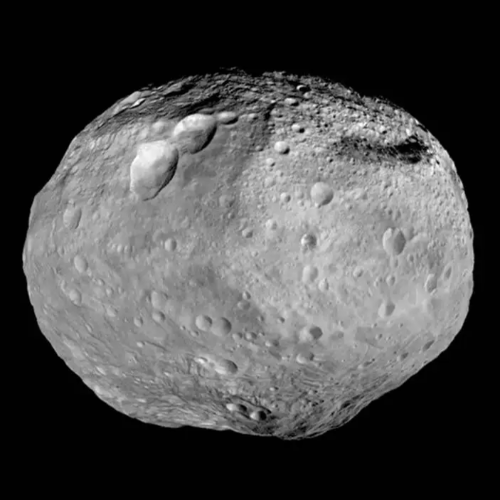
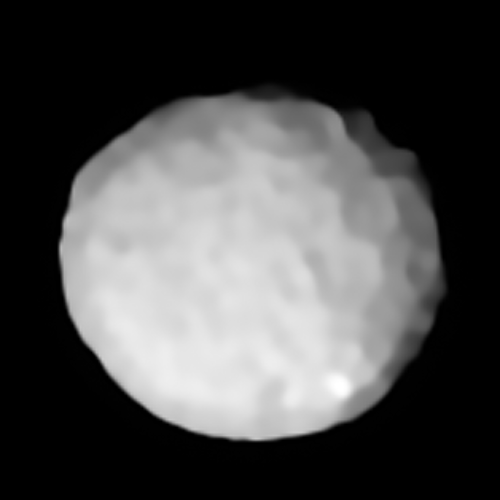
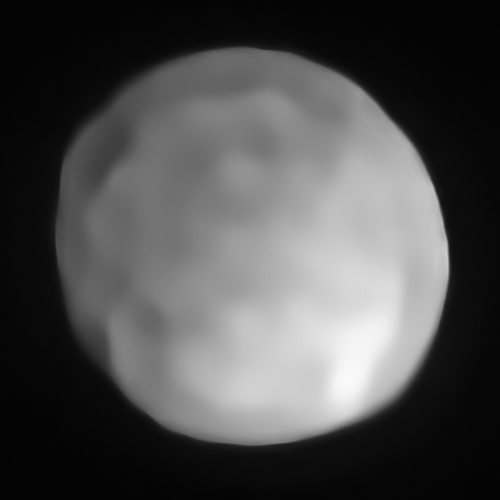
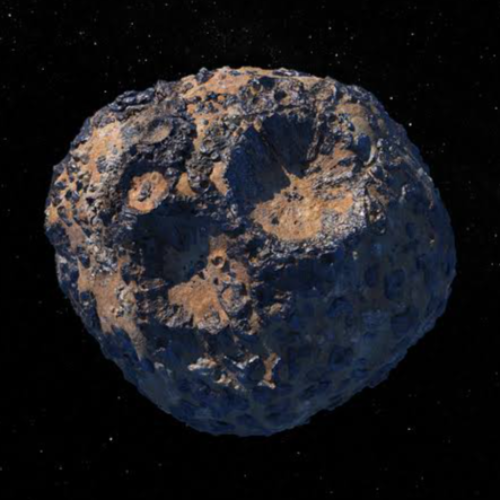
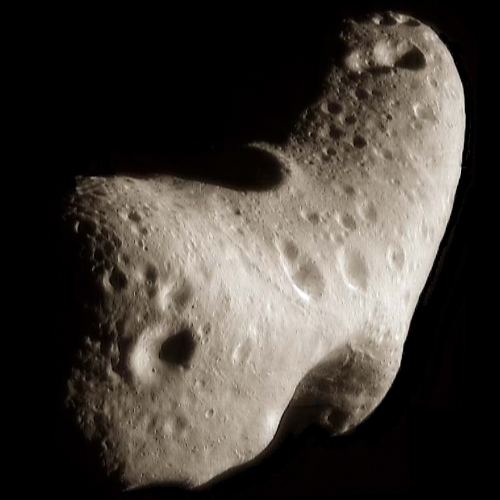
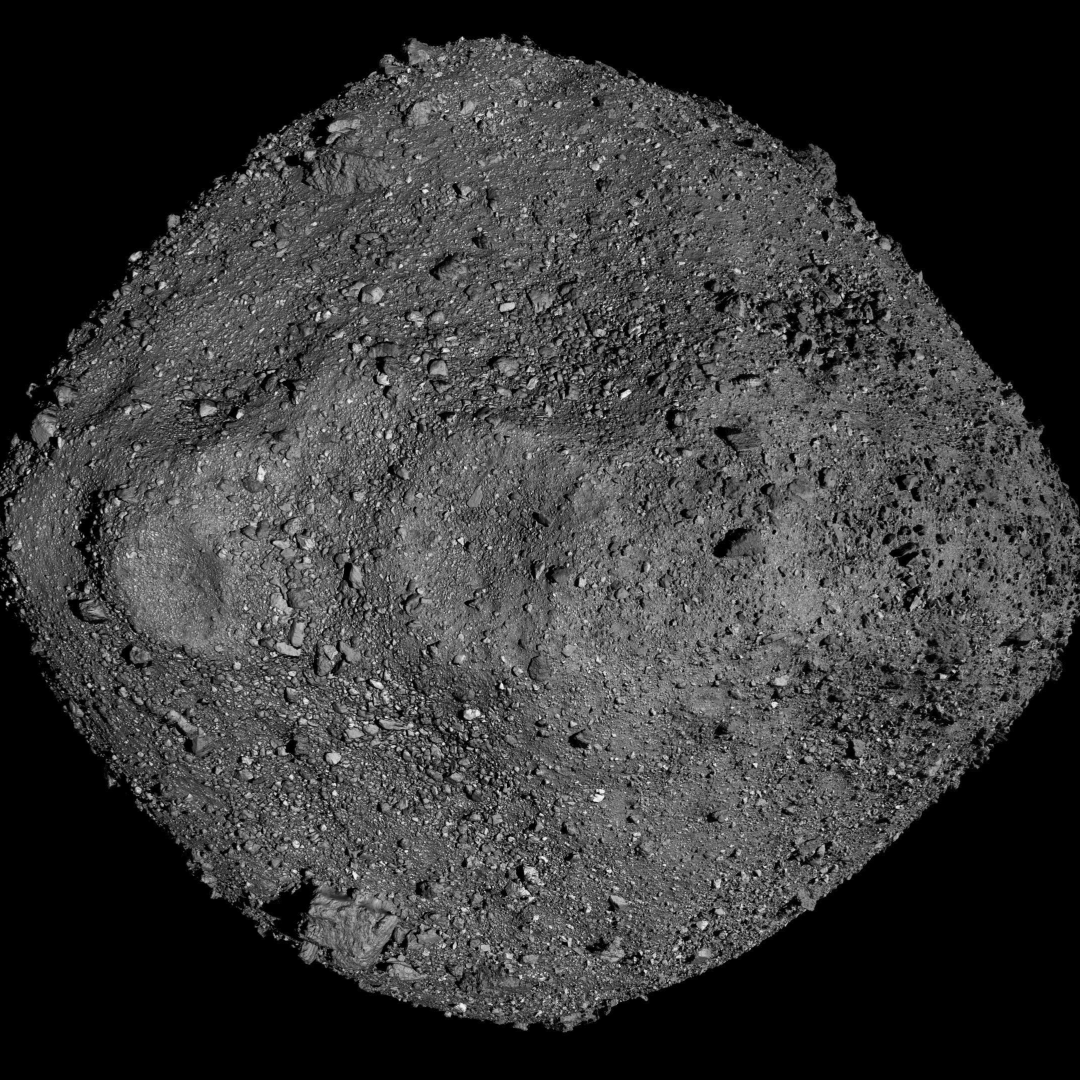
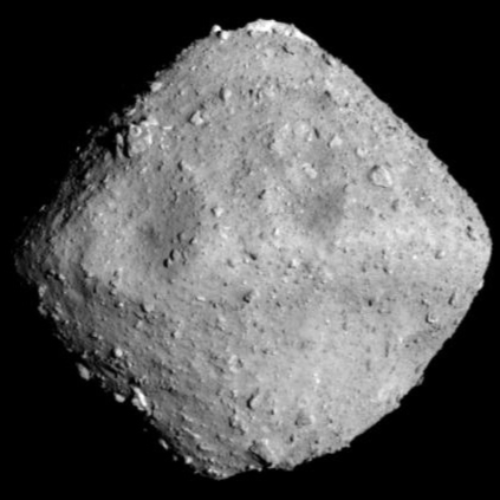
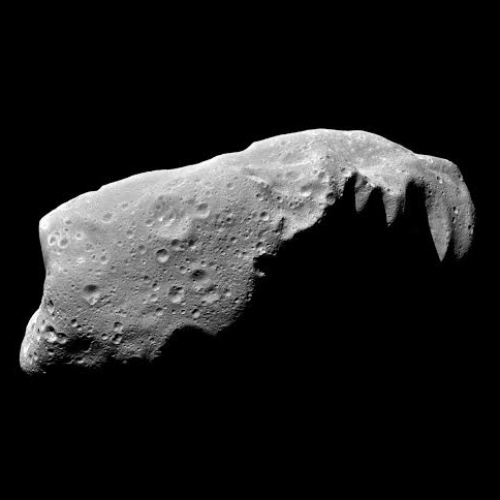
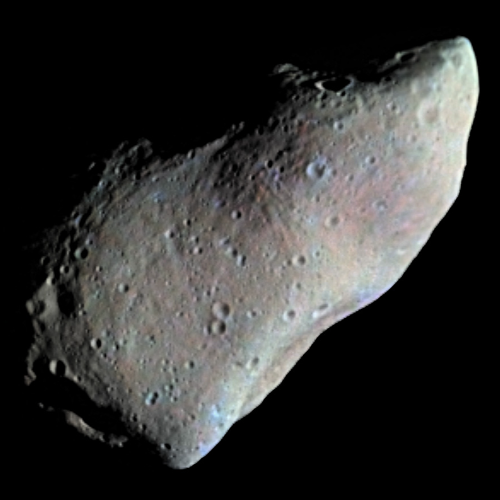
🚀 Asteroid Exploration Missions
Asteroids are among the oldest objects in the Solar System, preserving materials that formed more than 4.5 billion years ago. To better understand their composition, structure, and history, space agencies have launched robotic missions that fly past, orbit, land on, or even return samples from these fascinating worlds. These missions have transformed asteroids from distant points of light into well-studied planetary bodies, revealing their geology, chemistry, and role in the formation of the Solar System.
🌌 Why Explore Asteroids?
Asteroid missions help scientists investigate the earliest history of the Solar System, search for organic molecules and water-bearing minerals, improve planetary defense strategies, and develop new technologies for deep-space exploration. They also provide valuable experience for future missions to the Moon, Mars, and beyond.
🎯 Mission Objectives
🪨 Study Asteroids
Analyze asteroid size, shape, composition, and surface features.
📦 Collect Samples
Return untouched asteroid material to Earth for laboratory research.
💧 Search for Water
Investigate hydrated minerals and clues to the origin of Earth's water.
🌿 Organic Chemistry
Study carbon-rich compounds that may reveal how life-friendly molecules formed.
🛡 Planetary Defense
Improve our ability to detect and potentially deflect hazardous asteroids.
🚀 Advance Technology
Develop autonomous navigation, landing, and sample-return techniques.
🛰 Featured Exploration Missions
🌍 Dawn
Explored Vesta and Ceres, revealing their geology and internal structure.
💥 DART
Successfully changed the orbit of an asteroid moon during the first planetary defense test.
📦 OSIRIS-REx
Collected and returned samples from asteroid Bennu.
🇯🇵 Hayabusa
Returned the world's first asteroid samples from Itokawa.
🚀 Hayabusa2
Collected pristine samples from asteroid Ryugu.
🪐 Lucy
Currently exploring Jupiter's Trojan asteroids.
🪙 Psyche
Traveling to study the unique metal-rich asteroid Psyche.
📖 Chapter Overview
In the following sections, we'll explore the most important asteroid missions ever launched. From historic flybys and asteroid landings to sample-return missions and planetary defense experiments, these spacecraft have greatly expanded our understanding of the Solar System and continue to inspire future exploration.
🚀 Historic Asteroid Missions
Several asteroid missions have transformed our understanding of small worlds. From orbiting giant asteroids to returning pristine samples and testing planetary defense, these missions represent some of humanity's greatest achievements in robotic space exploration.
🌍 Dawn Mission
Launched by NASA in 2007, Dawn became the first spacecraft to orbit two different worlds—Vesta and Ceres. It revealed giant impact basins, mountains, bright salt deposits, and evidence that Ceres once contained large amounts of water.
- 🚀 Launch: 2007
- 🎯 Targets: Vesta & Ceres
- ⭐ First mission to orbit two planetary bodies
💥 DART Mission
NASA's Double Asteroid Redirection Test (DART) became the world's first planetary defense experiment by intentionally impacting the small asteroid moon Dimorphos in 2022, successfully changing its orbit.
- 🚀 Launch: 2021
- 🎯 Target: Dimorphos
- 🛡 First asteroid deflection test
📦 OSIRIS-REx
NASA's OSIRIS-REx explored asteroid Bennu, collected surface material, and safely returned the samples to Earth in 2023. Scientists are using them to study the early Solar System and the origin of organic compounds.
- 🚀 Launch: 2016
- 🎯 Target: Bennu
- 📦 Sample returned to Earth
🌟 Why These Missions Were Historic
🛰 New Discoveries
Mapped asteroid surfaces in remarkable detail and revealed their geology.
📦 Sample Return
Returned untouched asteroid material for laboratory research on Earth.
🛡 Planetary Defense
DART proved that humanity can alter the orbit of a small asteroid.
🌌 Future Exploration
These missions paved the way for future asteroid and deep-space exploration.
🇯🇵 Japanese Asteroid Missions
Japan Aerospace Exploration Agency (JAXA) has pioneered asteroid sample-return technology through the Hayabusa and Hayabusa2 missions. These groundbreaking spacecraft demonstrated that it is possible to collect material from distant asteroids and safely return it to Earth for scientific study.
🚀 Hayabusa
Launched in 2003, Hayabusa became the world's first mission to successfully return asteroid samples. Despite several technical problems, the spacecraft completed its mission and delivered tiny particles from asteroid Itokawa back to Earth in 2010.
- 🚀 Launch: 2003
- 🎯 Target: Itokawa
- 📦 First asteroid sample return
- 🏆 Mission completed: 2010
🛰 Hayabusa2
Building on the success of its predecessor, Hayabusa2 visited asteroid Ryugu, deployed robotic landers, collected both surface and subsurface samples, and safely returned them to Earth in 2020. The mission greatly expanded our understanding of primitive asteroids.
- 🚀 Launch: 2014
- 🎯 Target: Ryugu
- 📦 Surface & subsurface samples
- 🌍 Sample return: 2020
🌟 Legacy of the Hayabusa Program
📦 Sample Return
Japan became the first nation to successfully return asteroid material to Earth.
🤖 Advanced Robotics
Both missions demonstrated autonomous navigation, landing, and sampling technologies.
🔬 Scientific Discoveries
Returned samples have provided valuable insights into asteroid composition and Solar System history.
🚀 Future Missions
The success of Hayabusa and Hayabusa2 continues to influence future exploration missions worldwide.
🚀 Current & Future Asteroid Missions
Asteroid exploration continues with a new generation of spacecraft. Modern missions are studying unexplored worlds, testing advanced technologies, and helping scientists answer important questions about the formation of planets and the evolution of our Solar System.
🪐 Lucy Mission
NASA's Lucy mission was launched in 2021 to explore the ancient Trojan asteroids that share Jupiter's orbit. Over a 12-year journey, Lucy will visit multiple asteroids, providing our first close-up views of these primitive objects.
- 🚀 Launch: 2021
- 🎯 Targets: Trojan Asteroids
- 🛰 Multiple asteroid flybys
- ⭐ Longest asteroid tour ever planned
🪙 Psyche Mission
NASA's Psyche mission is traveling to the unusual metal-rich asteroid 16 Psyche. Scientists hope the mission will reveal whether Psyche is the exposed core of an ancient protoplanet, offering a unique look into planetary interiors.
- 🚀 Launch: 2023
- 🎯 Target: 16 Psyche
- 🪨 Study of a metal-rich asteroid
- ⭐ Exploring a possible planetary core
🌌 Looking Ahead
🔬 New Discoveries
Future missions will reveal how asteroids formed and evolved over billions of years.
🤖 Advanced Technology
Autonomous navigation, AI, and improved scientific instruments will enhance deep-space exploration.
🛡 Planetary Defense
Upcoming missions will improve our ability to detect and respond to potentially hazardous asteroids.
🚀 Human Exploration
Knowledge gained from asteroid missions may support future crewed missions and space resource utilization.
⛏ Asteroid Mining
Asteroid mining is the concept of extracting valuable materials from asteroids for use in space or on Earth. Although no commercial mining mission has taken place yet, scientists and engineers believe it could play an important role in future space exploration.
🚀 Why Mine Asteroids?
Many asteroids contain water, iron, nickel, cobalt, and precious metals. Water can be converted into hydrogen and oxygen for rocket fuel, while metals could be used to build spacecraft and space stations without launching large amounts of material from Earth.
💎 Valuable Resources
💧 Water Ice
Can provide drinking water, breathable oxygen, and hydrogen fuel for future space missions.
🪨 Iron & Nickel
Useful for building spacecraft, habitats, and other structures in space.
💍 Precious Metals
Some asteroids may contain platinum-group metals that are valuable for advanced technologies.
🧪 Rare Elements
Certain asteroids may hold rare materials important for scientific research and future industries.
🌌 Challenges & Future
⚠ Challenges
- 🚀 Extremely expensive missions
- 🤖 Complex robotic technology
- 📦 Returning materials safely
- ⚖ International space regulations
🌟 Future Outlook
Although asteroid mining remains experimental, future advances in robotics, reusable spacecraft, and in-space manufacturing could make it an important part of humanity's expansion beyond Earth.
🛡 Planetary Defense
Planetary defense is the global effort to detect, track, and understand near-Earth asteroids that could potentially collide with our planet. Although most asteroids pose no danger, continuous monitoring helps scientists identify possible future impact risks and develop methods to protect Earth.
🌍 Protecting Our Planet
Astronomers around the world use powerful telescopes and space missions to discover and calculate asteroid orbits. If a potentially hazardous asteroid is detected, scientists can predict its future path and, if necessary, study ways to safely change its trajectory long before it reaches Earth.
🚀 Planetary Defense Methods
🔭 Early Detection
Powerful observatories continuously search the sky for new near-Earth asteroids.
🛰 Orbit Tracking
Scientists precisely calculate asteroid paths to predict future close approaches.
💥 Kinetic Impact
The DART mission demonstrated that a spacecraft can slightly change an asteroid's orbit.
🌎 International Cooperation
Space agencies worldwide share observations and work together on planetary defense strategies.
⭐ Key Facts
☄ Near-Earth Objects
Near-Earth Objects (NEOs) include asteroids and comets whose orbits bring them close to Earth. Thousands have already been discovered, and new objects are found every year.
🛡 DART Success
In 2022, NASA's DART mission became the first successful planetary defense test by intentionally changing the orbit of the asteroid moon Dimorphos.
🚀 Future Asteroid Missions
Asteroid exploration is entering an exciting new era. Future missions will investigate unexplored asteroids, improve planetary defense techniques, and search for clues about the origin of planets and life. New spacecraft will carry more advanced instruments, autonomous navigation systems, and cutting-edge scientific technology.
🌌 The Next Generation of Exploration
Scientists hope future missions will collect more asteroid samples, study metal-rich and carbon-rich worlds, test new landing technologies, and improve our understanding of how the Solar System formed. These missions will also support future human exploration and long-term space development.
🎯 Future Mission Goals
🛰 Explore More Asteroids
Visit a wider variety of asteroids with different sizes, compositions, and origins.
📦 More Sample Returns
Bring additional pristine asteroid material back to Earth for laboratory research.
🛡 Better Planetary Defense
Develop improved technologies to detect and redirect potentially hazardous asteroids.
🤖 Smarter Spacecraft
Use artificial intelligence and autonomous systems for safer deep-space operations.
🌠 Looking Ahead
🌍 Scientific Discovery
Future asteroid missions are expected to answer important questions about planetary formation, the distribution of water, and the origin of organic molecules throughout the Solar System.
🚀 Humanity's Future
The knowledge gained from asteroid exploration may support future lunar bases, missions to Mars, in-space manufacturing, and sustainable exploration beyond Earth.
📅 Asteroid Exploration Timeline
Over the past several decades, asteroid missions have transformed our understanding of these ancient worlds. From the first spacecraft flybys to modern sample-return missions, each mission has marked a major step forward in Solar System exploration.
📷 Galileo Visits Gaspra
The Galileo spacecraft captured the first close-up images of an asteroid, revealing Gaspra's rocky and cratered surface.
🌑 Galileo Visits Ida
Galileo discovered Dactyl, the first known moon orbiting an asteroid.
🚀 NEAR Shoemaker
The first spacecraft to land on an asteroid, touching down on Eros.
📦 Hayabusa
JAXA successfully returned the world's first asteroid samples from Itokawa.
🌍 Dawn Mission
NASA explored Vesta and Ceres, revealing their complex geology and history.
🛰 Hayabusa2
Ryugu samples safely returned to Earth after a highly successful mission.
💥 DART
Humanity's first successful asteroid deflection test changed the orbit of Dimorphos.
📦 OSIRIS-REx
NASA returned precious samples from asteroid Bennu for scientific research.
🚀 Lucy & Psyche
Both missions continue exploring new asteroid populations and expanding our knowledge of the Solar System.
❓ Frequently Asked Questions
Here are answers to some of the most common questions about asteroid exploration missions and why they are important to science.
Asteroids preserve ancient material from the birth of the Solar System. Studying them helps scientists understand planetary formation, water, organic compounds, and the history of our cosmic neighborhood.
Laboratories on Earth contain far more advanced instruments than any spacecraft, allowing scientists to study asteroid material in much greater detail.
DART tested whether a spacecraft could slightly change the orbit of an asteroid, demonstrating a possible method for future planetary defense.
Most asteroids pose no threat to Earth. Space agencies continuously monitor near-Earth objects to identify and track any that may require future attention.
Future missions will explore more asteroids, return additional samples, improve planetary defense technologies, and prepare for long-term human exploration of deep space.
📚 References & Scientific Sources
The information presented throughout this page is based on research, mission data, and scientific publications from internationally recognized space agencies and astronomical organizations. These trusted sources continue to improve our understanding of asteroids and the Solar System.
🚀 NASA
NASA provides detailed information on asteroid missions including Dawn, DART, OSIRIS-REx, Lucy, and Psyche, along with educational resources and scientific discoveries.
Visit NASA →🌍 ESA
The European Space Agency supports asteroid research, planetary defense programs, and international cooperation in Solar System exploration.
Visit ESA →🇯🇵 JAXA
JAXA developed the Hayabusa and Hayabusa2 missions, pioneering asteroid sample-return technology.
Visit JAXA →☄ Minor Planet Center
The Minor Planet Center is the official international organization responsible for collecting asteroid observations and maintaining orbital data.
Visit MPC →🔭 International Astronomical Union
The IAU is responsible for the official naming and classification of asteroids, planets, and other celestial bodies.
Visit IAU →🪨 NASA Small-Body Database
A comprehensive catalog containing physical properties, orbital elements, and scientific data for thousands of asteroids and comets.
Browse Database →📖 Scientific Accuracy
SpaceVerse aims to provide educational and scientifically accurate information based on publicly available research from trusted organizations. As new discoveries are made and future asteroid missions return additional data, some information may be updated to reflect the latest scientific understanding.